The Surreal Beauty of Iran's Hidden Island Gem
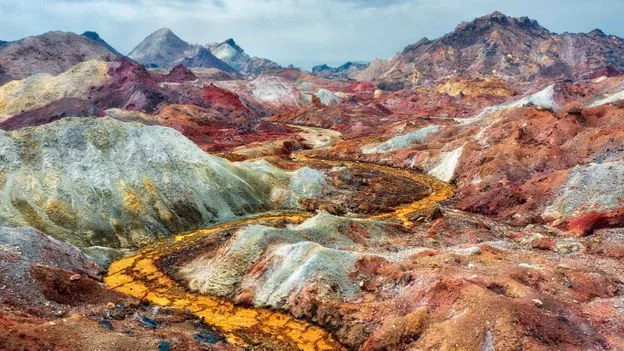
Imagine a destination where crimson sands meet shimmering salt mountains, where valleys blaze with rainbow hues, and landscapes appear transplanted from another planet. This is Hormuz Island, a 16-square-mile teardrop-shaped landmass lying just 8km off Iran's coast in the strategically critical Strait of Hormuz. While its extraordinary beauty has captivated intrepid travellers, current geopolitical tensions cast uncertainty over visiting this remote paradise.
A Landscape of Unearthly Colours
Hormuz Island's surreal topography results from volcanic activity, mineral deposits, and salt formations that create a visual spectacle unlike anywhere else on Earth. The island's most famous feature, Rainbow Valley, displays dramatic bands of green, orange, purple, pink and red cutting across the terrain, earning Hormuz its nickname as the 'rainbow island'. Further inland, Saffron Valley bursts with bright yellow and deep golden hues reminiscent of blooming saffron fields, formed from iron oxide and other minerals that attract hikers, geologists, and nature enthusiasts.
On the western side, the Goddess of Salt mountain shimmers with glistening salt crystals that locals believe possess healing properties, dispelling negative energy and promoting positivity - hence its alternative name, 'Energy Mountain'. Travel content creator Jesper Hedlund (@jesperhedlund1) describes the landscape as reminiscent of Chile's Atacama Desert, stating 'It looks like we're on another planet.'
The Crimson Coastline and Edible Earth
Perhaps most striking is Hormuz's Red Beach, where vivid crimson sand stretches to the shoreline. The island's abundant red soil, locally called 'gelack', contains high iron oxide content that gives it both visual and practical significance. Remarkably, this soil is considered edible and features in local cuisine as a spice for sauces and jams, according to tourist board information. Industrially, it serves dyeing, cosmetic, glass, and ceramic production.
When rainfall occurs, water runs off in bright red streams that travel content creator Ankita Kumar (@monkey.inc) describes as resembling 'a literal bloodbath.' This phenomenon gained widespread attention last year when footage circulated showing rainwater transforming the beach into a striking scarlet spectacle, with floodwater creating spectacular waterfalls that left eerie trails across the landscape.
Artistic Expression and Sustainable Accommodation
Local artists harness the island's natural pigments to create stunning sand carpets on the beaches, using mineral powders to produce vast, swirling works of art. The bohemian-style Majara Residence, part of the Presence in Hormuz project, reflects this artistic spirit with its 17 colourful domes constructed from rammed earth and sand. As Ankita Kumar notes in her video, 'To mimic nature, they have also built these sustainable, colourful homes that you can stay at.' Additional accommodation options include the Red Beach Hotel and House of Sun.
Wildlife and Accessibility Challenges
Beyond its colourful landscapes, Hormuz Island hosts important ecological sites like Turtles Cliff, described as resembling Australia's dreamy shores. According to Walking In Iran, this mostly untouched area represents one of the country's most significant sea turtle habitats, with countless turtles arriving each spring and summer to lay eggs.
Experienced traveller Ben (@benbookstheworld), who has visited over 50 countries, calls Hormuz 'the most diverse and beautiful island I've ever been to' and notes that 'it feels like another planet.' He recommends tuk-tuks or scooters for navigating the island, which can be crossed in approximately 40 minutes.
Geopolitical Realities and Travel Considerations
Despite a current two-week ceasefire agreement and the reopening of the Persian Gulf, travel to the region remains uncertain with official advisories still in place. Hormuz Island's location in the strategically vital Strait of Hormuz places it at the heart of escalated tensions, making accessibility challenging. The island remains reachable only by ferry from Bandar Abbas or nearby Qeshm Island, maintaining its remote, largely undiscovered character.
As travel content creator Ben enthuses in another video, the island 'has some of the most magical spots I've ever seen in this world,' yet its surreal beauty exists alongside complex geopolitical realities. For now, Hormuz Island remains as difficult to reach as it is unforgettable - a rainbow-hued paradise awaiting more stable times for broader discovery.