Belarus Could Become Launchpad for New Russian Offensive in Ukraine
Belarus May Launch New Russian Offensive in Ukraine

More than four years after Belarus allowed Russia to use its territory to invade Ukraine, concerns are mounting that Minsk could again serve as a launchpad for a new Russian offensive. Ukrainian officials warn that President Alexander Lukashenko may permit the Kremlin's forces to stage attacks from Belarusian soil, despite his denials.

Belarus's Role in the Conflict

Although Belarus has not directly contributed troops to the war, Lukashenko has supported President Vladimir Putin's efforts by hosting Russian nuclear weapons and military infrastructure, and producing components for Moscow's war industries. Joint drills of nuclear forces involving Russian weapons deployed in Belarus took place earlier this month. Lukashenko, who has ruled the nation of 9.5 million for over three decades, has cracked down on dissent and relied on close ties with Russia and Kremlin subsidies to counter Western sanctions.

Military cooperation between Moscow and Minsk is increasingly alarming Ukraine's allies. During the full-scale invasion that began on February 24, 2022, Russian troops gathered in Belarus under the guise of drills and dashed toward Kyiv, just 90 kilometers south of the border. However, staunch Ukrainian resistance shattered Putin's hopes of capturing the capital quickly, and Russian forces withdrew after heavy losses.

Wide Pickt banner — collaborative shopping lists app for Telegram, phone mockup with grocery list

Belarus's Industrial Support

As the conflict became a war of attrition, Belarus has played a key role in supporting Moscow's war effort. Belarusian plants produce microchips, electronics, optical guidance systems, artillery munitions, and heavy trucks for Russian ballistic missiles. Ukraine's presidential envoy on sanctions policy, Vladyslav Vlasiuk, noted that fragments of an Oreshnik ballistic missile fired at Ukraine on May 24 contained microchips from Belarus, urging tighter sanctions against Minsk.

Belarus has also provided training grounds for Russian troops, hosted joint drills, and offered hospitals to treat wounded Russian soldiers. BELPOL, a group of former military and law enforcement officers opposing Lukashenko, says over 500 Belarusian industrial plants are involved in manufacturing weapons and ammunition, repairing military equipment, and providing logistics. BELPOL head Uladzimir Zhyhar stated that Lukashenko's regime is seriously involved in the war, helping Russia in every way possible.

In the Gomel region bordering Ukraine, construction has begun on a large firing range and barracks for troops. Ukraine has been forced to maintain forces at the Belarusian border, diverting them from the front line.

Nuclear Umbrella and Drills

Belarus hosts some of Russia's tactical nuclear weapons, and in December, Russia announced that its Oreshnik missile system entered service in Belarus. Russia has used a conventionally armed Oreshnik to strike Ukrainian facilities three times. In 2024, the Kremlin revised its nuclear doctrine, placing Belarus under Russia's nuclear umbrella. Putin stated that Moscow retains control of its nuclear weapons in Belarus but would allow its ally to select targets in case of conflict. Earlier this month, Russia and Belarus held drills including the delivery of nuclear warheads to missile units and launch preparations.

Zhyhar warned that Belarus lacks military sovereignty and that Moscow would use it as a launchpad for a new invasion of Ukraine or conflict with NATO countries if needed.

Zelenskyy's Warning

Last week, Ukrainian President Volodymyr Zelenskyy said intelligence indicated Moscow has stepped up efforts to draw Belarus deeper into the war and launch aggressive operations from Belarusian territory, possibly targeting the Chernihiv-Kyiv area or a NATO country. He ordered the military and security agencies to strengthen northern defenses. Lukashenko denied aggressive plans, and Sergei Shoigu, Russia's Security Council secretary, dismissed Zelenskyy's claim as a scare tactic to attract Western aid.

In a sign of Western concern, French President Emmanuel Macron spoke to Lukashenko on May 24, underscoring the risks for Belarus of being dragged into the war. Lukashenko said he would host a French envoy for talks on European security and easing EU sanctions. Andrii Demchenko, a spokesman for Ukraine's Border Guard Service, said that while intelligence indicates Russia has pressured Belarus to enter the war, no buildup of troops near the border has been spotted.

Pickt after-article banner — collaborative shopping lists app with family illustration

Opposition Leader's Appeal

Belarusian opposition leader-in-exile Sviatlana Tsikhanouskaya visited Kyiv last week, emphasizing that Belarus must never again become a springboard for aggression. She stated that Ukraine is fighting for itself and for all peoples who have lived in the shadow of empire, and that the fate of Belarus depends on Ukraine's success.

Military Analysis

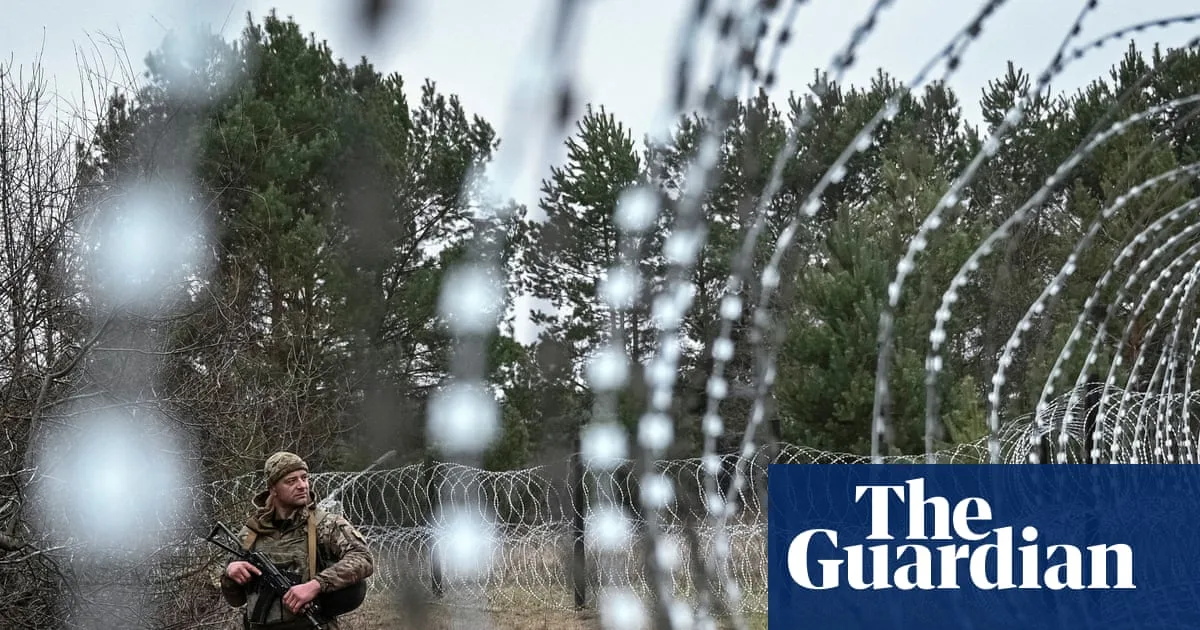
Belarus's armed forces have 48,600 troops, a tiny force compared with Russia's 1.5 million. In case of war, Belarus could mobilize 290,000, but they would need weapons and training. Military analyst Alexander Alesin said the Belarusian army is unfit for offensive action and that an attack would require mobilizing up to 500,000 troops, which is unlikely. Ukraine has built heavy fortifications and mines on the border, making an incursion difficult. Alesin added that Lukashenko is comfortable with Belarus's role as a key supplier and would oppose direct involvement in the war to avoid fighting while profiting from it.