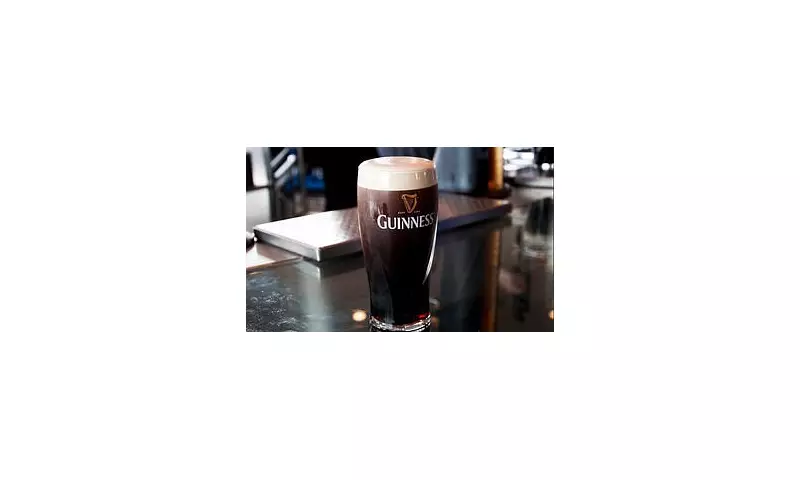
A startling historical revelation is challenging the very identity of one of Ireland's most iconic products. According to a leading beer historian, the world-famous Guinness stout may owe its entire existence to England, with its signature dark beer style actually invented in London during the 1700s.
The London Porter That Conquered Dublin
Dr Malcolm Purinton, a beer historian at Northeastern University, states that the Guinness beer style was born not in Dublin, but in the English capital. The catalyst was the immense popularity of a dark beer known as London 'porter', which flooded into Dublin via exports in the 18th century.
"Historically, the development of porter and stronger stouts originated with the English brewers," Dr Purinton told the Daily Mail. "The name porter comes from the popularity of the strong-flavoured dark beer with London porters who carried goods around London."

Inspired by this trend, head brewer and founder Arthur Guinness (1725–1803) began crafting his own version of the dark beer in the 1770s. He started brewing porter in 1778 specifically to compete with the London imports and capture a greater share of the Dublin market, responding to local demand.
From St. James's Gate Ale to Global Stout
This marked a significant pivot for the brewery. Arthur Guinness had signed his famous 9,000-year lease on the St. James's Gate brewery in Dublin in 1759, initially focusing on brewing lighter ales. "Before the production of the stouts and London porters, Guinness beers would have been brown ales and brown beers," Dr Purinton explained.
The shift was decisive. By 1799, production of the lighter Guinness ales had ceased entirely at St. James's Gate, superseded by the booming popularity of the darker porter. The first known export of Guinness left Dublin for England in 1796, completing a circular trade journey. It wasn't until the 1840s that Guinness began using the term 'stout' for its dark beer, a style that also emerged in 18th century England as a stronger variation of porter.
Dr Purinton notes that the original 18th-century beer would have been quite different from today's pint. "The beer would have been a similar colour but it would have been more bitter, likely slightly sour or funky from yeasts... and have a heavier roasted quality to it," he said.
Full Circle: A New Brewery in Covent Garden
In a twist of fate that brings the story full circle, Guinness is arguably returning to its stylistic birthplace this week with the opening of a new £73 million microbrewery in Covent Garden, London. This area was the epicentre of the 18th-century porter boom, home to dominant brewing houses like Combe & Co., Whitbread, Thrale, and Parsons.
This is not the brand's first brewing venture in the capital. The first overseas Guinness brewery opened in Park Royal, west London in 1936, closing two decades ago. The company's headquarters moved to London in 1932, and in 1997, Guinness merged to form the multinational Diageo, which is still based in the city.
Today's Guinness is a distinct product, notably due to the addition of nitrogen gas since 1959, which creates its characteristic creamy head. The iconic stout is now brewed in over 40 countries and is a truly global brand. Yet, as Dr Purinton concludes, "there is a degree of Englishness to Guinness at least in terms of its identity and genesis," a heritage now physically acknowledged with its new home in the heart of historic London brewing territory.