Fodor's 2026 No List: Seven Destinations to Avoid Due to Overtourism
Fodor's 2026 No List: Seven Destinations to Avoid

Fodor's 2026 No List Warns of Overtourism in Seven Key Destinations

British holidaymakers are being urged to steer clear of seven specific destinations this year, as identified by the American travel publication Fodor's in its annual No List. This list focuses on locations where tourism is exerting unsustainable pressure on both the environment and local communities. While travel can undoubtedly bring joy and broaden horizons, it also has the potential to inflict significant harm and stress when approached without care. From overcrowded streets and overburdened public transport systems to skyrocketing property prices and the environmental impact of aviation emissions, globe-trotting in 2026 presents considerable challenges without leaving a substantial negative mark.

The purpose of Fodor's No List is to offer what the publication describes as "a gentle nudge to ease up on a spot for now–not forever–and give a rest to any location that clearly needs a breather." Here are the seven locations that travellers are being advised to bypass in 2026.

Mombasa, Kenya

Kenya's tourism industry has been experiencing a significant boom since the Covid-19 pandemic, with international arrivals reaching a record 2.4 million last year, marking a 14.6% increase compared to 2023. Travel now stands as the third-largest industry in the country for generating foreign currency. A major area of growth has been the cruise sector, which saw a staggering 164% rise in port traffic in coastal cities like Mombasa and Lamu in 2024. Kenya aims to further boost inbound arrivals to 3 million this year, with no plans to slow down.

Wide Pickt banner — collaborative shopping lists app for Telegram, phone mockup with grocery list

However, Fodor's highlights Mombasa as particularly at risk. The publication notes that overtourism has left the city grappling with depleting resources, severe overcrowding, poor and congested roads, inadequate waste management leading to littered beaches and polluted oceans, encroachment endangering the shoreline, and numerous dilapidated buildings on prime beachfront areas due to uneven development. Tourist exit surveys warn that Mombasa is in danger of losing its appeal as a destination.

Antarctica

The unofficial motto for Antarctica's tourism operators is "take only photos, leave only footprints," with more formal regulations under the Protocol on Environmental Protection of 1991 requiring visitors to have at most "a minor or transitory impact." Conservationists have long fought to preserve Earth's most pristine and barren landmass, achieving successes such as the recovery of the humpback whale population to 135,000 globally from a low of 10,000, alongside strict rules implemented by the International Association of Antarctic Tour Operators.

Yet, as global temperatures rise and the desire to travel to novel destinations increases, the ice recedes, and threats to Antarctica's inhabitants grow. Scientists are currently investigating outbreaks of diseases like cholera or avian flu in penguin colonies on the Peninsula. While humans must maintain a distance of 5 metres from all Antarctic animals and avoid touching anything to prevent acting as vectors, accidents do occur. Recent data shows the continent received 120,000 visitors from 2023 to 2024, with projections indicating this figure could double. Increasingly loud questions are being raised about whether the frozen continent can sustainably handle such visitor numbers.

Isola Sacra, Italy

Isola Sacra, or Sacred Island, is a seaside destination located approximately 20 miles from Rome, renowned for its vast Roman Necropolis dating from the 1st to 6th centuries AD, featuring distinctive tomb structures that resemble dwellings. This compact community is home to around 15,000 inhabitants. However, its proximity to Rome Fiumicino Airport and access to a stunning stretch of coast have transformed it into a magnet for holidaymakers.

Accommodation has proliferated across the region, and now a massive port project called Fiumicino Waterfront is set to be constructed. This port will include moorings for roughly 1,000 small vessels and a jetty for enormous cruise ships reaching 70 metres in height and 350 metres in length, with capacity for up to 6,000 passengers. The plans received approval in November, sparking outrage among activists and securing Isola Sacra a spot on Fodor's 2026 No List.

Pickt after-article banner — collaborative shopping lists app with family illustration

Canary Islands, Spain

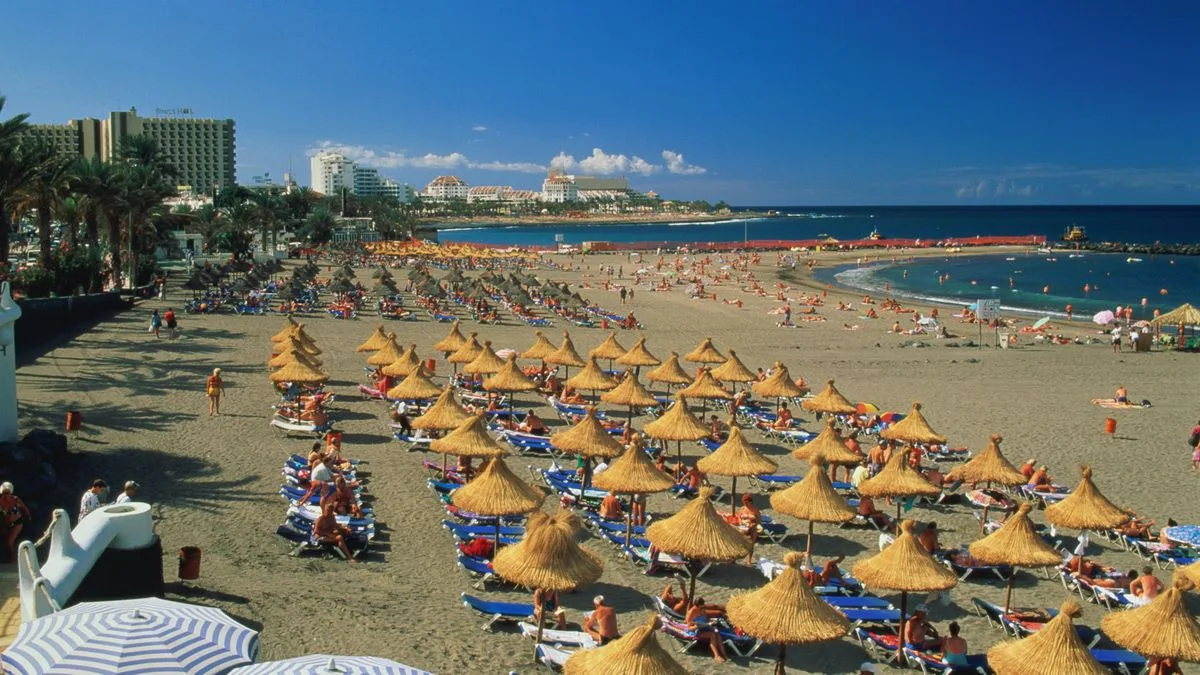
Among the cultural sites and natural beauty spots being marred by overtourism, the Canary Islands represent a Spanish entry on the list. Cherished by British tourists due to a microclimate that makes them a prime winter sun destination, the islands welcomed nearly 18 million visitors last year, with tourism at the core of their economy. The Canaries have faced numerous issues and negative press this year, including overtourism protests in the summer and reports of delays at airports due to new EU passport checks.

In May, thousands marched through the streets of Tenerife, Gran Canaria, and Lanzarote under the banner, "Canarias tiene un límite" ("The Canaries have a limit"). Their message is clear: tourism is perceived as killing the Canary Islands, highlighting the severe strain on local resources and communities.

Mexico City, Mexico

Mexico City is experiencing a tourist backlash similar to that seen in Spanish cities. While "tourists go home" is a rallying cry in Spain, in Mexico, it's "kill a gringo." On July 4, large protests erupted in Mexico City against gentrification, short-term rentals, and rising rents, with some demonstrations turning violent. Foreign tourists were harassed, and stock was looted from tourist-facing businesses.

Fodor's notes that the protest date, coinciding with U.S. Independence Day, indicated where the majority of anger was directed. Mexico's President Claudia Sheinbaum decried the protests as "xenophobic," reflecting the tensions between tourists and local residents.

Jungfrau Region, Switzerland

Set in the Bernese Oberland of central Switzerland, the Jungfrau Region stretches from the valleys of Interlaken to the imposing summits of the Eiger, Mönch, and Jungfrau. It is most famous for its Alpine villages, including Grindelwald, Lauterbrunnen, Wengen, and Mürren. Like many beautiful parts of the world, Jungfrau is attempting to balance booming tourism with the preservation of its environment and local quality of life.

The area's popularity strains natural resources and the daily lives of residents. Fodor's warns that coaches jam mountain roads, delicate paths around Kleine Scheidegg show visible wear, and tour groups crowd Lauterbrunnen's once-quiet waterfalls, underscoring the impact of overtourism.

Glacier National Park, USA

Glacier National Park in the United States is home to both the Blackfeet tribe and glaciers atop Montana's Northern Rockies. The latter are under serious threat, as the park is warming nearly twice as fast as the global average. Only 27 of the estimated 150 glaciers that ringed its peaks in the early 20th century remain, and these final 27 are likely to disappear by the end of the decade.

News of their imminent demise has led to a surge in last-chance tourism, overwhelming certain parts of the park. The famous Going-to-the-Sun Road is often clogged, rubbish issues are growing, and wildlife is being disturbed, highlighting the challenges of managing visitor numbers in a fragile ecosystem.