With the festive season in full swing, millions of travellers are taking to the skies, leading to crowded cabins and heightened potential for in-flight friction. To help navigate the social minefield of holiday air travel, we consulted two leading etiquette authorities for their indispensable advice.
Navigating Space and Seat Invasions
The battle for personal space is a primary source of mid-air tension. Diane Gottsman, founder of the Protocol School of Texas, advises caution when reclining your seat. "Reclining fully depends on the person behind you," she states, emphasising the need to check you are not crushing someone's knees or disrupting their meal. A simple glance back or a polite enquiry can prevent conflict.
If you find yourself the victim of a troublesome recliner, Richie Frieman, author of 'Reply All… And Other Ways to Tank Your Career', suggests a courteous approach: "As they recline, say something like, 'Excuse me, but would you mind pulling up a little bit? It's a little tight back here.'"

For those plagued by a passenger behind using their seatback as a grab-handle, Gottsman recommends a pleasant but direct request to use the armrests instead. Frieman advocates a "three strikes" policy, escalating from a smile to a firm reminder about your paid-for comfort.
Confronting Personal Space and Behavioural Offences
Armrest wars require diplomacy. Gottsman notes that hogging is often inadvertent and suggests asking, "Would you mind if I shared the armrest with you?" For middle-seat occupants, Frieman proposes a tactical "one elbow up, one elbow down" Jenga-style manoeuvre to claim fair share.
On the subject of 'manspreading', Frieman is unequivocal: "Let's just stop this disgusting act... your space is limited." Gottsman provides a script for victims: "Do you mind moving over a bit? We are clearly in close quarters."
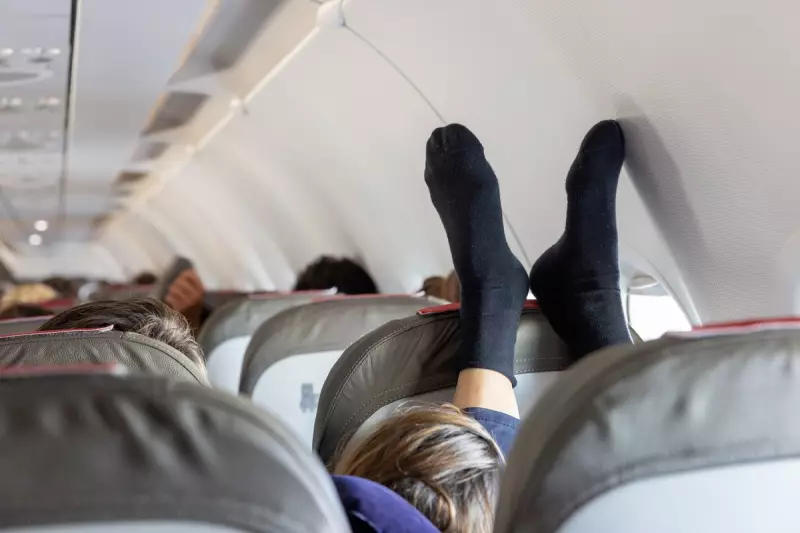
Personal habits also cause strife. Both experts condemn removing shoes or placing bare feet on surfaces, with Frieman deeming it "pure etiquette savagery" worthy of an anonymous report to cabin crew. For chatty neighbours ignoring social cues, Gottsman advises politely excusing yourself to work or rest, with earbuds serving as a universal "do not disturb" sign.
Managing Luggage, Noise, and Parenting Dilemmas
Overhead bin etiquette is crucial. If space above your seat is full, Gottsman says you may look elsewhere but should ask nearby passengers if using their compartment. Frieman agrees, noting that asking politely often succeeds.
Regarding noise, using headphones is a "no-brainer," insists Frieman. Speakerphone use is "rude, ignorant, and a flat-out sad attempt for someone to get attention." For strong-smelling food, he advises bringing only bland, quietly scented items onboard.
Parenting on planes requires balance. While Frieman urges empathy for crying infants, he states that seat-kicking or blasting tablets "is on the parent to solve immediately." He is adamant that nappies should only be changed in the lavatory, calling seat-based changes "flat-out appalling."
Gray Areas and Final Considerations
On debated issues like seat-swapping for families, Gottsman clarifies you are not obliged to agree, though helping a child is the polite response. As for applause upon landing, she sees it as a gesture of goodwill after a particularly turbulent journey.
With over 50 million people forecast to fly between 19 December and 5 January, according to Airlines for America, these expert tips provide a vital blueprint for maintaining civility at 35,000 feet. The core principle, both experts concur, is mutual respect and clear, courteous communication to ensure everyone's journey is as smooth as possible.