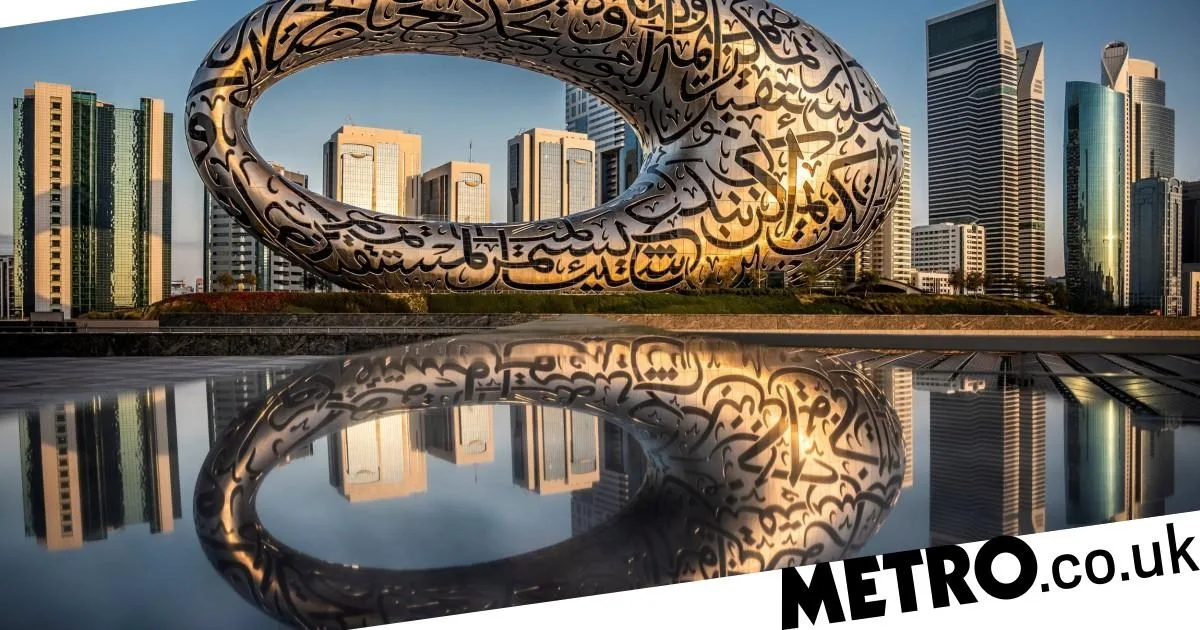
The Museum of the Future in Dubai has been hailed as the world's most beautiful building, a striking addition to the city's skyline of iconic structures. Standing at 77 metres, it may not rival the Burj Khalifa in height, but its unique torus shape—described as an elliptical void—sets it apart. The building, designed by local firm Killa Design, features 2,400 diagonally intersecting steel beams and zero support columns, relying on a network of diagonal supports.
Its stainless steel exterior is adorned with Arabic calligraphy on 1,024 individually robot-manufactured panels. These inscriptions serve both aesthetic and practical purposes: they reduce heat reflection and stabilise the building against wind vortexes. At night, 14 kilometres of LED lighting illuminate the structure. The museum is also sustainable, powered by its own solar park.
Opened on the palindrome date of 22 February 2022, the museum coincides with Dubai's hosting of World Expo 2020, delayed by the pandemic. The pandemic also allowed builders to adapt exhibits for minimal physical interaction, making the experience 'pandemic-proof'.
Unlike traditional museums, the Museum of the Future does not house artefacts but instead takes visitors on a journey 50 years into the future, starting from a spaceport in 2071. Creative Director Brendan McGetrick noted that their competitors are Netflix and video games, aiming to create an experience that rewards physical presence.
The building's design symbolises knowledge: the solid part represents what we know, and the void represents the unknown future. Its bold shape and innovative features have made it a must-see attraction, even drawing tourists before its completion.