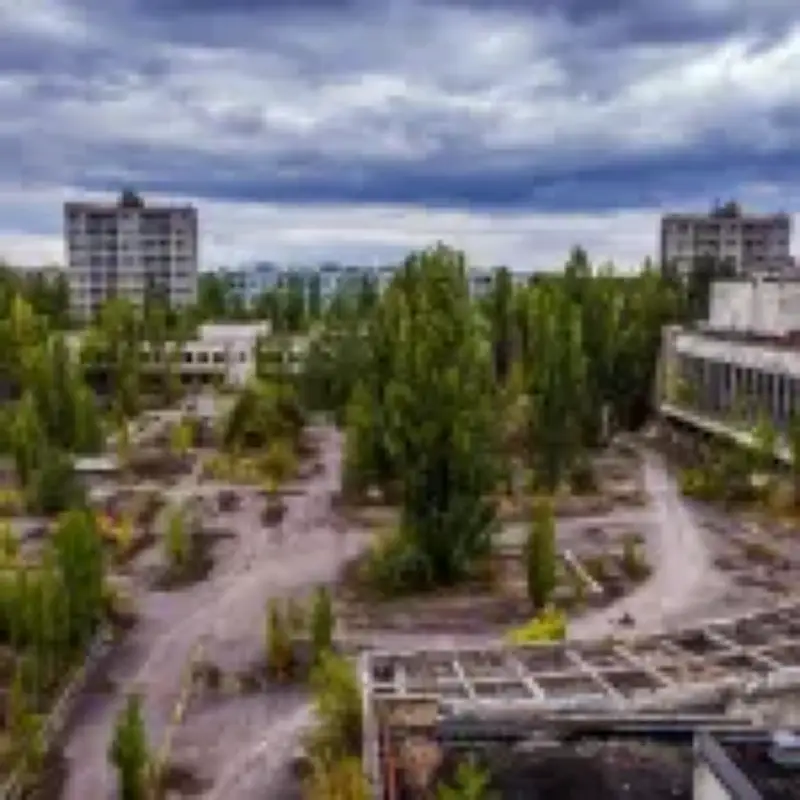
Dark tourism—visiting destinations historically associated with death, disaster, or the macabre—has grown in popularity, but its ethics remain hotly debated. Critics call it exploitative and potentially unsafe, while supporters argue it's simply a form of historical education. Experts in the field offer nuanced perspectives on where the line between remembrance and spectacle lies.
What Is Dark Tourism?
The term was coined in 1996 by academics J. John Lennon and Malcolm Foley to describe growing interest in examining the past. The trend gained mainstream attention in 2018 with the Netflix series Dark Tourist, hosted by journalist David Farrier, who visited a Japanese nuclear disaster site, an exorcism in Mexico, and a space station in a former Soviet republic.
Opinions on the practice have long been divided. Some see it as a way to honor history, while others question whether it crosses ethical lines.
Ethical Concerns and Expert Views
Political scientist Daniel Schatz, who studies dictatorships and political repression, tells Metro that while dark tourism can be ethical, it is 'never ethically neutral.' He emphasizes that the central question is whether a visit fosters genuine historical understanding or 'turns suffering and repression into spectacle.'
In authoritarian states like North Korea, tourism is tightly controlled, showing visitors a regime-approved version of reality. This raises concerns about the purpose and impact of such visits.
Albania's Approach to Difficult History
Donald Leka, founder of InAlb, a tour operator in Tirana, guides around 1,000 tourists annually through Albania and the Balkans, mostly from the UK. Nearly all visit at least one site from the country's communist past, such as Bunk'Art 1, a five-floor nuclear bunker, or Bunk'Art 2, a former Interior Ministry bunker now housing a museum of the Sigurimi secret police.
Leka tells Metro that his tours educate travelers about Albania's communist era, during which thousands were killed, imprisoned, or sent to internment camps. He stresses that the ethical line is not about visiting but about how visitors are guided. 'We brief our guides on survivor families, and we treat these as memorial sites, not attractions,' he explains. 'A good guide makes it history. A bad one makes it a photo stop.'
Dark Tourism or Just History?
Schatz is skeptical of labeling visits to sites like Auschwitz or former dictatorships as 'dark tourism' when they are undertaken for historical and educational reasons. He calls such visits 'an act of memory, civic education, and moral seriousness,' with the crucial issue being the purpose and whether victims are treated with dignity.
Leka agrees, saying, 'Nobody books Albania to tour the dark. They book it to understand the country, and you cannot understand Albania without its 45+ years of communism.'
Canadian traveler Alicia Recupero, who toured Albania with Leka's company, echoes this sentiment. She says she didn't fully grasp the impact of the dictatorship until walking through the underground corridors of the bunkers. Learning about Spaç, a notorious political prison where inmates endured forced labor, she reflected on how easily ordinary comments could be interpreted as criticism of the state, with devastating consequences. 'Inside that bunker, I realised how extraordinary those ordinary freedoms really are,' she says. For her, this was not dark tourism but history.
Safety and Economic Impact
Safety in dark tourism depends on the location and the nature of the visit. Regulated sites like Albania's bunkers are built for tourists, with staff and security protocols. In contrast, abandoned locations like Western Village near Tokyo pose risks such as collapsing roofs or limited emergency access. Disaster zones like Chornobyl or Fukushima carry environmental and radiation hazards, especially for those venturing into exclusion zones without proper guidance.
Economically, dark tourism can benefit local communities. Leka notes that tours stopping at Spaç bring money to a mountain village with no other attractions. Similarly, the Chornobyl Exclusion Zone saw an economic boom between 2017 and 2020, generating approximately £15.5 million, largely driven by the 2019 HBO miniseries Chernobyl, before the COVID-19 pandemic and the Russia-Ukraine war.
Ultimately, dark tourism remains a subjective matter, shaped by the destination, the traveler's perspective, and the tour operator's approach. Whether it is ethical may depend on how it is conducted and the intent behind the visit.