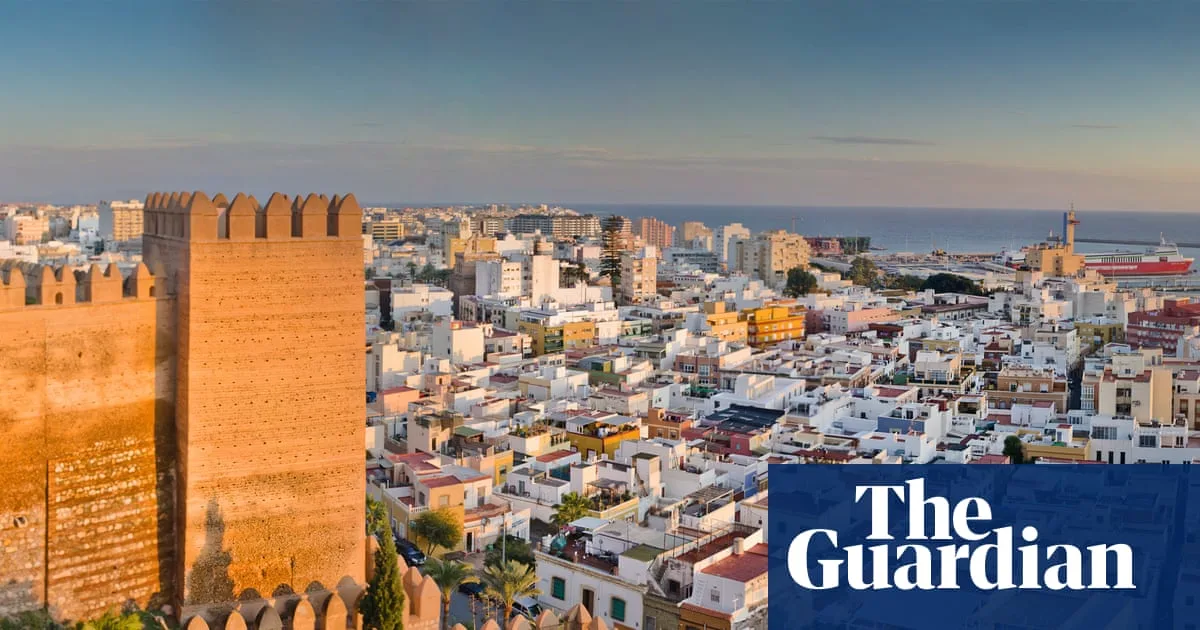
While Málaga grapples with overtourism down the coast, the working port city of Almería in southeastern Spain revels in its outsider status. Perched on the battlements of its 10th-century Alcazaba, visitors can take in panoramic views of flat roofs cascading to the sea, evoking the same sense of time travel that British author Gerald Brenan described in his 1920 travel classic South from Granada.
Almería, located in Europe’s only desert and closer to Morocco than Madrid, feels like a forgotten outpost. Unlike Málaga, which underwent a major transformation in the 1990s, Almería retains an unpretentious charm with ornate but crumbling townhouses, faded mid-century shopfronts, and a working waterfront where the smell of diesel and fish mingles with the sea air. Its docks serve primarily as a ferry terminal for Algeria and Morocco, giving nearby streets a North African feel.
The Alcazaba offers a tranquil alternative to Granada’s crowded Alhambra. Entry is free for European citizens, including Britons, and visitors can explore at leisure, taking in 360-degree views of arid mountains, the glittering sea, and the historic Arab quarter of La Chanca below. This neighbourhood, a jumble of cave homes and tiny houses, has inspired the avant-garde Movimiento Indaliano artistic movement.
For those willing to venture through a truck-park wasteland, bar 900 Millas serves sumptuous seafood from the adjacent fish market, popular with locals and fishers alike. The Hotel Catedral, a 19th-century palatial house on Plaza de la Catedral, offers serene accommodation with a rooftop bar overlooking the cathedral and the illuminated Alcazaba.
With a new high-speed rail service from Madrid due in 2027 and plans to develop the docks for luxury cruise ships, Almería’s status as Andalucía’s rough diamond may soon change. For now, it remains a living, working port city with a rugged charm that sets it apart from its more touristy neighbours.