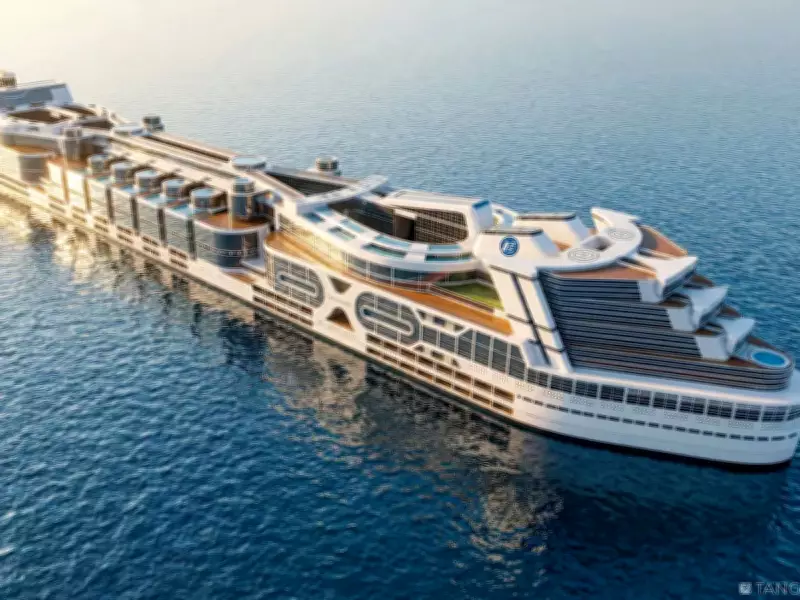
A new £12 billion megaproject, the Freedom Ship, is set to become the world's largest cruise ship, stretching a mile in length and accommodating up to 80,000 passengers and crew. This floating city will dwarf existing giants like Royal Caribbean's Star of the Seas and Icon of the Seas, which are each about a quarter-mile long and carry 5,600 passengers.
Unprecedented Scale and Design
According to Freedom Cruise Line International, the Freedom Ship will weigh over 2 million gross tons, be 800 feet wide, and rise 30 stories high. It will feature a concert hall, convention centre, water park, and a 15,000-capacity sports stadium. The vessel is designed to have no home port, instead circumnavigating the globe continuously, powered by an onboard nuclear reactor.
Libertarian Vision Revived
The concept originated in the 1990s with American engineer Norman Nixon, who envisioned a libertarian community operating outside any single nation's jurisdiction. After Nixon's death in 2012, the project stalled but was revived in March this year with a dedicated project manager, designer, and naval architect. CEO Roger Gooch stated that raising the £12bn budget is the key challenge, but expressed confidence in securing capital.

Floating City Amenities
The Freedom Ship will host around 50,000 permanent residents, 20,000 crew, and up to 10,000 visitors. Many facilities, including nightclubs and hotels, will be leased to independent businesses. The ship will feature a state-of-the-art hospital and medical research facilities, benefiting from its status outside regulatory reach. Designer Kevin Schopfer emphasised human-scale design with softened edges, walkways, green spaces, and a tram system. A football pitch will serve for sports and concerts, though Schopfer joked that Taylor Swift might be too big an act.
Engineering and Logistical Challenges
Sceptics highlight immense structural challenges: ocean waves impose enormous bending forces on a mile-long vessel, and no dry dock exists large enough for initial construction. Food supply and waste management for a population equivalent to St Albans (Hertfordshire) pose further hurdles. The cost has risen from Nixon's initial $6bn estimate to around $16bn (£12bn) today.
Despite these obstacles, Gooch remains optimistic: 'We want entrepreneurs to lease or buy space from us, just like they would in a land-based community.' The Freedom Ship aims to be a destination in itself, avoiding the backlash faced by mega-liners that flood ports with day-trippers.