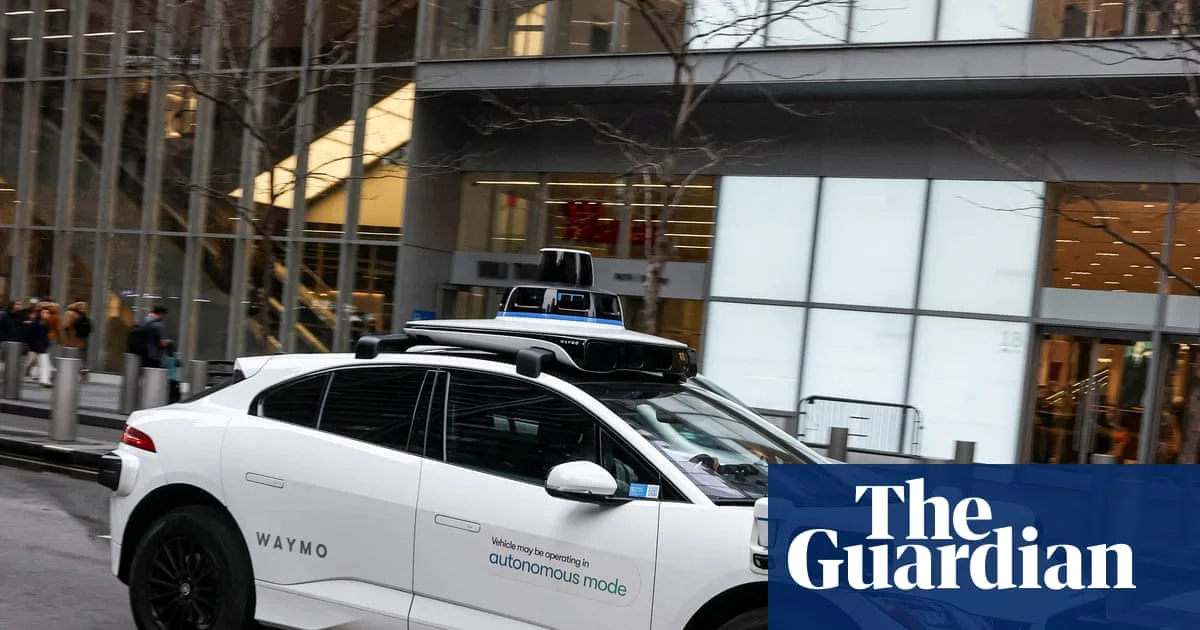
Waymo Secures $16bn Funding, Targets London Robotaxi Expansion
Waymo's $16bn Funding Fuels Global Robotaxi Growth

In a landmark development for the autonomous vehicle industry, Waymo has announced a colossal $16 billion funding round that values the Alphabet subsidiary at an impressive $126 billion. The investment, disclosed on Monday, marks a significant milestone as the company accelerates its global expansion plans, with London firmly in its sights for 2026.

Unprecedented Investment Fuels Expansion Ambitions

Waymo's co-chief executives, Tekedra Mawakana and Dmitri Dolgov, heralded the massive capital injection as a clear signal that large-scale autonomous mobility has transitioned from concept to commercial reality. In a joint blog post, they emphasised that this financial boost will enable the company to advance with "unprecedented velocity" while upholding its industry-leading safety standards.

The funding round was spearheaded by Dragoneer Investment Group, with substantial participation from Alphabet itself and prominent Silicon Valley venture capital firms including Andreessen Horowitz and Sequoia Capital. This robust backing underscores growing investor confidence in the viability and scalability of autonomous transportation technologies.

Wide Pickt banner — collaborative shopping lists app for Telegram, phone mockup with grocery list

Global Growth Strategy Takes Shape

Waymo's immediate focus is on rapidly expanding its robotaxi service across the United States and internationally throughout this year. Currently operational in ten US cities as of early 2026, the company aims to approximately double its footprint within twelve months, targeting around twenty metropolitan areas worldwide.

London features prominently in these expansion plans, alongside Tokyo, as Waymo seeks to establish its distinctive white Jaguar vehicles—equipped with sophisticated cameras and sensors—on streets beyond their familiar haunts in San Francisco and Los Angeles.

From Proof of Concept to Commercial Reality

The company's executives have declared that Waymo is no longer merely proving a technological concept but is actively scaling a commercial operation. Their confidence is bolstered by impressive growth metrics: last year, Waymo more than tripled its annual ride volume to 15 million journeys, and now provides over 400,000 weekly rides across six major US metropolitan areas where it operates.

"We have demonstrated that our technology is not just the most advanced manifestation of AI in the physical world, but a vital service that people have come to rely on in their daily lives," stated Dolgov and Mawakana, highlighting the transition from novelty to utility.

A Competitive Landscape Emerges

Waymo's expansion occurs against a backdrop of increasing competition in the autonomous vehicle sector. Rivals such as Uber are making significant strides, with the ride-sharing giant recently unveiling a Lucid robotaxi and planning to deploy a fleet in San Francisco later this year.

Meanwhile, China's Apollo Go service has demonstrated rapid growth over the past year, further validating the reliability of fully autonomous driving systems where responsibility shifts from human to machine. This global momentum suggests that relinquishing the steering wheel is becoming an increasingly tangible reality rather than a distant fantasy.

As regulatory inquiries continue—including a recent US investigation into an incident involving a Waymo vehicle and a child in California—the company's substantial new funding provides both the resources and the mandate to navigate these challenges while pursuing ambitious international growth.

Pickt after-article banner — collaborative shopping lists app with family illustration