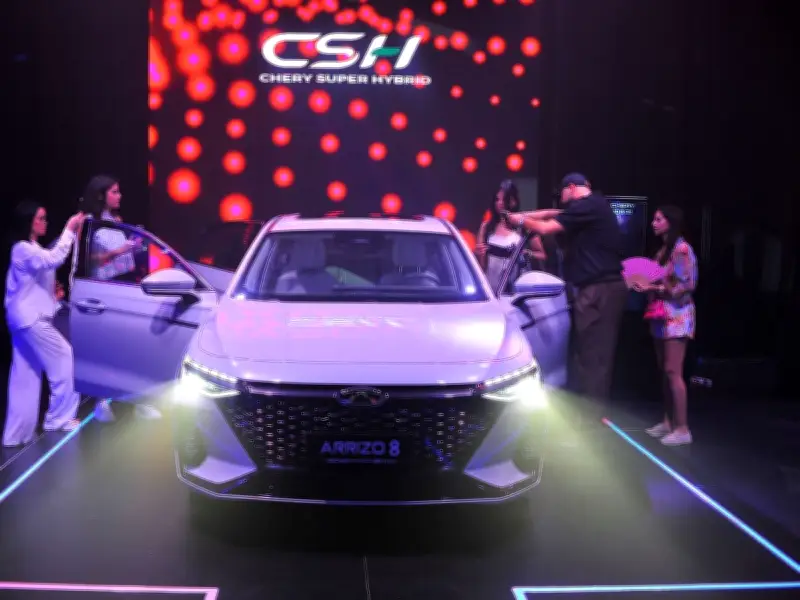
Hundreds of car showrooms across Britain are abandoning traditional European and US brands for Chinese challengers as the Iran war petrol crisis accelerates the shift to electric vehicles. Over the past two years, dealerships nationwide have been refitted to house Beijing-backed brands such as Jaecoo, XPENG, Chery, Changan, and Omoda.
Chinese Brands Dominate UK Sales
BYD, already the UK's best-selling EV brand, aims to become the nation's number one overall within five years, reporting 113% growth in 2026 compared to the previous year. MG, once a quintessentially British marque, is now a fully owned subsidiary of Shanghai-based SAIC Motors. The hybrid Jaecoo 7 is battling for the UK's best-selling car of 2026, currently in third place ahead of established names like the Vauxhall Corsa, Range Rover Sport, and Mini Cooper.
Last month was the best May for overall car sales in Britain since the pandemic, with EVs from China leading the charge. The Society of Motor Manufacturers and Traders (SMMT) reported that 27.3% of all new sales were electric, attributing the boom to "increasingly competitive offers" amid "economic and geopolitical uncertainty."
Showroom Conversions Accelerate
Major UK car retailers have set up at least 300 showrooms for Chinese EVs and hybrids over the past 24 months, mostly by converting existing sites from Western brands. Evans Halshaw rebranded at least five sites—including Ford locations in Rotherham and Bury—into BYD showrooms. London-based Ancaster Group repurposed its Hyundai forecourt in Welling to launch Omoda and Jaecoo. Vertu Motors converted some Ford premises, such as its Hartlepool branch, into dedicated BYD hubs. JCT600, a 78-year-old Yorkshire family business, cleared its Volkswagen Vans site at Priory Tec Park in Hessle to house Changan.
Steve Fowler, a motoring expert and World Car of the Year judge, told the Mirror: "These Chinese brands are looking after their dealers better than some of the established brands have been... they are looking after their dealers really well. And they're looking after their customers better because they’re incentivised to do so. A Chinese car has to be explained a little bit more, the consumer is a little bit more wary about them. You’ve got to try harder to sell them. And I think that’s what people are liking, the fact that the dealership is working harder to explain the cars to answer all the questions, which, frankly, the established legacy players are not doing, and they haven’t been doing for years."
Driver Experiences
Sandra Wilkinson, 61, from Bramhall, Cheshire, cares for her 88-year-old mother and 96-year-old ex-Mirror reporter father. She said her Jaecoo 7 4x4 hybrid helps them travel comfortably. "They've made it a hard car not to buy, and I think that European and North American car manufacturers have got a hell of a competitor on their hands," she explained. "I was looking for a car that I could transport two elderly parents comfortably, and that they could get in and out of very easily. It’s not a sports car, it doesn’t feel like it’s stuck to the road. But it's a very comfortable ride that is incredible value for money. It ticked every box." Her father Reginald added: "The car does the job... and I couldn't care less who makes it!"
Taxi driver Rob Dunkerley, 56, from Fleet, Hampshire, has used a Jaecoo model for six months after driving a Toyota Avensis. He was "very pleased with the car so far," noting only that "the boot isn’t as big as I’d like." Tu Pham, a BMW driver of 25 years, said his family had already moved to BYD and he was now considering an XPeng.
Strategic Shift and Tariff Advantage
China's car exports previously suffered from a poor reputation, failing crash tests and being the butt of jokes on Top Gear as recently as the early 2010s. However, Chinese manufacturers "leap frogged" Western competitors by focusing on EV development early. Donald Trump's war in Iran has sent petrol prices soaring, pushing sceptical drivers towards EVs.
Professor David Bailey from Birmingham Business School explained the "Brexit effect": the UK has significantly lower tariffs than the EU and the US, making it a "target" for Chinese manufacturers. "The US has got tariffs of more than 100% on Chinese EVs, which is keeping lots of them out. The European Union has various tariffs of up to about 45% for some Chinese brands... but the UK doesn't have that tariff. We have just a simple standard 10% tariff. So because of that Chinese brands are very much targeting the UK because it's wide open for them," he said.
He added that the rate of growth could raise questions about introducing tariffs, but "if you want people to get into EVs, then it's going to be cheap Chinese EVs that will do that much more quickly."
Future Prospects
Last month, Nissan announced plans to build Chery passenger vehicles at its Sunderland factory, securing 6,000 jobs and marking the first time a Chinese manufacturer would make cars in Britain. Professor Bailey noted: "You've got this situation where, because the European industry including the UK is under so much pressure, they've got a lot of spare capacity. And so companies are looking to bring in Chinese players to build in that spare capacity—including Stellantis with Leapmotor, Nissan with Chery. We may see further moves. JLR has got a lot of spare capacity and in fact with Chery they've got a kind of joint venture to make the Freelander model, which I think is eventually becoming a separate brand."