I’ve worn Ray-Ban Meta’s smart glasses for weeks – here’s my verdict. The latest Meta eyewear can record in 3K and has a much longer battery life.
The world wasn’t ready for smart glasses in 2014, or at least, it wasn’t prepared for Google Glass. The dorky-looking piece of eyewear was so unattractive, so creepy to anyone who cared about privacy, and so utterly baffling to everyday consumers that no one was surprised to see it blink out of existence within a year. But the world is certainly ready for them now.
In 2023, Meta launched the Ray-Ban Meta smart glasses, officially bringing the wearable back from the dead. Within its first year, it had sold more than a million units. Late last year, the company unveiled a second-generation pair of Ray-Ban Meta smart glasses, which promised longer battery life, sharper video capture and a lighter design. And they’re only getting more popular. Together, Meta and eyewear giant EssilorLuxottica sold more than 7 million smart glasses in 2025 alone, transforming the once-maligned category into Meta’s bestselling product.

I've been using the original Ray-Ban Meta smart glasses since they launched in 2023, so I was eager to see how they’ve improved. After spending weeks wearing the second-generation model, using them for everything from taking calls and listening to podcasts to capturing videos and testing Meta AI, has Meta made the ultimate pair of smart glasses?
Design
Meta's Ray-Ban smart glasses are some of the most customisable tech I'd ever reviewed. But it was arguably to their detriment. The Ray-Ban Remix platform presented me with such a dizzying number of options, from frame styles and colours to lens types and finishes, that it ended up overwhelming me rather than assisting. Altogether, there were around 150 different combinations to choose from.
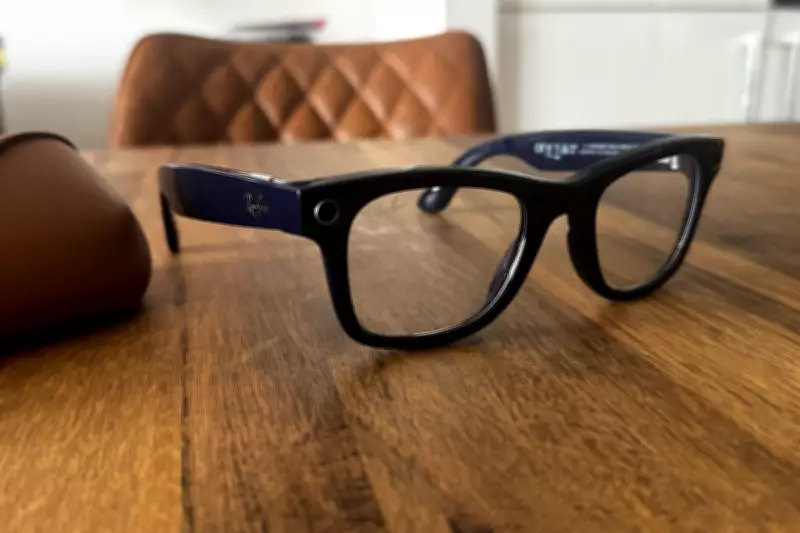
While the second-generation pair are still super customisable, personalisation has been pared back. Meta has ditched the sprawling Design Lab in favour of a curated selection of pre-configured frame-and-lens combinations. Like the previous model, you can choose from three different styles – wayfarer, skyler and headliner. At the time of writing, the skyler comes in eight configurations, while the wayfarer and headliner are available in seven each. This can change whenever Meta likes – it’s always adding new styles, frame colours and lens colours. Interestingly, transition lenses make up the bulk of the 22 configurations available, with frame styles now only getting just one clear-lens option, one tinted sunglasses variant and one polarised configuration. That differs to the first-generation pair, which leaned sunglasses-heavy. You can get everything from understated matte black frames with clear lenses to more adventurous transparent peach, cosmic blue and violet frames partnered with colour-shifting transition lenses. I went with the classic wayfarers with the shiny blue cosmic frame and clear-to-sapphire transition lenses. What I would say is that while the glasses with the transition lenses are the most expensive out of the various configurations, £459 versus the £379 only-clear or only-tinted variants, I think they’re worth it.

My biggest gripe with the first-generation Ray-Ban Meta smart glasses was that I'd chosen a pair with permanently tinted lenses. Unfortunately, I was testing them in September, when the British summer had long since disappeared, leaving little more than grey skies and rain. Hardly sunglasses weather. As a result, I found myself rarely wearing them, especially indoors. Getting the transition lenses has meant I’ve been able to wear them all day – they tint fast when I go out and clear up almost instantly when I go inside. Don’t worry, they’re not like the dorky transitions from yesteryear that took absolutely ages to clear up. They look like any pair of classic wayfarers, with an LED privacy indicator and an ultra-wide 12MP camera in the corner being the only real clues that these are anything more than ordinary glasses. Even the touchpad on the side is completely invisible, and the capture button on the right arm is so small that no one will notice it unless they're looking very closely. Despite managing to squish in a camera, five microphones and a pair of speakers, they’re still super discreet. There's a hidden power switch inside the left arm, and you can customise the long press on the touch pad.
Meta has also responded to some of the criticism levelled at its earlier smart glasses by making the recording indicator on the right arm brighter and more prominent. While it’s slightly more visible, I still think it’s easy to miss when out in public, especially in bright sunlight. It still often looks as though the corner of the glasses have caught a reflection, or it’s a bit of glare. It’s one of the reasons why Google Glass failed. People didn’t like that you could record covertly.
The wayfarer is available in two sizes, standard and large, and they’re also slightly lighter than the previous model with a tighter hinge. Other than that, they look practically the same. While I’ve found them comfortable to wear, as someone with a flat nose bridge, the standard size pair still slip down my nose, so I still have to put on little sockies on the arms so they grip my head better. In April, Meta launched the Ray-Ban Meta Optics range. These glasses come in a blayzer and scriber style. While they’re specifically built for prescription wearers, they come with adjustable nose pads, so they might be a better fit for those with high or low nose bridges.
The leather charging case is virtually identical to the one that shipped with the first-generation glasses. Slimline and understated, it looks like any ordinary Ray-Ban glasses case, with the clasp doubling as a battery indicator and the glasses clicking satisfyingly into place when charging. In fact, the two are so similar that I couldn't tell them apart without checking the serial numbers in the Meta AI app. That's important because, despite their near-identical appearance, the new case stores up to 48 hours of battery life, whereas you only get 32 hours on the original model. I do wish Meta had changed the colour of the case so it was more identifiable.
The glasses themselves also last longer, with up to eight hours on a single charge, which is double the four hours on the original pair. I found myself frequently putting the glasses back into the case when I was on holiday to recharge the first-generation model, but I haven’t had to do that with the newest pair. They easily last a whole day, and top up nicely when I do put them away for a bit. They charge to 50 per cent in 20 minutes, and take 75 minutes to charge to full from zero. The case itself takes around 3.5 hours to recharge to full.
Camera
The biggest benefit of having a pair of these isn’t just the onboard AI (which I’ll go into below), but the fact you have a camera on your face. While the glasses still use a 12MP ultra-wide camera, the TikTok generation will be pleased to hear that you can now take sharper videos than ever before. Meta has upgraded video capture from 1080p at 60fps to 3K at 30fps. With 3K recording turned on, I noticed I that got much clearer footage with better colour reproduction. It’s much more vivid and great for socials.
But as mentioned, you have to turn the feature on, so don’t assume you'll get the best quality from the moment you put the glasses on. Recording in both formats is limited to one minute or three minutes. Don’t expect iPhone 17 Pro levels of image quality, either. Photos are perfectly good for sharing on socials or for quickly sending to friends, but that’s not really the point. What I adore about the Meta glasses is that I am able to capture moments exactly as I see them, without having to reach for my phone, especially when I’ve got both my hands full.
I've been wearing Ray-Ban Meta smart glasses since the original model launched in 2023 and they fundamentally change how I take photos. It’s frankly liberating not having to take out your phone to frame a shot. You can just press a button on the side of your glasses or tell Meta to take the picture for you. I found myself taking lots more spontaneous photos whilst on a trip to Tokyo or grappling with shopping bags in both my hands.
The issues about framing are still there, however. Because you can't see exactly what the camera sees, you still have to learn to frame the right way or your pictures or footage are offset to the side. Photos are always captured in the social-first vertical orientation, so there’s no way to capture something horizontally. The lens also uses a fixed focus, so it doesn’t adjust. I think that’s broadly fine, and overall I like the pictures I get from the Meta glasses thanks to how it processes them.
As mentioned earlier, it’s video capture where the smart glasses come to life. While the jump to 3K is nice, it's the stabilisation that works wonderfully. It’s surprising how smooth footage is for something recorded from your face. It’s a lot smoother than something I’ve recorded on my phone, as well as more immersive. One neat feature I like about the Meta smart glasses is the spatial audio – all sound is recorded in a 3D space. If music or chatter is coming from your left, it will be placed in your ear towards the left and behind you when you replay the clip at a later date, while wearing the glasses or a pair of headphones with spatial audio support. It’s really very cool. I thought my sister was talking to me when I replayed a clip, but when I turned to my right, she was just scrolling on her phone.
Moving photos and videos onto your phone is still wonderfully simple. Thanks to built-in Wi-Fi, media can automatically transfer to the Meta AI app whenever the glasses are charging and connected to a known network. The glasses also pack 32GB of storage, enough for hundreds of photos and videos before you'll need to start clearing space.
I've also ended up using the live video calling feature a lot. The glasses let you share your perspective during WhatsApp and Messenger video calls, so friends and family can see exactly what you're looking at. It's really quite intimate. When I was wandering around Japan, I could show my family the cute little shops in Kyoto and all the matcha gift sets. It’s way more natural to show someone your perspective than having to hold up your phone. Interestingly, the glasses also stream better quality video than my iPhone when signal strength is poor.
Meta AI
Besides the camera, it’s the voice assistant and Meta AI smarts that are the real selling point. When I reviewed the original Ray-Ban Meta smart glasses in 2023, the AI assistant was little more than a glorified voice assistant. It could tell me the battery life, take a photo or play a song, but ask it anything remotely interesting and I'd usually be met with some variation of: “I can't do that on your glasses”. Three years later, and Meta AI is the main reason why you should buy them. Like before, you can still use voice commands to send messages, make calls, control music playback and ask general questions. But the gamechanging bits come from the glasses's ability to understand what you're looking at. Ask Meta AI about a landmark, a menu, a plant or a product on a shop shelf and it can use the camera to analyse what it sees and provide information in real time.
I’ve used it a heck of a lot while travelling. As someone allergic to fish and nuts, I could ask Meta to choose me something to eat from a Japanese-language menu that wouldn’t kill me; I could ask for more information about buildings I was visiting in Rome; I could ask for suggestions on the best bakery item to get from the display. It would tell me within seconds, right in my ear through the speakers in the arms. It’s been fantastic.
There’s also a live translation feature, with the glasses able to translate conversations spoken in English, French, Italian, Spanish, German and Brazilian Portuguese. It reads responses aloud through the speakers. I actually found Meta’s real-time live translation feature better than Apple’s implementation on the AirPods Pro. On a trip to Spain, the translation from Spanish to English was way more accurate and faster than the comparative translation on my AirPods. It also displays the text in the Meta AI app, but hearing the translation in my ears has been sufficient enough.
There are some good accessibility features too. Meta has partnered with Be My Eyes, letting visually impaired users connect with volunteers who can help describe their surroundings. Plus with Meta AI's ability to identify objects, read signs and describe scenes, it's easy to see why these glasses have become popular among blind and low-vision users.
That's not to say Meta AI is perfect. Like every AI assistant, it does get things wrong. I found it was generally reliable when identifying landmarks, products and everyday objects, but it can still confidently provide incorrect information.
It's entirely unnecessary, but I also really like the selection of Meta AI voices you can choose from. There’s a huge range of AI voices, but you can also pick celeb voices, including Awkwafina, Judi Dench, John Cena, Kristen Bell and Keegan-Michael Key. Having Dame Judi Dench be your travel companion is way more fun than just another AI voice.
The frustrating thing is the rollout of Meta AI features is still incredibly slow when it comes to the UK. The UK still gets Meta AI features months (if not years) after the US and Canada. We still haven’t got Live AI, which lets you have ongoing conversations with Meta, despite being announced more than two years ago. And we don’t have the memories feature, which was announced more than a year ago. Conversation Focus also isn’t yet available in the UK. It uses the microphones to amplify the person you're speaking to. If you turn your head away, their voice dampens. I’ve tried it whilst at CES in the US, and it’s a really cool feature, especially useful in noisy environments. It’s just a shame it’s not available yet over here.
Sound and mic quality
Personally, I think the best thing about the Meta smart glasses is that you don’t need to wear headphones anymore. But do they sound good enough to do that? I was actually quite impressed with the audio, and I review a lot of headphones at The Independent. Although the sound is a little bit grating and tinny when you pump up the volume to the highest level, for smart glasses with open-ear audio, they’re the best I’ve tried. You’re still going to want to pick up a pair of actual headphones if you want high-fidelity tunes during your commute, though. The audio feels very heady, with a tiny soundstage, but the vocals were surprisingly clear on my favourite tracks.
You can switch between tracks by tapping on the side of the frames, as well as swiping forwards and backwards to increase and decrease the volume. In terms of sound leakage, which can be a pretty big issue with open-ear headphones, there definitely is some, but with my music on at a moderate to low level, no one could really hear what I was listening to. The big thing some of you might miss is active noise cancellation. Because you haven’t got anything covering your ears, open-ear headphones physically don’t have ANC. It’s impossible, and that’s frustrating. On the screechy Jubilee line, I had to pump up the volume all the way to drown out the sound of the wheels, which is when people could hear my music. Cue disapproving stares. Voices and vocals seem to be the types of audio that escape the glasses most easily. Friends could make out what was being said whenever I was listening to a podcast or a vocalist was singing.
Call quality is fantastic, however. The five microphones pick up my voice better than any other headphones I’ve tested, and that’s because there are two microphones in each arm and one in the nose pad. Listening to myself back, I sound completely centralised within videos, like I’ve been speaking into a microphone in a recording studio. I don’t think they can replace a good pair of earbuds, but they have replaced the need to carry them everywhere.
Privacy
The elephant in the room is privacy – the Meta smart glasses have received the most pushback over how people have been using them. The brighter privacy indicator is a step in the right direction, but I still don't think it's obvious enough. Most people simply assume I'm wearing ordinary glasses, and unless they're specifically looking for the camera, they'll probably never notice it. While I’m a lot more comfortable wearing them in public now that so many people have them, the privacy debate hasn't gone away. If you're uncomfortable with the idea of people wearing cameras on their face, these glasses probably won't change your mind.
Should you buy the Ray-Ban Meta gen 2 smart glasses?
Meta has fixed almost every major complaint I had about its original smart glasses. The battery life is a lot better, the 3K video quality makes footage look sharper and Meta AI has levelled up from being a glorified voice assistant into something I can actually use. The Ray-Ban Meta gen 2 smart glasses fit really seamlessly into my day. I’ve translated menus in Spain, identified landmarks in Rome, shared my perspective with family during a video call and just listened to podcasts on the tube. They’re just a really versatile bit of kit.
The only annoying thing? The UK continues to get new AI features frustratingly late. I still think the privacy concerns remain valid as well. But none of those issues stop these from being the best smart glasses I've tested.
How I tested the Ray-Ban Meta gen 2 smart glasses
I've been using the original Ray-Ban Meta smart glasses since they launched in 2023 and have worn the second-generation model for several weeks. I used them as my primary pair of smart glasses while travelling, exercising and working. I’ve taken hundreds of photos and videos, made calls, listened to podcasts and music, used live translation, tested Meta AI features and shared my perspective through WhatsApp video calls. I compared them directly against the first-generation Ray-Ban Meta glasses, paying close attention to battery life, camera quality, comfort, audio performance and AI features.