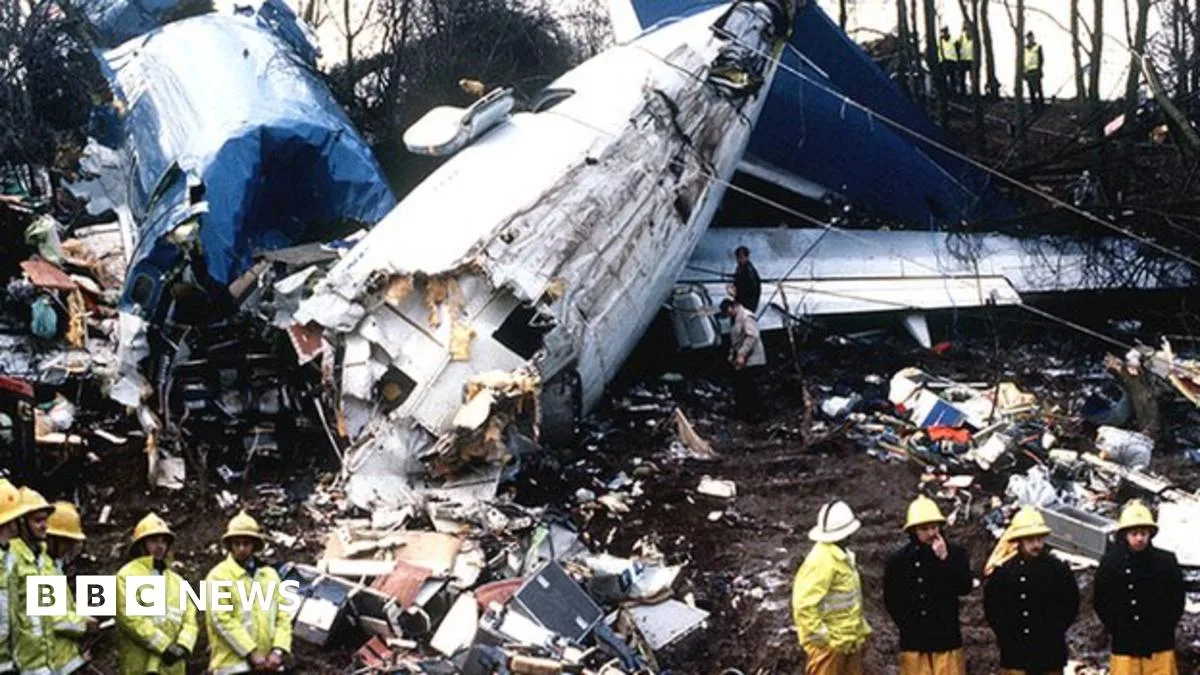
Kegworth Air Disaster Survivor Recalls 'Definitely Going to Crash' Moment
An amputee survivor of one of Britain's most devastating air tragedies has vividly recounted the terrifying instant she realised the aircraft was doomed, just before it crashed, claiming 47 lives. The British Midland Boeing 737, en route from London Heathrow to Belfast, encountered severe engine trouble and ultimately smashed into an M1 motorway embankment near Kegworth, Leicestershire, on the night of January 8, 1989.
Alice O'Hagan, a mother-of-five from County Antrim, was among the passengers trapped between shattered seats upon impact. Travelling with her husband Eamon, she sustained such catastrophic leg injuries that her foot required amputation above the ankle. Her candid testimony features in a new documentary, 'Kegworth: Flight to Disaster', airing on BBC Two next Thursday, which delves into the harrowing scenes before and after the crash.
The Fatal Flight and Survivor's Ordeal
In the programme, Mrs O'Hagan describes sitting in window seat 2F, with her husband beside her in 2E, as the plane began shuddering violently. 'You think, my God, I'm up here, there's no getting off,' she recalls. 'Eamon took my hand and said "We'll be fine, darling, nothing will happen" - which was a big lie.' The noise ceased, plunging the cabin into an eerie silence as the aircraft descended without engines. 'I was looking out and then I could see the lights and I knew then that we were definitely going to crash,' she adds.
Following the impact, Mrs O'Hagan found herself pinned, with her feet severely trapped. 'I remember pushing the seat in front and my ankles started sliding out and I could see that they were pretty messed up,' she explains. Her husband attempted to assist by tearing his shirt to tie off her ankles, but his own broken arm prevented him. Medical professionals later described her feet as 'like a bag of broken crisps', with severed ankle bones, a smashed heel, and all toes fractured.
Despite multiple surgeries, the pain remained unbearable. 'My right leg, we couldn't get it into a position that it was easier to walk on and the pain levels were very high, so they decided I'd be better off [being] an amputee,' Mrs O'Hagan reveals. The crash miraculously avoided vehicles on the M1, sparing road users, but resulted in 47 fatalities and 74 injuries among those on board.
Rescue Efforts and Chaotic Aftermath
The documentary also features accounts from rescuers who rushed to the scene. Barrie Brigham, travelling on the M1 with RNLI colleagues, initially mistook aviation fuel for water flooding the embankment. 'The whole embankment was like a flood. I turned round to Rob and I said "where the hell's all this water coming from?" And he said: "It isn't water, can't you smell it? It's aviation fuel",' he recounts.
Ambulance worker Pat Withers, among the first responders, describes the surreal quietness at the crash site. 'It was so quiet, there was nobody screaming and shouting - it was eerily quiet. There was no hysteria, and that threw me. You just started doing your job,' he says. Similarly, Jeremy Noon of Leicestershire Fire and Rescue Service notes the strange calm inside the wreckage, with passengers not crying or making noise.
Investigation Findings and Safety Reforms
The disaster unfolded after Flight BD092 developed issues with one engine mid-flight, leading pilots Captain Kevin Hunt and co-pilot David McClelland to mistakenly shut down the functioning right-hand engine instead of the faulty left one. An Air Accidents Investigation Branch report highlighted that passengers and cabin crew failed to alert the cockpit to this error, partly due to assumptions that they could not contribute to pilot decisions.
In response, the aviation industry implemented significant safety improvements. Cockpit Resource Management training was introduced globally, emphasising better communication between pilots and empowering cabin crew to challenge flight crew when necessary. Additionally, Professor Angus Wallace developed an enhanced brace position after studying the crash, now standard in UK airlines to prevent injuries like those suffered by Mrs O'Hagan.
The pilots, though surviving, were dismissed by British Midland for hasty and ill-considered actions, compounded by inadequate training on updated cockpit instruments. Despite this, some Kegworth residents commended their efforts in steering the plane away from the village.
The documentary, which initially aired on BBC One Northern Ireland on January 8, is set for its national debut on BBC Two on April 2 at 9pm, offering a poignant reflection on a tragedy that reshaped aviation safety protocols.