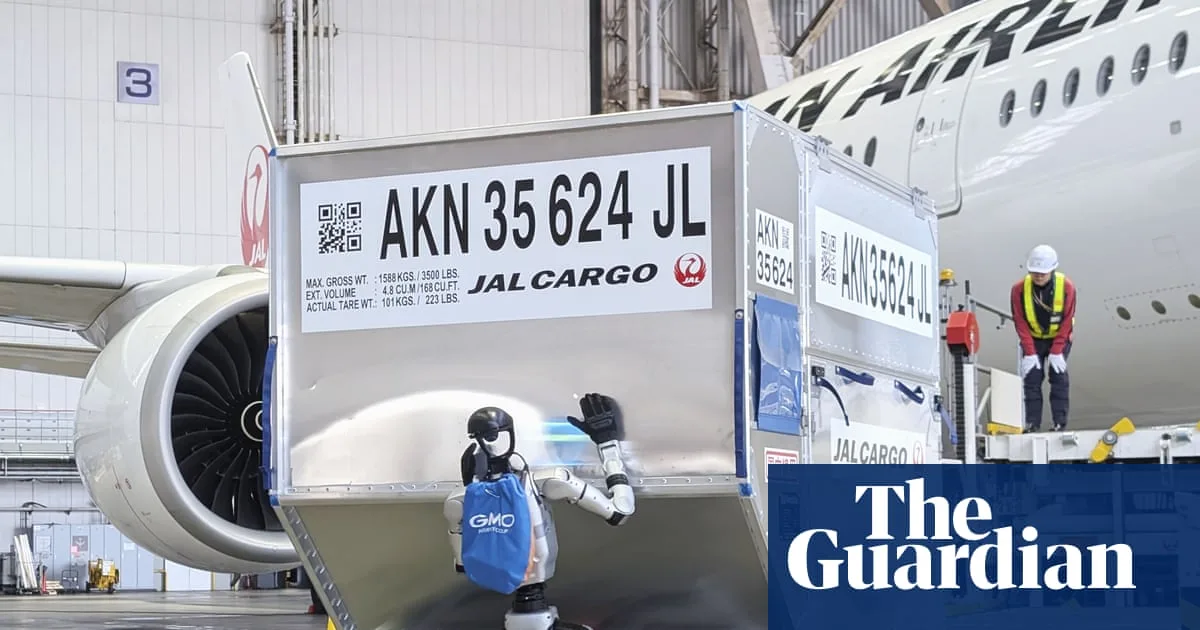
Japan Airlines is set to trial humanoid robots as baggage handlers at Tokyo's Haneda airport from the beginning of May, aiming to alleviate chronic labour shortages exacerbated by a surge in inbound tourism. The Chinese-made robots, built by Hangzhou-based Unitree, stand 130cm tall and can operate continuously for two to three hours before needing recharging.
The trial, conducted in partnership with Japan Airlines GMO Internet Group, will see the robots move luggage and cargo on the tarmac. Haneda airport handles more than 60 million passengers annually. The experiment is scheduled to run until 2028, with the possibility of permanent deployment if successful.
Yoshiteru Suzuki, president of JAL Ground Service, stated that using robots for physically demanding work would “inevitably reduce the burden on workers and provide significant benefits to employees”. However, he emphasised that tasks such as safety management would remain with human staff.
Japan is grappling with a record 42.7 million foreign visitors last year and a declining, ageing population. The country is forecast to need over 6.5 million foreign workers by 2040 to meet growth targets, though there is political pressure to curb immigration. Tomohiro Uchida, president of GMO AI and Robotics, noted that despite apparent automation, back-end airport operations still rely heavily on human labour and face serious shortages.
The robots, initially tested for luggage handling, may later be deployed for other duties such as cleaning aircraft cabins.