The historic market town of Stanhope in County Durham is home to a fossil tree dating back 320 million years, along with giant stepping stones, a heritage railway line, and a former castle now used as holiday lets.
The Stanhope Fossil Tree
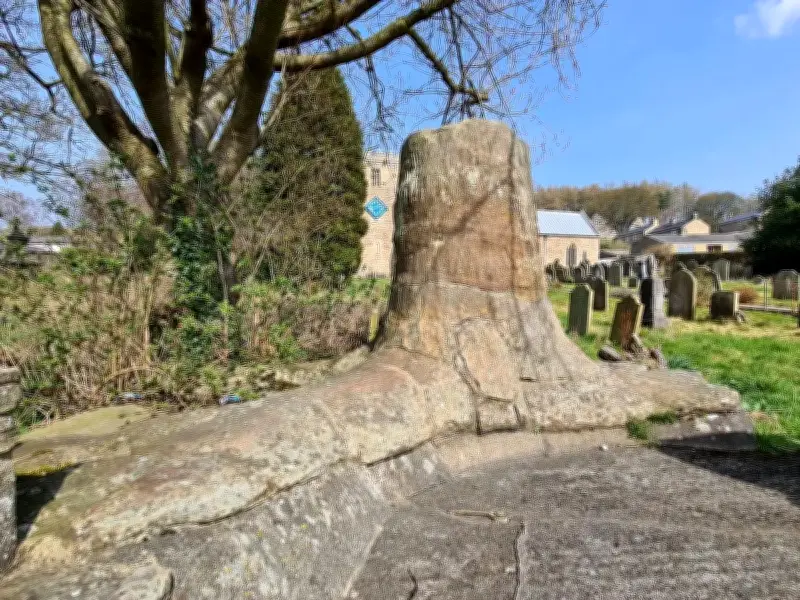
Embedded in a gap in the wall of the old Church of St Thomas' yard, the fossil tree offers a glimpse into ancient life. The site was once a tropical rainforest, and the tree remains as a reminder of that distant era.
Dating from the Carboniferous Period, the Stanhope fossil tree predates the UK as it exists today. When the tree died and was buried, sand from a nearby river filled the space left by the rotting wood and eventually hardened into sandstone.
Discovery and Relocation
The tree was found in a sandstone quarry at Edmundbyers Cross, north of Stanhope, in 1915. A similar fossil tree had been discovered in 1914 and taken to the Hancock Museum in Newcastle. In the early 1960s, the Stanhope tree was brought to the town in large pieces and reassembled in the churchyard of St. Thomas' Church in Stanhope Market Place.
Today, the sandstone forms a rare, perfect cast of the original tree, with impressions of the bark still visible on the trunk.
Heritage Railway and Stepping Stones
Stanhope also hosts the Weardale Railway, an 18-mile heritage line running from a connection with the main rail network at Bishop Auckland to Eastgate in Weardale, an Area of Outstanding Natural Beauty. A 16-mile section between Bishop Auckland and Stanhope has been restored for passenger and freight use.
For autumn walkers, the famous giant stepping stones carry visitors across the River Wear.
Historic Castle and Local Art
The former 'castle' has been converted into apartments. The 18th-century Grade II* listed building is believed to stand on the site of a 13th-14th century castle, though no visible remains of the earlier structure exist. The current building was constructed in 1798 and now houses holiday lets.
Stanhope is also home to Alex Clark Lime Tree Gallery, where the North East-born artist draws inspiration from the County Durham and Northumbrian countryside.