India Pursues $200 Billion Data Centre Investment to Bolster AI Hub Aspirations
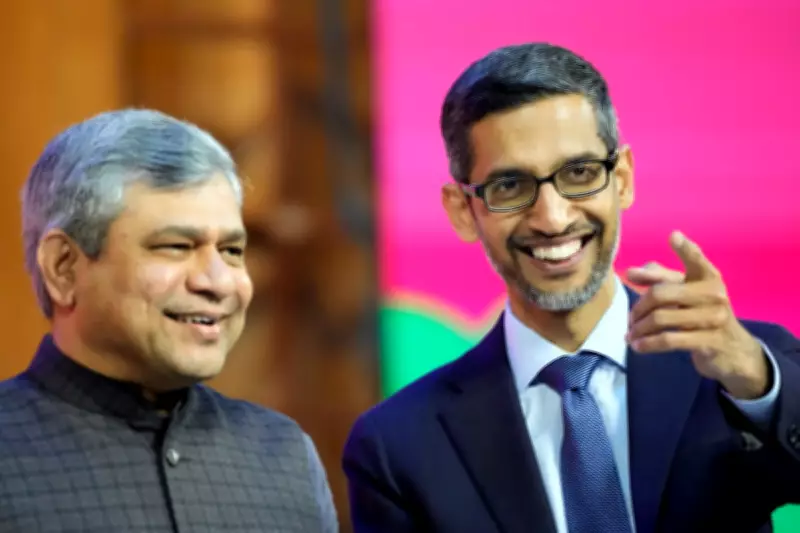
India is actively seeking to secure up to $200 billion in investments for data centres over the coming years, as it intensifies efforts to establish itself as a global hub for artificial intelligence. This ambitious initiative was confirmed by the country's Minister for Electronics and Information Technology, Ashwini Vaishnaw, during a recent statement. The substantial financial influx highlights the strategic importance of India as a critical technology and talent base for major tech corporations competing in the worldwide race for AI dominance.
Global Tech Giants Commit Billions to Indian AI Infrastructure
The investment drive coincides with a series of high-profile commitments from leading technology firms. In October, Google unveiled a $15 billion investment plan spanning five years to establish its inaugural artificial intelligence hub within India. Microsoft followed suit two months later, announcing its largest-ever Asian investment of $17.5 billion to enhance India's cloud and AI infrastructure over a four-year period. Additionally, Amazon has pledged $35 billion by 2030 to expand its operations in the country, with a specific focus on AI-driven digitisation projects.
These cumulative investments form part of the broader $200 billion pipeline that New Delhi anticipates will materialise, providing high-value infrastructure and foreign capital to accelerate India's digital transformation objectives. Minister Vaishnaw emphasised that India's approach centres on ensuring artificial intelligence delivers measurable, scalable impacts rather than remaining an exclusive technology accessible only to elites.

Policy Incentives and Infrastructure Development Underpin Strategy
To attract global capital and provide policy certainty, the Indian government has implemented a long-term tax holiday for data centres. Vaishnaw outlined that a central pillar of India's AI strategy involves robust infrastructure development, including a recently operationalised shared computing facility equipped with over 38,000 graphics processing units (GPUs). This facility enables startups, researchers, and public institutions to access high-end computing resources without incurring prohibitive upfront costs, promoting wider accessibility.
Alongside this infrastructure push, India is supporting the creation of sovereign foundational AI models trained on Indian languages and local contexts. Some of these models reportedly meet global benchmarks and, in certain tasks, rival widely used large language models. Vaishnaw articulated a vision for India to become a major provider of AI services in the near future, describing a strategy that is "self-reliant yet globally integrated" across applications, models, chips, infrastructure, and energy sectors.
Balancing Innovation with Safeguards in AI Expansion
As artificial intelligence permeates sensitive sectors such as governance, healthcare, and finance, balancing innovation with appropriate safeguards presents a significant challenge. Vaishnaw detailed a fourfold strategy to address these concerns, encompassing implementable global frameworks, trusted AI infrastructure, regulation of harmful misinformation, and enhanced human and technical capacities to mitigate adverse impacts.
He asserted that the future of AI should be inclusive, distributed, and development-focused, positioning India not merely as a "rule maker or rule taker" but as an active participant in shaping practical, workable global norms. The minister also highlighted India's AI Mission program, which emphasises sector-specific solutions through public-private partnerships, and efforts to reskill the workforce amid global apprehensions about AI disrupting white-collar and technology jobs.
Widespread 5G connectivity across the nation, coupled with a young, tech-savvy population, is expected to facilitate faster AI adoption. India is scaling AI education through universities, skilling programs, and online platforms to cultivate a substantial AI-ready talent pool, reinforcing its pitch as a trusted AI partner for Global South nations seeking open, affordable, and development-oriented solutions.