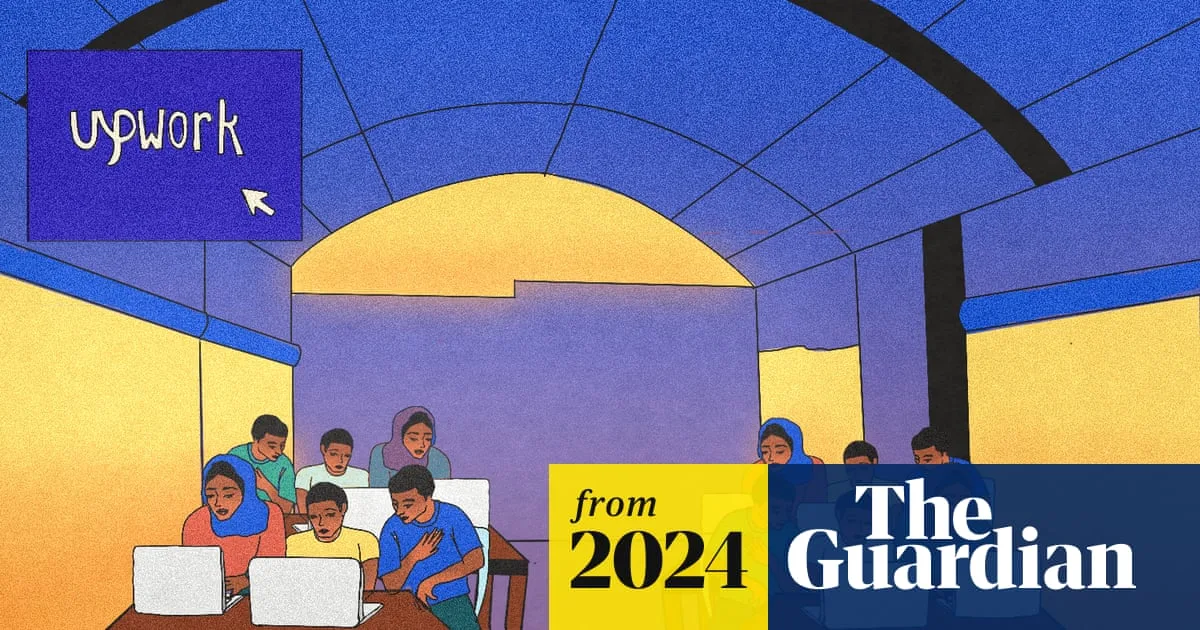
With poor internet and electricity, Palestinians in Gaza are flocking to co-working spaces and finding hope through freelancing, despite Israel’s ongoing attacks. Farida Algoul, an English teacher by training, splits her time between teaching for free in a tent and working as a translator in a makeshift co-working space in Deir al-Balah. She spends six hours a day completing assignments via Upwork, earning $200 a month, though fees reduce her take-home pay significantly.
Algoul is one of many who have turned to online freelancing as economic opportunities have dwindled. Israel’s 17-year blockade and the bombardment since October 2023 have rendered jobs nearly nonexistent, according to the International Labor Organization. The UN estimates at least 12,000 workers in Gaza now rely on freelance work for income.
However, freelancers face immense challenges. Airstrikes have decimated infrastructure, making reliable internet and electricity scarce. When internet is available, it is slow or unstable. Workers also risk their safety travelling to co-working spaces or ad-hoc hotspots. Algoul, who has lost 300 family members, said: ‘Workers in Gaza live under the constant fear of airstrikes. This situation is just in Gaza.’
Waleed Iky, a marketing entrepreneur, often avoids telling clients he lives in Gaza, fearing it may be seen as a liability. He graduated from the Islamic University of Gaza just before the war and spent months evacuating. Despite disruptions, he now works from Hope Hub, a co-working initiative that started in a tent in Rafah. Iky currently has two clients and strives to ensure his location does not affect his work.