Electric Vehicle Adventure Exposes Major Charging Disparity
Motoring writer Jack Evans recently embarked on an ambitious 800-mile road trip from the United Kingdom through France and Germany, ultimately arriving in Austria's picturesque Zell am See. The journey served as a comprehensive real-world test of electric vehicle capabilities on long-distance travel, challenging persistent criticisms about charging limitations and range anxiety.
The Vehicle and Preparation
For this continental expedition, Evans selected Polestar's newly released 4 model, specifically the dual-motor variant equipped with winter-ready tyres essential for the anticipated snowy conditions. The vehicle boasts an advertised range of 367 miles and supports maximum charging rates of 200kW, theoretically enabling a 10-80% charge in approximately thirty minutes when connected to compatible rapid chargers.
However, initial testing revealed a discrepancy: when fully charged before departure, the car displayed only 238 miles of range at 100% capacity, falling notably short of the manufacturer's projection. Despite this unexpected shortfall, the adventure proceeded as planned from a hotel near Maidstone, with multiple Polestar vehicles forming a convoy destined for the Channel Tunnel.

European Charging Experience
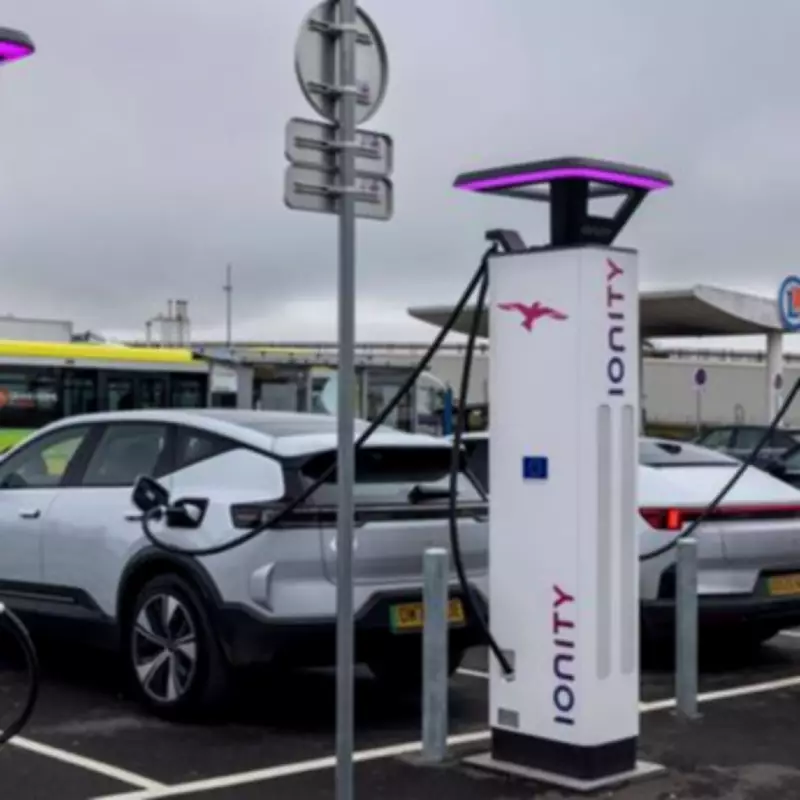
The journey's first charging stop occurred in northern France at a supermarket car park featuring an impressive array of ultra-rapid IONITY terminals. This experience proved remarkably straightforward and efficient, with the Polestar 4 receiving 135kW of power while the driver attended to personal needs. Within the time required for a restroom visit and acquiring refreshments, the vehicle's battery climbed from 10% to 80% capacity.
The most striking revelation emerged in charging costs: French stations charged approximately 54 cents per kilowatt-hour, while comparable rapid chargers in Britain typically cost around 80 pence per kilowatt-hour or potentially more. This substantial price difference represents a significant financial advantage for European EV drivers undertaking long journeys.
Infrastructure and Practical Realities
Throughout the continental traverse, charging infrastructure generally performed flawlessly. The route included stops at modern, well-maintained Fastned stations requiring merely twenty-minute top-ups to reach subsequent destinations. Most hotels visited offered overnight charging facilities, eliminating range anxiety for morning departures.
Driving patterns naturally adapted to the vehicle's characteristics, with approximately two-and-a-half-hour intervals between charges proving optimal for both battery management and driver comfort. This rhythm conveniently aligned with natural breaks for refreshment and rest, transforming potential inconveniences into welcome pauses.
Service Station Challenges
The journey encountered its sole significant charging difficulty at a motorway service station near Munich. Unlike previous stops at retail parks or supermarket locations, this facility experienced high demand with queues forming for available charging spots. One particularly frustrating incident involved another driver disconnecting a Polestar from a charger to connect their own vehicle.
Additionally, this location witnessed the trip's only charging malfunction, where one vehicle failed to receive any power despite being properly connected. Fortunately, the rapid charging capability allowed for quick resolution by switching vehicles, minimizing overall delay.
Performance and Final Assessment
The Polestar 4 demonstrated impressive performance capabilities during unrestricted autobahn sections, reaching a maximum velocity of 124 miles per hour with relative ease. While sustained high-speed cruising noticeably impacted range, the vehicle maintained composure through mountain passes and snowy conditions, with winter tyres providing essential traction.
Upon reaching the final destination in Austria, the total journey cost calculated to just over £160 for more than 800 miles of travel. This expense appears remarkably reasonable compared to traditional fuel costs, particularly when considering the environmental benefits of electric propulsion.

Conclusion and Implications
The European EV road trip ultimately proved both practical and enjoyable, challenging preconceptions about electric vehicle limitations on extended journeys. Charging infrastructure across France and Germany generally operated seamlessly, with strategically located stations minimizing disruption to travel schedules.
The most compelling takeaway centers on the substantial cost disparity: European charging tariffs remain significantly lower than their British counterparts, potentially transforming the economic calculus of electric vehicle ownership for frequent long-distance travelers. This financial advantage, combined with reliable infrastructure, makes continental electric motoring increasingly attractive and accessible.
As electric vehicles continue their market penetration, the British charging network must address both pricing competitiveness and service station availability to match the European standard. The successful journey demonstrates that technological and infrastructural barriers are rapidly diminishing, leaving economic factors as the primary differentiator in the electric mobility transition.