
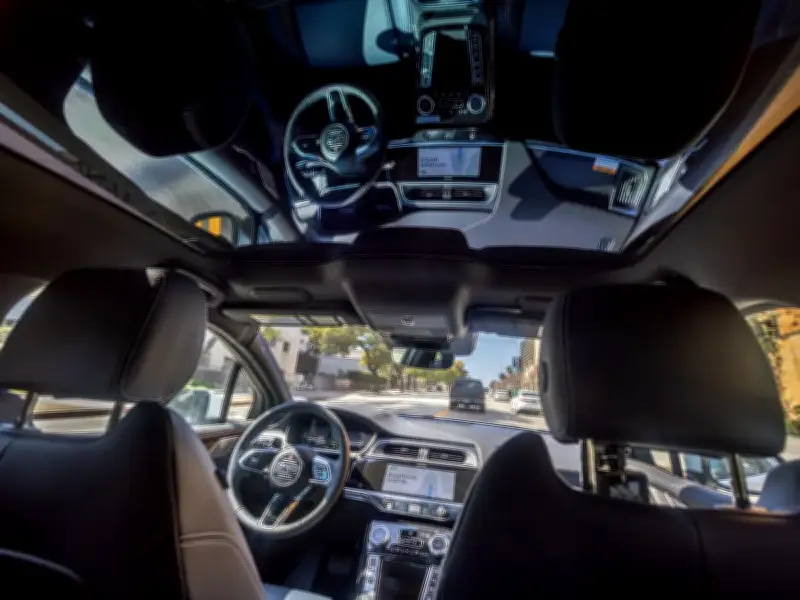
A new survey has revealed that fewer than a third of Londoners want driverless taxis on the capital's roads, as Uber begins a trial of autonomous vehicles in Manchester. The London Assembly transport committee commissioned a YouGov survey of 1,053 Londoners, which found that 42 per cent opposed the self-driving cars, with only 29 per cent saying they would ever use one.
Committee report raises concerns
The committee's report concluded that it has 'not heard enough evidence' to be convinced by the driverless cars. Caroline Russell, the committee's chair, said: "London's streets are famously old, idiosyncratic and crowded, and before we open them up to a whole new category of vehicles it's essential to question the impact on Londoners."
The report also raised concerns about vehicle hesitation at junctions and called for Transport for London to monitor and publish data on 'empty miles' – when the car is moving without a passenger – and for bosses to be able to issue and withdraw permits. Wayve and Waymo, which are behind the roll out, maintain that the technology will improve road safety.
Manchester trial and cabbie criticism
Manchester will become the second UK city where the autonomous vehicles can be hailed, following the capital. A batch of the taxi-hailing app's fleet started taking paying customers in London last month, although a human safety operator will still sit behind the wheel until the vehicles are allowed to operate totally autonomously.
Steve McNamara, general secretary of the Licensed Taxi Drivers' Association (LTDA), said London's roads are too clogged for Wayve's robot cars to operate effectively because of a safety design that sees the vehicles remain stationary at junctions, often for minutes at a time. He believes the driverless cars will vanish within a few years if given the green light because Brits will soon tire of the 'gimmick'.
Mr McNamara told the Mirror: "It's hype and it's spin, it's clever marketing but that's all it is. It’s a novelty, a gimmick at best. Driverless cars are the solution that we don’t need. Who actually requires one? It'll be a bit of fun for some then that's it."
He added: "They're not even driverless [yet] and may not be for a long time. When you get in one, the safety operator is told not to speak to you. They want to give you a dystopian experience. This is not about driverless cabs, it’s about the software they are creating that they want to go on to sell to other countries after testing it in this environment."




