
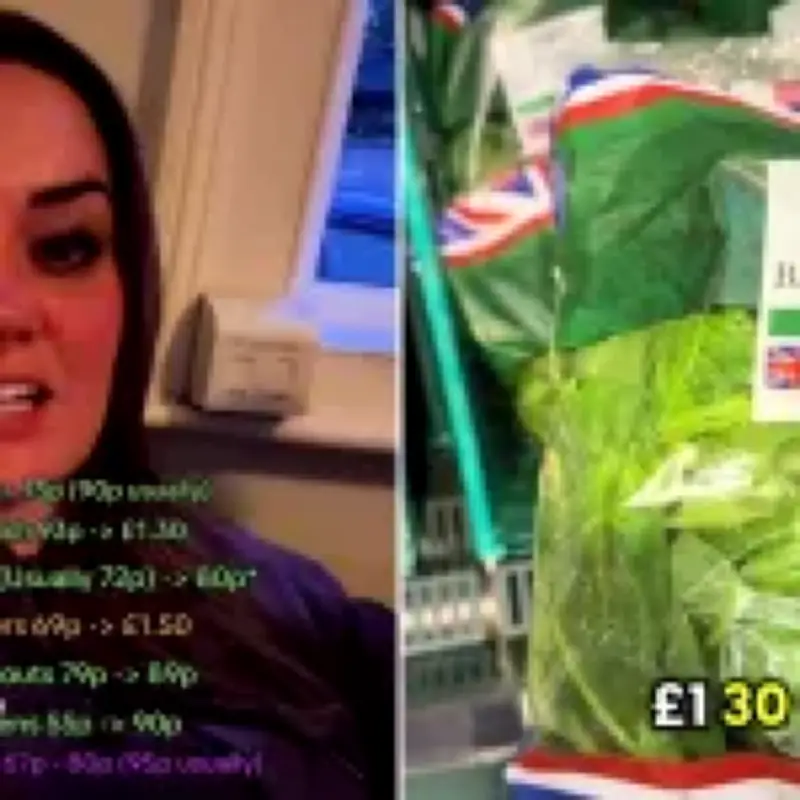
A TikTok creator who filmed a £10.96 weekly food shop in 2022 has compared the same basket in 2026 — and the total has risen to £15.82, a 44.3% increase.
Char, who posts as @charworksoutlife, originally went to the supermarket four years ago to see if she could buy a week's groceries for a tenner. She went slightly over budget, but the basket was enough to feed her for seven days, albeit without treats and not much protein.
After rediscovering the clip, Char detailed some of the bargains from back then, from 49p broccoli to a £1.25 pack of bacon steaks, before doing a direct price comparison against the same products today.
Which items saw the biggest jumps?
Some individual items have risen sharply. A 15-pack of eggs that cost £1.18 in 2022 now costs £2.85 — an increase of £1.67, or more than 140%. Easy peelers have more than doubled, rising from 69p to £1.50, while curly kale has jumped from 39p to 80p. Broccoli has gone from 49p to 75p, and a bag of fresh greens from 55p to 90p.
Not everything has risen so dramatically. Chicken steaks, for example, are only 4p more nowadays thanks to Tesco's Aldi Price Match discount.
What does it mean for shoppers?
All in, the total comes to £15.82, a £4.86 increase in four years. That equates to a 44.3% higher weekly grocery bill, or £252.72 extra a year — assuming no extras are added and the same prices are available every time you shop.
By contrast, average UK salaries have gone up by 18.9% over the same period, which, when inflation is factored in, means many have seen a real-terms cut to their spending power.
Shoppers react
Commenters shared their frustration at the rising cost of food. @snow_fairy23 called it 'greed gone supersize', while @aisforashleigh wrote 'This is radicalising,' and @cutewithoutthee said it 'really makes the cost of living issues clear.' @nami75276 added: 'If only our wages could go up like this.'
Some also highlighted how many products had fallen victim to shrinkflation, or claimed food seems poorer quality or rots faster these days. Char's comparison offers clear evidence that money does not stretch as far as it once did.




