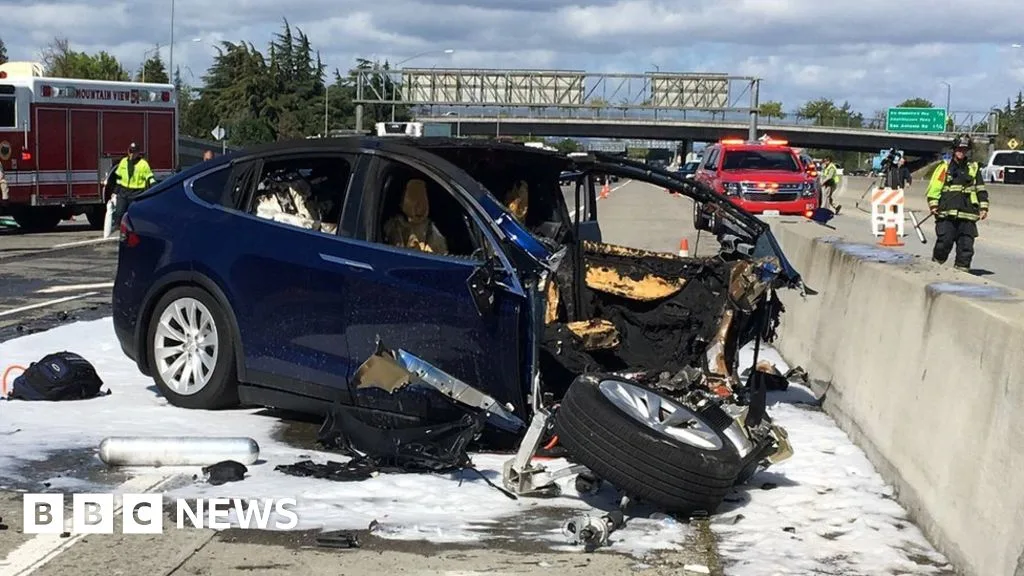
Tesla has confirmed that a Model X involved in a fatal crash in California last month was operating in Autopilot mode at the time of the accident. The vehicle struck a roadside barrier and caught fire on 23 March, and the 38-year-old driver died shortly afterwards.
In a statement on its website, the company said the system had sent the driver several visual warnings and one audible hands-on warning earlier in the drive. Tesla also noted that the driver's hands were not detected on the wheel for six seconds before the collision, and that the driver had about five seconds and 150 metres of unobstructed view of the concrete divider, yet no action was taken.
Autopilot is classified as a driver assistance system, not a fully autonomous technology. It can brake, accelerate, and steer under certain conditions, but it requires the driver to remain attentive and keep their hands on the wheel. The company has faced scrutiny over the system before, including a fatal crash in Florida in 2016 when a Tesla failed to spot a lorry crossing its path, prompting new safety measures.
Federal investigators concluded last year that Tesla lacked a full understanding of Autopilot's limitations. The latest incident comes at a difficult time for self-driving technology, as Uber was recently barred from resuming autonomous vehicle tests in Arizona following a fatal collision with a pedestrian earlier this month.