Chery Tiggo 7 Super Hybrid Review: A Budget-Friendly Family SUV with Strong Electric Credentials
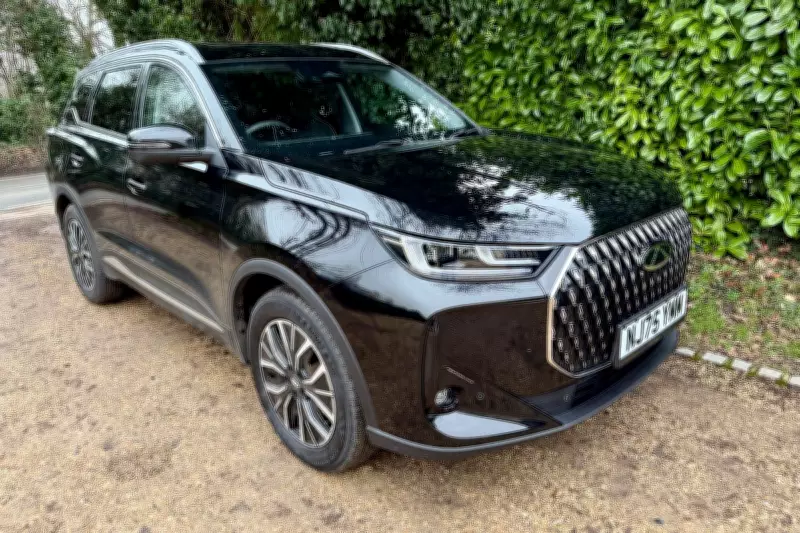
The Chery Tiggo 7 Super Hybrid has made its debut in the UK market, marking another step in the brand's ambitious expansion into one of the most fiercely competitive automotive segments. Positioned below the seven-seat Tiggo 8 and the flagship Tiggo 9, this mid-size SUV is available with either a conventional petrol engine or Chery's innovative Super Hybrid CSH plug-in hybrid system. It is the plug-in hybrid variant that presents the most compelling argument for prospective buyers seeking a balance of efficiency and affordability.
Competitive Pricing and Positioning
While the petrol-powered Tiggo 7 starts at an astonishingly low £24,995, the Super Hybrid CSH model begins at £29,995, rising to £32,995 for the top-tier Summit specification. This pricing strategy places it significantly below many established plug-in hybrid rivals from brands like Volkswagen, Kia, and Hyundai. On paper, the Tiggo 7 Super Hybrid promises spacious interior accommodation, a respectable electric-only range, and a level of standard equipment that typically demands a much higher financial outlay.
Targeted explicitly at families and high-mileage drivers aiming to reduce fuel expenditure without transitioning to a fully electric vehicle, Chery claims an electric range of up to 56 miles and a combined range of up to 750 miles. These figures are particularly eye-catching within this vehicle class. Backed by a comprehensive seven-year or 100,000-mile vehicle warranty, plus an eight-year warranty for the hybrid battery, Chery is evidently keen to mitigate perceived risks for UK consumers.

Real-World Testing and Driving Experience
During an extensive week-long test, the Tiggo 7 Super Hybrid was subjected to rigorous evaluation, encompassing typical family duties, a 400-mile round trip from London to Liverpool, and urban commuting. The powertrain combines a 1.5-litre turbocharged petrol engine with an 18.4kWh battery and an electric motor, delivering a combined 201bhp and 365Nm of torque. This setup enables a claimed 0-62mph time of 8.5 seconds and a top speed of 112mph, aligning it with mainstream competitors.
In daily use, the hybrid system's primary strength is its smooth operation. The vehicle frequently runs quietly on electric power alone, with generally seamless transitions between electric, petrol, and combined modes. However, the petrol engine can sound somewhat gruff under hard acceleration. Ride quality is less refined; the suspension feels overly firm on Britain's imperfect road surfaces, transmitting impacts from potholes more harshly than some rivals. On smoother roads, it is more composed, but the tuning prioritises control over comfort.
Refinement at motorway speeds is adequate but not class-leading, with noticeable tyre and wind noise. Steering is light and manageable in town, though it lacks weight and reassurance on faster roads. Efficiency, however, is a standout attribute. The 400-mile motorway journey concluded with over 100 miles of indicated range remaining, despite not beginning with a fully charged battery. With a full charge, achieving over 50 miles of real-world electric driving appears entirely feasible, allowing many daily commutes to be completed without using any petrol.
Interior Quality, Practicality, and Technology
The cabin of the Tiggo 7 Super Hybrid impresses with a premium aesthetic, featuring soft-touch materials and a clean, modern design. Build quality is generally good, though minor alignment issues were noted in the test vehicle. The Summit model boasts an extensive list of standard features, including heated and ventilated front seats, a panoramic sunroof, a hands-free powered tailgate, and synthetic leather upholstery. The seats provide commendable support during long drives, and visibility is excellent, aided by large windows and a standard surround-view camera system.
Rear passenger space is generous for adults, complemented by rear air vents. The boot offers 565 litres of capacity, expanding to 1,396 litres with the rear seats folded, making it highly practical for family life, holidays, and transporting bulky items. Some interior quirks include unusually quiet indicator signals and a climate control system that can be inconsistent, fluctuating between insufficient warmth and sudden overheating.

The technology suite includes twin 12.3-inch screens for the driver display and infotainment. The touchscreen is responsive but suffers from usability issues, particularly when switching between Apple CarPlay/Android Auto and the native system. The eight-speaker Sony audio system in the Summit model disappoints, lacking richness in mid-range and bass. Safety and driver assistance features are comprehensive, with adaptive cruise control and lane-keeping assistance standard, though the semi-autonomous systems sometimes position the car too far left in its lane.
Value Proposition and Verdict
At £29,995, the Chery Tiggo 7 Super Hybrid represents exceptional value, offering a long electric range, strong real-world efficiency, high equipment levels, and extensive warranty coverage for significantly less than many competitors. Company car drivers will be attracted by its low 19g/km CO2 emissions. Running costs should be competitive, especially for those who regularly charge the battery to maximise electric driving.
The Chery Tiggo 7 Super Hybrid does not aspire to be a luxury SUV or a driver's car, but it excels in the areas that matter most to many family buyers. It delivers spaciousness, equipment, and efficiency at a price that undercuts much of the competition, with its plug-in hybrid system proving genuinely effective in real-world conditions. While it has rough edges—such as a firm ride, refinement limitations at speed, and an infotainment system needing refinement—these do not detract from its core strengths. As a high-value family plug-in hybrid, the Tiggo 7 Super Hybrid makes a very persuasive case for itself in a crowded market.