California McDonald's Sparks Outrage with Fully Automated Restaurant
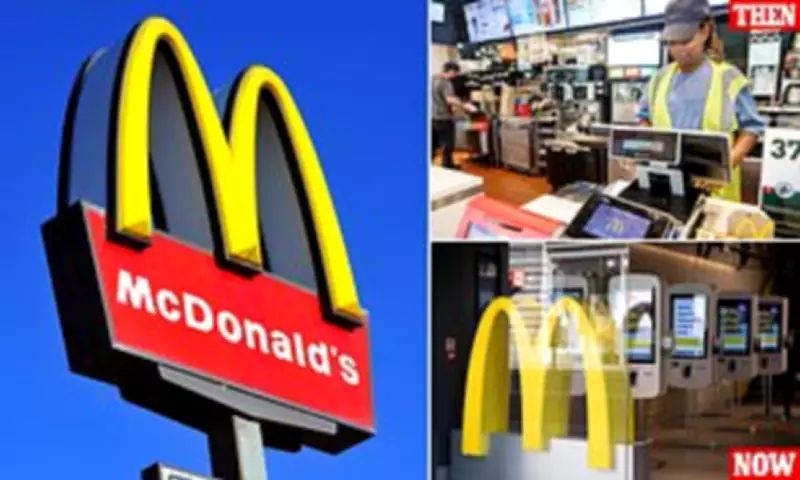
Customers entering a McDonald's in Sacramento, California, are encountering a startling new reality. The location features no traditional menu boards, no cashiers, and in many instances, no human interaction whatsoever. A viral video circulating on TikTok and X has ignited immediate backlash, with numerous users accusing the fast food giant of quietly replacing employees with machines.
Viral Video Reveals Stark Automation
The widely shared clip depicts a McDonald's outlet where diners are directed exclusively to self-service kiosks to place their orders. This setup has provoked strong reactions online. One social media user commented, "They're making you the cashier now," drawing parallels to self-checkout systems in retail stores like Walmart. The video has fueled concerns that automation is rapidly displacing human workers in the service industry.
McDonald's has responded to the controversy, stating that the configuration shown in the video is atypical and does not represent the standard operation of its US restaurants. The company emphasized that customers continue to be served through conventional methods, including in-store ordering counters, drive-thru lanes, and various digital platforms.

Minimum Wage Debate Reignited
This incident has reignited a longstanding debate about whether increased minimum wages, particularly in California, are accelerating automation across the fast food sector. In April 2024, Governor Gavin Newsom raised the minimum wage for fast food workers to twenty dollars per hour. This policy change prompted reports at the time of multiple chains eliminating over ten thousand positions.
After years of persistent inflation, restaurant executives across the industry have recognized they cannot indefinitely raise prices to offset higher labor costs. Consequently, many are turning to technology to replace human roles. For consumers, this often translates to paying more money while simultaneously assuming tasks that were previously handled by employees.
McDonald's AI Overhaul and Customer Experience
In March 2025, McDonald's announced a comprehensive plan to overhaul forty-three thousand restaurants with an AI-driven makeover. This initiative aims to reduce wait times and enhance the experience for both customers and staff. The transformation includes internet-connected kitchen equipment, AI-enabled drive-through systems, and AI-powered managerial tools designed to improve order accuracy.
However, critics argue that corporations are responding to wage pressures by reducing staff and investing heavily in machinery. This shift leaves customers paying higher prices while performing more labor themselves. Ravi Sawhney, founder of RKS Design, articulated this concern, stating, "What's changing here is the value exchange. Customers are doing more of the work while paying more. People feel that immediately, even if they don’t say it out loud."
The Human Element and Brand Trust
Sawhney further explained that when prices increase, consumers naturally expect an enhanced experience, not a diminished one. Removing the human element necessitates replacing it with something that still feels worthwhile. He noted there is a critical point where "convenience stops feeling convenient" and instead feels like shifting responsibility onto the customer.
"Automation can make things faster, but it doesn’t automatically make them better," Sawhney cautioned. "In some cases, it removes the very thing that made the experience work in the first place." He observed that most customers are not consciously considering labor costs; they are simply evaluating whether what they receive justifies what they pay. It is at this juncture, Sawhney suggested, that brand trust begins to erode.

While acknowledging that speed and efficiency have become paramount for fast-food chains, Sawhney warned that customers fundamentally "want to feel understood." He remarked, "When everything becomes a prompt, the experience can start to feel cold, even if it's technically faster." McDonald's has historically built its brand on consistency and familiarity. The pressing question now is whether widespread automation will strengthen that brand identity or gradually undermine it over time. McDonald's did not provide an immediate comment in response to inquiries about this specific location.