Boom Supersonic has completed assembly of the core of Symphony, the first engine built to bring back supersonic passenger flight, and it is set to be turned on for the first time next month. Founder Blake Scholl, a former Amazon software engineer, launched the company in 2014 after becoming convinced that no one else was making a credible effort to revive supersonic travel.
From Concorde to Boom
Scholl's interest began in 2007 when he climbed into a retired Concorde and wondered why such a machine was not at an airport. After setting a Google alert on supersonic flight and waiting years without results, he decided to research the field himself, teaching himself aerospace engineering fundamentals in a year between quitting his job and starting Boom.
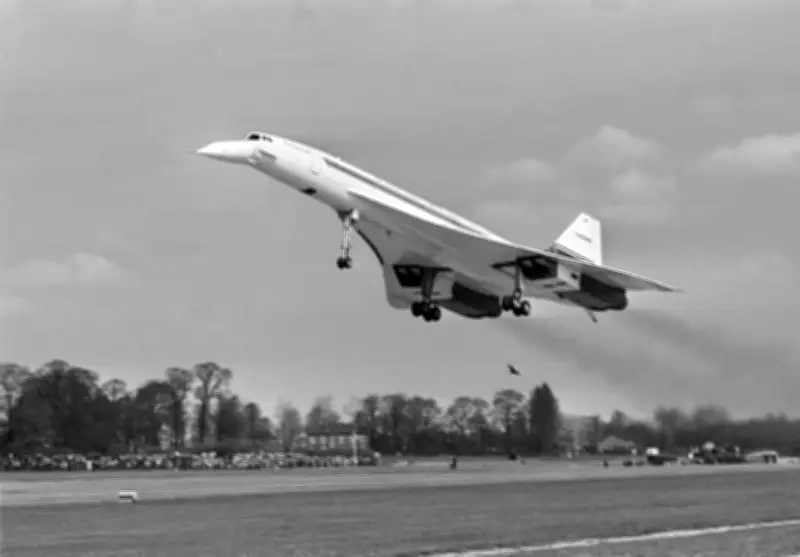
British Airways' last commercial Concorde landed at Heathrow in 2003. The immediate causes included the 2000 Air France crash at Charles de Gaulle, when a burst tyre ruptured a fuel tank and the plane crashed into a hotel, killing 113 people, and the impact of 9/11 on transatlantic premium travel. Scholl argues the deeper problem was that Concorde was built for national prestige rather than passengers, describing it as a taxpayer-funded project without commercial input and a 100-seat aeroplane with 100 uncomfortable seats. By its final years, a return ticket to New York cost £8,292, equivalent to £16,000 today.
Why Britain fell behind
Scholl also blames America for banning supersonic flight over land, which he says led to 50 years of no progress. He notes that Rolls-Royce, Boom's original engine partner, walked away in 2022, and Reaction Engines, the Oxfordshire firm behind the SABRE hypersonic engine, went into administration in 2024. In America, he says, software money routinely pays for hardware bets; Scholl sold his start-up Kima Labs to Groupon in 2012 before starting Boom.
Boom claims its aircraft will be about 15 minutes slower across the Atlantic at a quarter of the cost, with a modern turbofan engine that has no afterburners, unlike Concorde's loud military-derived powerplant. The sonic boom problem is addressed by flying at around Mach 1.2, where shock waves bend back upwards before reaching the ground, a prediction verified six times on Boom's test jet XB-1. Over the ocean, the Overture airliner will fly faster at Mach 1.7.
Engine first, passengers later
Before Symphony carries any passengers, it will power AI data centres, which need reliable power and no water. Every hour the engine runs provides test data, and every turbine sold provides cash, helping Boom become independent of investors quickly. Overture has yet to fly, but United, American Airlines and Japan Airlines are among those holding orders and pre-orders for 130 jets.