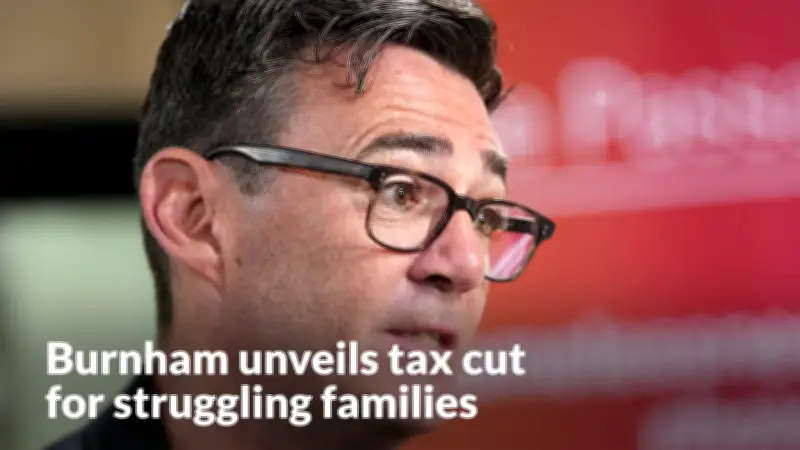
Prime Minister Andy Burnham has ordered a review into whether standing charges can be removed from gas bills, as households face another potential rise in energy costs this winter. The move could reduce fixed daily fees for millions of consumers across Scotland, England and Wales.
Speaking during Prime Minister's Questions on Wednesday, Mr Burnham confirmed he had instructed Chancellor John Healey and Energy Secretary Miatta Fahnbulleh to investigate the possibility and report back to MPs as soon as possible. The announcement comes as households face the prospect of another substantial increase in energy bills from January, following a four per cent rise in Ofgem's price cap at the beginning of October.
Prime Minister's announcement
Mr Burnham told the Commons: "It will also allow us, Mr Speaker, to do more to help people with bills. I can tell the House today that I have asked the Chancellor and the Energy Secretary (Miatta Fahnbulleh) to look at whether we can remove standing charges from gas bills and to report back to this House at the earliest opportunity."
The Prime Minister made the announcement during an exchange with Conservative leader Kemi Badenoch about the Government's decision to approve the Jackdaw gas field. He said the decision would allow the Government to invest in renewable energy and work towards separating gas and electricity prices to bring household bills down.
What are energy standing charges?
Standing charges are fixed daily fees added to gas and electricity bills, regardless of how much energy a household uses. The charges cover costs associated with supplying energy to homes and businesses, including maintaining networks, infrastructure upgrades and other essential services.
Customers generally pay separate standing charges for gas and electricity, with the amounts varying depending on their supplier, tariff, payment method and location. This means households can still face charges even when they use little or no gas or electricity.
Removing standing charges from gas bills could reduce the fixed costs households pay, although the Government has not confirmed how the costs currently covered by these charges would be funded. If those costs were transferred to gas unit rates, the overall savings for individual households would depend on how much energy they use. There has been no announcement about removing electricity standing charges.
Energy bills could rise again in January
The announcement comes amid growing concerns about household energy costs this winter. Ofgem's energy price cap increased by four per cent on October 1, while the latest forecast from Cornwall Insight suggests another substantial rise could follow at the beginning of next year.
The energy consultancy predicts the annual price cap for a typical dual-fuel household paying by Direct Debit could increase by 16 per cent to £1,999 from January 1, 2027. This would represent an increase of £276 compared with the October to December cap and the largest rise since January 2023. However, the January figure remains a forecast and Ofgem has not yet confirmed the next price cap.
The Government has already temporarily removed the five per cent VAT charge from electricity bills until March 31, 2027, in a move expected to save households around £45 a year. Gas bills remain subject to five per cent VAT.
Warning over winter energy costs
Ofgem's new chief executive Tim Jarvis warned last week that households could face a difficult winter as wholesale energy prices continue to rise. Speaking at the Energy UK conference in London, he said: "We can all see what's happening to wholesale prices as a result of what's going on in the Middle East, and we've seen the predictions for January. It's going to be a difficult winter."
Campaigners have called for additional UK Government support to help households manage rising heating costs. The End Fuel Poverty Coalition has urged ministers to prepare an emergency heat tariff to limit heating costs this winter, warning that gas prices have already risen by 27 per cent year-on-year.
The UK Government has not announced a timetable for completing its review of gas standing charges, although the Prime Minister has asked ministers to report their findings to Parliament at the earliest opportunity.