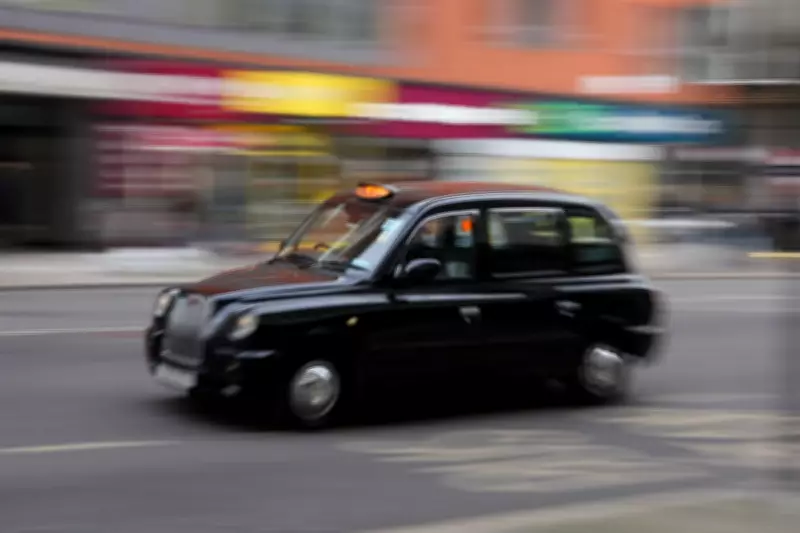
London's Black Cab Drivers Express Skepticism as Robotaxis Prepare for Spring Trials
The iconic streets of London, famous for their black cabs and historic layout, are poised to become a major testing ground for autonomous vehicles. With government-backed robotaxi trials scheduled to launch this spring, tech companies from around the world are preparing to deploy their self-driving technology in the British capital. However, the city's renowned black cab drivers, who must master "The Knowledge"—a grueling training course requiring memorization of hundreds of routes—are deeply skeptical about the viability of robotaxis on London's complex and congested roads.
Global Tech Giants Eye London as Robotaxi Arena
Companies including British startup Wayve Technologies, U.S.-based Waymo, and China's Baidu are set to participate in the pilot program, positioning London as a key arena in the global competition for autonomous vehicle dominance. Wayve, which is partnering with Uber for the trials, recently demonstrated its technology using a Ford Mustang Mach-E equipped with an AI system capable of navigating traffic, avoiding jaywalkers and cyclists, and handling roadworks. During a test run covering a three-mile loop in North London, the vehicle maintained a steady pace and handled most situations smoothly, though it did brake firmly at a changing traffic light, causing a slight jolt for passengers.
Waymo, owned by Google's parent company Alphabet, plans to launch a passenger service in London by the third quarter of 2026. Company officials have sought to reassure concerns about flooding the streets with robotaxis, noting they operate 1,000 vehicles in San Francisco and aim to provide an additional transportation option rather than replace existing services. Baidu is also teaming up with Uber and its rival Lyft to operate its Apollo Go service in the London pilot.

Unique Challenges of London's Streets
London's ancient road network, described as a convoluted spiderweb dating back to Roman times, presents unique challenges for autonomous technology. Unlike the grid layouts of American cities like San Francisco and Phoenix where Waymo operates, London's streets are notoriously congested, clogged with private cars, buses, motor scooters, bicycles, and electric rental bikes. Additionally, the high volume of pedestrians—jaywalking is not an offense in Britain—poses a significant hurdle. Steven McNamara, general secretary of the Licensed Taxi Drivers' Association, questioned how robotaxis will handle the nearly 10 million residents who frequently cross streets, stating, "It's virtually impossible to drive anywhere in London without somebody walking in front of you."
McNamara dismissed robotaxis as "a solution looking for a problem," arguing they offer no advantage on London's road network. Black cab drivers, who have previously opposed disruptive technologies like Uber, emphasize the human touch and local knowledge that autonomous vehicles cannot replicate. Frank O'Beirne, a black cab driver with 14 years of experience, recounted assisting blind passengers to a hard-to-find restaurant, a service he believes robotaxis cannot provide.
Technological Innovations and Market Positioning
Wayve CEO Alex Kendall highlighted his company's innovative approach, which relies on AI trained on millions of hours of driving data rather than traditional high-definition maps and hand-coded safety rules. "This is the key thing for self-driving, because every time you drive on the road, you're going to experience something different," Kendall explained. Wayve positions itself as a technology provider, offering hardware and software to make any vehicle autonomous, and has signed a deal with Nissan to build self-driving cars for sale by 2027.
While pricing details for the robotaxi services remain undisclosed, Waymo officials have indicated fares will be competitive and in line with market rates, though they may command premium pricing in some cases. Experts like Kevin Vincent, director of the Centre for Connected and Autonomous Automotive Research at Coventry University, suggest robotaxis could fill gaps in Britain's public transport network, such as serving villages affected by bus service cuts. However, Vincent notes that demand for human drivers will persist, especially among tourists who value local knowledge and reassurance.

The Future of Transportation in London
As London prepares for these groundbreaking trials, the debate between technological advancement and traditional expertise intensifies. While robotaxi companies promise new choices for commuters alongside the Tube, cycling, and walking, black cab drivers remain unconvinced about their practicality on the city's bustling streets. The spring trials will be a critical test of whether autonomous vehicles can navigate London's unique challenges and win over a skeptical public, shaping the future of transportation in one of the world's most iconic cities.