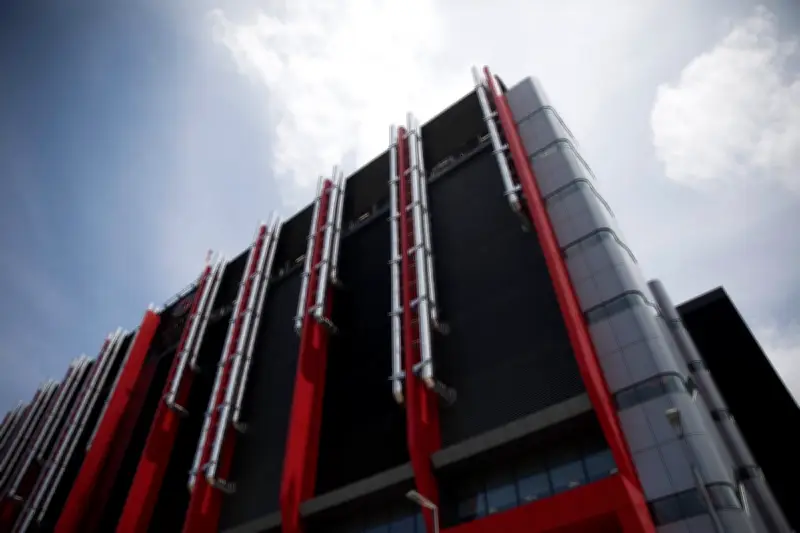
Australia is experiencing a rapid expansion of datacentres, with approximately 160 currently operational and another 90 in the pipeline, according to the Climate Council. This boom is driven by the global surge in artificial intelligence and digital services, but it comes with significant environmental costs and limited employment benefits.
Massive Investment and Energy Demand
The investment pipeline for datacentres is estimated at $155 billion over the next decade. One prominent project on Mamre Road in Sydney's outer western suburbs, if approved, would become the country's single largest energy user, consuming more power than the Tomago aluminium smelter. The 52-hectare site plans include six four-storey buildings, 936 cooling units, and 852 diesel backup generators.
Alex Hooper, head of climate and energy economics at Oxford Economics Australia, notes that datacentres currently account for 2.8% of electricity consumption on Australia's east coast. She projects this will rise to 7% by 2030 and exceed 10% by the mid-2030s, with significant upside risk given the strength of the project pipeline.
Environmental and Community Impact
Datacentres require substantial amounts of water for evaporative cooling and large tracts of land, often located in urban areas near homes. The Climate Council estimates that wholesale electricity prices on the east coast could be 20% higher by 2035 if the extra demand is not offset by additional renewable energy sources.
Penrith council has opposed the Mamre Road project, citing its massive energy consumption. The facilities also generate noise and visual pollution, contributing to community concerns.
Limited Job Creation
Despite their size, datacentres are not major employers. Studies from the US indicate that thousands of workers are needed during construction, but only hundreds remain for operational roles. This raises questions about the economic benefits for local communities.
Beth Webster, an economics professor at Melbourne University, remains cautiously optimistic. She points to problems in the US, such as developers not being required to provide additional energy and water, and datacentres being placed too close to residential areas. "I think it's going to be a win. Foreign direct investment is a very important source of knowledge exchange, and I can't see too many downsides as long as they have rules around it," she says.
Economic Opportunities and Productivity Gains
Pat Bustamante, a senior economist at Westpac, argues that the datacentre boom is unequivocally good for the economy. "It's laying the foundation for the next wave of productivity growth. We saw this during the PC and IT revolution during the late 90s, and this is going to be bigger than that," he states. He expects productivity gains to materialise once the high-speed computing power is in place.
Sally Auld, chief economist at NAB, acknowledges societal concerns about AI but believes the technology will augment rather than replace most jobs. "But it's hard to know what the net effect of that will be," she adds.
Need for Policy Framework
Hooper emphasises the need for a comprehensive industrial policy to ensure datacentres benefit Australia rather than merely happen to it. "We have a lot of interest here to make sure the public sees the benefit, and for that we will need to have a vision of the future," she says. "I think there are huge opportunities, but we have to be smart."
The debate underscores the tension between embracing technological advancement and managing its environmental and social impacts. Policymakers face the challenge of balancing economic growth with sustainability and community well-being.