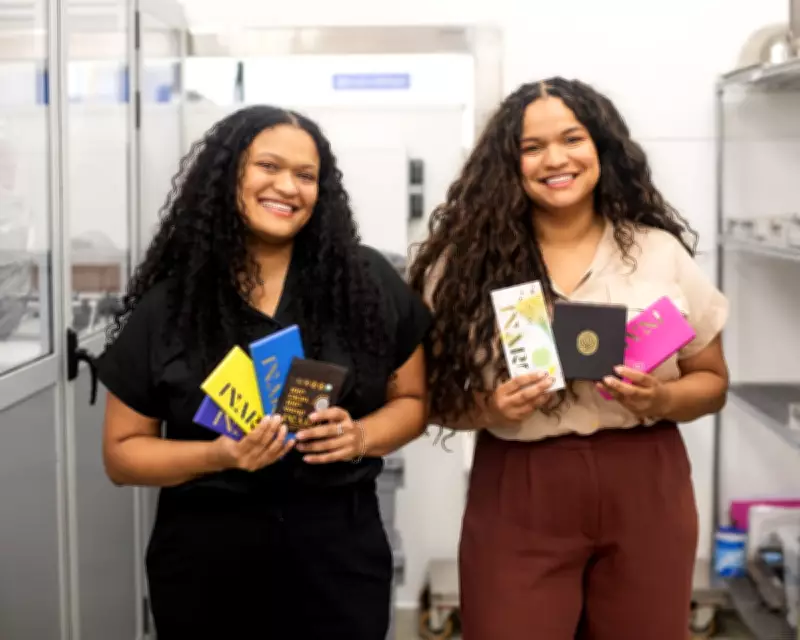
Sisters Transform Dominican Cacao Industry with Fair-Trade Chocolate Venture
Erika and Janett Liriano, daughters of Dominican immigrants raised in Queens, New York, have achieved a remarkable pivot from corporate success to entrepreneurial impact. By their late twenties, Janett had earned a spot on the Forbes 30 Under 30 list as chief of staff at a biopharmaceutical firm, while Erika carved out a career in venture capital. Despite their professional accomplishments, both felt a profound sense of unfulfillment, prompting a life-changing decision.
A Family Inspiration Sparks a Bold Idea
In early 2019, during a family gathering at Janett's home in Kew Gardens, the sisters sampled a traditional Dominican cacao and coffee drink prepared by their father. This simple moment ignited a daydream about starting a chocolate company in their parents' homeland. Initially, Janett dismissed it as a side hustle she was too busy for, but their parents' encouragement proved pivotal. "Why don't you commit to your own projects?" they urged, highlighting the potential to create real change by focusing on their passions.
Growing up, the Liriano sisters heard stories of their family's struggles in the Dominican Republic, where maternal grandparents worked as farmhands and their father's family owned a small cocoa farm. Their parents emphasized that the country wasn't inherently poor but suffered from a lack of value creation that could translate into widespread opportunity. This insight resonated deeply as they learned that the Dominican Republic produces about 60% of the world's organic cacao, yet most exports are raw beans, with profits of around $8 billion largely accruing to chocolate-finishing countries like Belgium, Germany, and the United States, leaving local farmers in financial hardship.

Taking the Leap Amid Uncertainty
Despite their expertise, the sisters harbored reservations about relocating to the Dominican Republic, citing limited business knowledge of the country and the risk of abandoning lucrative careers. Erika recalled the internal conflict: "Am I really about to go to the DR and just, like, hope it happens?" Their parents, who had made a similar leap by immigrating to the US, offered unwavering support and even agreed to join them, setting the stage for a transformative journey.
The COVID-19 pandemic provided an unexpected catalyst. In 2020, the sisters left their jobs and, accompanied by their parents, moved to the Dominican Republic, staying in various Airbnbs while immersing themselves in the cacao industry. They spent months traveling with their father, observing the supply chain from the back of pickup trucks. They discovered that farmers often sold beans to informal buyers—"tipos con un camión" (guys with trucks)—who exploited them through low prices, delayed payments, and rigged scales. Antonie Fountain of the Voice Network noted this is a global issue, with farmers typically being "price-takers" in a volatile market unless they find dedicated buyers.
Building a Vertically Integrated Chocolate Company
Determined to become those dedicated buyers, the Lirianos launched Inaru Chocolate, named after a Taino word meaning fertility or creation. As the country's first vertically integrated cacao company, Inaru contracts directly with farmers, paying purchasing agents a fixed rate to eliminate incentives for undercutting. The company pays farmers 3% of every product sold, resulting in payments 30 to 50% higher than typical buyers, enabling investments in land and sustainable practices that enhance cacao quality and environmental benefits.
Jennifer Gomez of the Founder's Pool praised the model: "Rather than treating farmers as distant suppliers, Inaru views them as genuine partners in the brand's success. They've replaced a fragmented supply chain with a transparent, family-rooted model." Recognizing that real profits lie in finished chocolate—where a ton can fetch over three times the value of raw beans—the sisters opened a 7,000-square-foot factory outside Santo Domingo in 2023. Securing the site involved navigating bureaucratic hurdles, ministerial approvals, and creatively repurposing a parking lot between warehouses, now employing 35 people.

Overcoming Challenges and Achieving Growth
The venture faced significant headwinds, from language barriers—negotiating contracts in Spanish, their second language—to funding obstacles. Janett highlighted the disparity: "Women of color founders, our access to capital is so much lower," citing a 2023 McKinsey report that Black and Latino women receive only 0.1% of US venture capital. Despite investor skepticism and unrealistic demands, Inaru bootstrapped with angel capital, including support from a former Hershey's executive, and has since raised $12 million.
Today, Inaru's impact extends widely: 80% of its business supplies high-quality chocolate to brands like the W Hotel and Zingerman's, attracted by its transparent supply chain. Inaru-branded products, such as a $11 2.5oz dark chocolate bar, are sold online and in boutiques, featuring unique flavors like hibiscus white chocolate and orange fennel dark. Antonie Fountain noted, "Cocoa from the DR tends to be better quality, better chocolate. This is not what you put in a KitKat."
A Rewarding Reconnection with Roots
Now living full-time in the Dominican Republic with frequent US visits, the sisters find deep fulfillment in job creation and reconnecting with their heritage. Erika reflected: "From a young age, I always knew there was another way of life beyond what I knew... Honestly, it feels really natural to be here." Their journey exemplifies how entrepreneurial vision can foster economic empowerment and cultural pride, turning a family dream into a sustainable business that benefits an entire community.