For many years, UK food had a terrible reputation. Then, in the 1990s, gastropubs brought new flavours, energy and ideas. When and why did it all start to go downhill again?
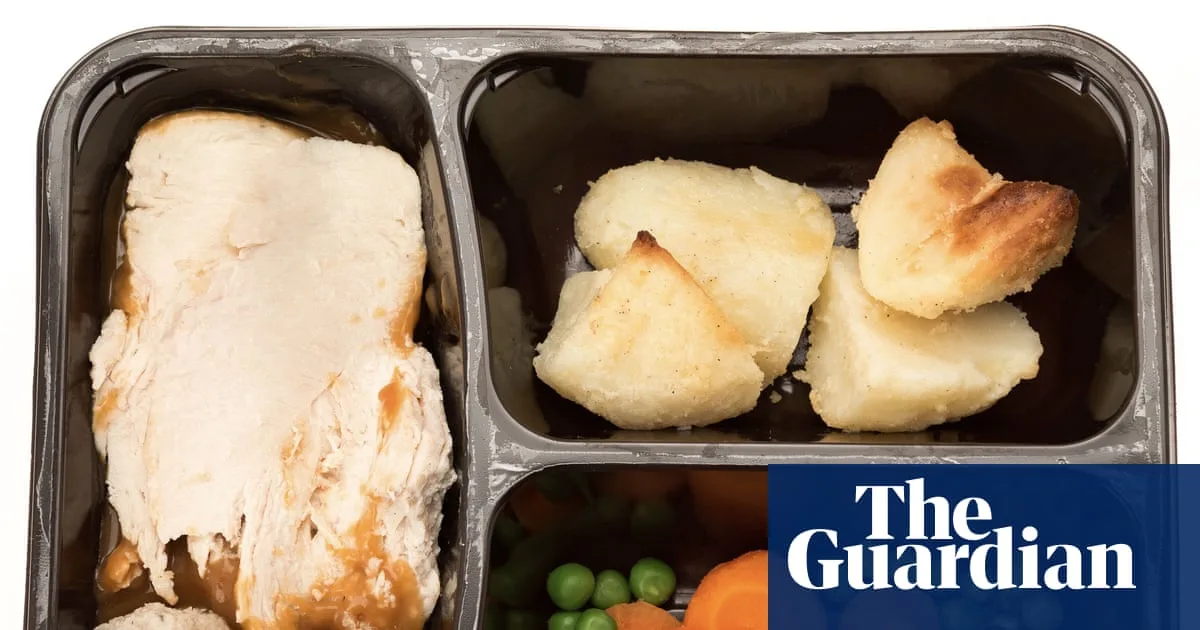
It was supposed to be a special occasion: an extended family get-together for Sunday lunch at a country pub. The setting was promising: a traditional establishment recently redecorated; outside terrace by the river; plenty of customers. The menu was also promising: a giant sheet of paper like a medieval charter, with glowing descriptions of how they aged their beef and sourced their produce locally. The food, though, was awful. The starters were assorted deep-fried pellets of unidentifiable organic matter; the meat was cold and colourless, the gravy watery, the roast potatoes soggy and the Yorkshire pudding chewy as a dishcloth. It was very difficult to believe all of this had been freshly prepared in the kitchen that day. It felt more like reheated leftovers – for £30 a head.
How did pub food get so grim? We like to think the bad old days of British cuisine are far behind us, that the 1990s and 2000s ushered in a wave of quality gastropubs and that the shires are bursting with talented chefs cooking local produce from scratch. In some cases, that is true, but more broadly – in my view, at least – pub food in the UK is on the decline. “You’re definitely not alone,” says Katie Mather, a drinks writer and pub culture blogger. “There is evidence to support your hypothesis.” Ray Bailey, one half of the bloggers Boak & Bailey and a co-author of 20th Century Pub, also agrees. “Pub food has quietly been on the decline for a few years now, both in terms of quality and availability. There was a golden period during which you could rely on being able to get a solid meal for a reasonable price, but now many pubs have closed their kitchens or outsourced food to fast food popups.”

Pubs have never had it so hard, you could argue. They face significant and often inexorably increasing costs: rent; staffing (partly as a result of the recent national insurance contribution increases); energy (to heat and chill food and people); alcohol (duty on a bottle of 14.5% red wine has risen by nearly £1 in the past two years); and food (one chef tells me beef has gone up 50% in the past eight months). This comes on top of Covid recovery and the cost of living crisis. According to the British Beer and Pub Association, 15,000 pubs have closed in the past 25 years. There are still roughly 45,000 left, but the UK is losing about six pubs a week. “Pub food used to be the moneymaker, but with the rising price of literally everything, it really isn’t as cheap to do that any more,” says Mather. “For a long time, business owners have been able to hide the effects from customers to a certain degree; they’ve been able to cut corners in kind of invisible ways. But it’s become so difficult to deal with.”
Pubs have had it hard for a long time, says Brian Hannon, a co-founder of the London-based restaurant group Super 8, which includes Brat, Kiln and Smoking Goat. Previously, he worked for 18 years in the pub sector. The shake-up began with the beer orders in 1989. In an attempt to improve competition, the government limited the number of tied pubs a brewery could own to 2,000. At the time, 75% of UK pubs were controlled by six breweries (Bass, for example, had to sell nearly 5,000 of its 7,000 pubs) and 95% of their revenue came from drinks. This change created conditions for new pub chains and independents to flourish. By the time the beer orders were revoked, in 2003, the industry had been transformed. Habits were changing, too. By the 2000s, we had what Hannon calls the three Fs: “Food, females and fenestration.” Pubs opened up literally and socially, while food revenues made up for declining drinks sales. It was the era of new chains, such as All Bar One, and the original gastropubs, such as the Eagle in Clerkenwell, London. Pub food became a route to culinary acclaim and celebrity. In 2001, the Stagg Inn in Herefordshire became the first pub to receive a Michelin star. The Hand and Flowers, Tom Kerridge’s pub in Marlow, Buckinghamshire, has two stars. This era didn’t last long.