
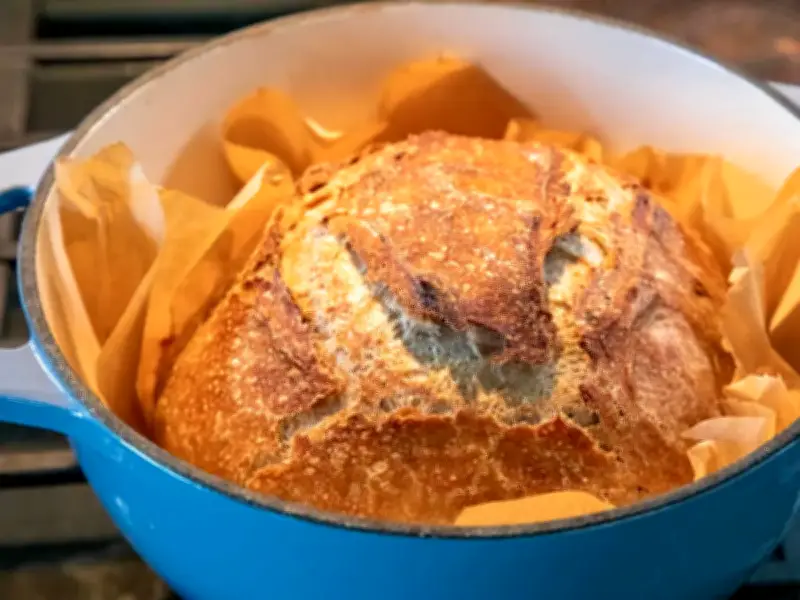
A simple bread recipe using just two ingredients—self-raising flour and plain kefir—is said to produce a loaf that is tastier than traditional sourdough, with only 10 minutes of preparation and no need to maintain a starter.
Jennifer Lee, a three-time cookbook author and creator of the recipe blog Kirbie's Cravings, has shared a "shortcut" recipe for bread that mimics sourdough but is far simpler to make. The resulting loaf comes out of the oven with a crusty exterior and a soft, chewy, tangy interior, according to the cook.
Why This Recipe Skips the Starter
Most bread recipes require the dough to rise twice, proof the yeast and be kneaded thoroughly. This recipe avoids those steps entirely. Instead of yeast, the bread relies on baking powder, which is already mixed into self-raising flour, to give it its rise. There is no need to feed or keep a sourdough starter alive for days or weeks.
If self-raising flour is not available, roughly 530g of plain flour can be mixed with two teaspoons of baking powder and two teaspoons of salt as a substitute. The second key ingredient is plain kefir, with low-fat or full-fat varieties both working well. Kefir is a probiotic drink made from fermented milk using kefir grains, with a consistency similar to thin yoghurt and a tangy flavour. Jennifer notes that kefir is "the key to this bread tasting like sourdough," as it shares many of the same ingredients found in a sourdough starter, helping to ferment the dough and produce that distinctive sourdough taste.
How to Make the Two-Ingredient Bread
Ingredients:
- 530g of self-raising flour
- 473ml of plain kefir
Method:
In a large glass mixing bowl, combine the flour and kefir and stir thoroughly with a spatula until a sticky, wet dough forms. Cover the bowl tightly with cling film and refrigerate, allowing the dough to rest and prove for four to six hours, or up to 12 hours. The longer it rests, the richer the flavour, though leaving it too long will make the dough wetter and harder to handle.
About 30 minutes before baking, heat the oven to 230C/210C Fan/Gas Mark 8 and place a large Dutch oven with its lid on inside to preheat. Jennifer noted that "this is important," as "the Dutch oven needs to preheat before adding the bread."
Once the dough has rested, dampen the hands with water, stretch one side of the dough upwards and fold it over the middle, working around all eight sides. Lightly dust a work surface with self-raising flour, tip the dough out seam side down, and use a bench scraper or floured hands to rotate and drag the dough into a tight ball. Place the shaped dough seam side down on baking paper, lower it into the preheated Dutch oven, replace the lid and bake covered for 30 minutes.
After 30 minutes, remove the lid and bake for a further 15 to 20 minutes, until the surface is golden brown and produces a hollow sound when tapped on the bottom. Allow the loaf to cool completely before slicing and serving.




