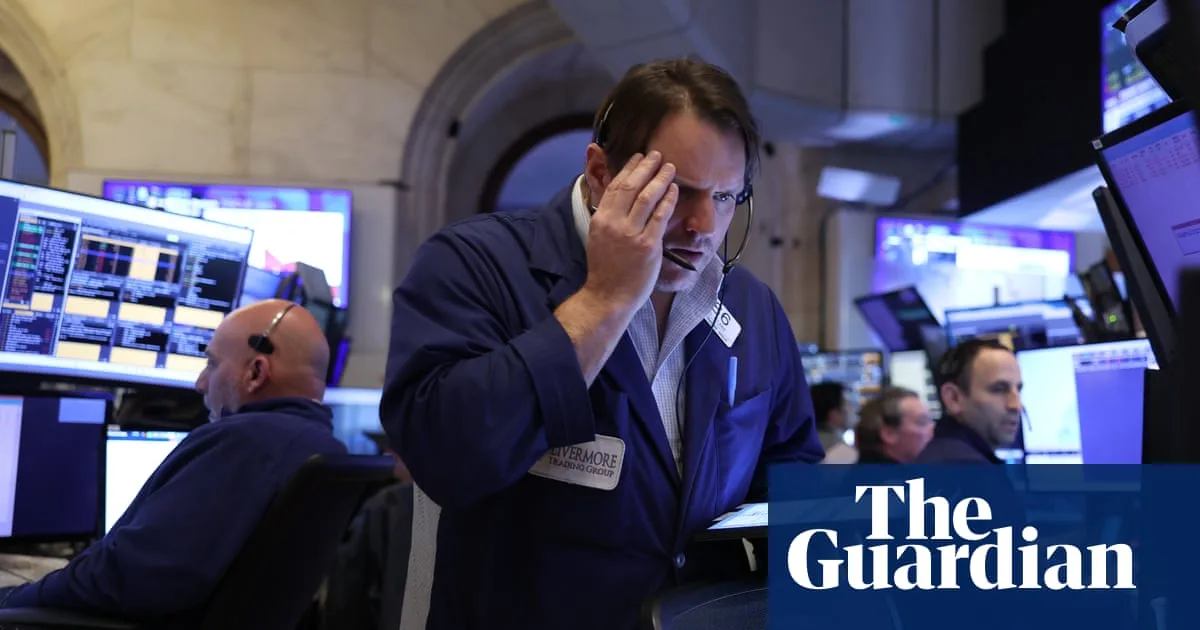
US stock markets experienced their worst day since June 2020 on Thursday, as investors reacted to sweeping tariffs imposed by President Donald Trump. The tech-heavy Nasdaq fell 6%, while the S&P 500 dropped 4.8% and the Dow Jones Industrial Average declined 3.9%. Apple and Nvidia, two of the largest US companies by market value, lost a combined $470bn by midday.
The US dollar hit a six-month low, dropping at least 2.2% against other major currencies, and oil prices sank on fears of a global economic slowdown. The sell-off followed Trump's announcement of a 10% baseline tariff on all imports, set to take effect on 5 April, with higher reciprocal tariffs of over 20% on many economies including the EU, China, Japan and Taiwan starting on 9 April.
Trump defended the tariffs, telling reporters: 'The markets are going to boom. I think it's going very well.' He described the event as 'liberation day' and claimed the tariffs would usher in 'the golden age of America'. Commerce Secretary Howard Lutnick insisted the president would not back down, telling CNN: 'He is not going to back off what he announced yesterday.'
Major US business groups condemned the move. The Business Roundtable, whose members include JP Morgan, Apple and IBM, warned that 'universal tariffs ranging from 10-50% run the risk of causing major harm to American manufacturers, workers, families and exporters.' The National Retail Federation said the tariffs create 'more anxiety and uncertainty for American businesses and consumers', while the National Association of Manufacturers argued that tariffs 'threaten investment, jobs, supply chains'.
A poll released before the announcement found that only 28% of Americans believe tariffs help the economy, with 58% expecting damaging effects. Economists have long warned that high tariffs risk pushing up consumer prices and destabilising the US role in the global economy. Japanese stocks also fell sharply, with the Nikkei index slumping to an eight-month low, followed by declines in London and across Europe.