
The Craghoppers National Trust mid-season sale offers savings of up to 50%, with Express Premium readers able to enjoy an extra 15% off using code DE15 until November 14. A perfect winter coat is now available for just £59.50, a massive £80.50 saving.
Wellness trends and the free alternative
Red-light therapy, proteinmaxxing, mushroom gummies. If you spend as much time on social media as I do, you too will have been bombarded by the numerous wellness trends promising a better, happier, healthier you. The temptation is strong but why does self-improvement always seem to come with a price tag?
There is an alternative, however, and it won't cost a penny. Green social prescribing to improve mental wellbeing is becoming increasingly popular, with even GPs recommending nature-based activities, such as gardening or walking. Essentially, it's like your mum telling you to go outside and get some fresh air but there's science behind it.
A £5.7million government-backed study found that spending time in nature can significantly reduce anxiety and improve happiness and life satisfaction.
Why nature is good for us
To find out more about how something as simple as going for a walk could have a tangible impact on mental health, I spoke to Peter Coventry, Professor of Health, Environment and Society at Manchester Metropolitan University. He tells me there are two main reasons nature is so good for us.
“The first is pretty easy to understand and boils down to stress reduction. Natural scenes can often signal safety to our brains which evolved outdoors, so heart rate, blood pressure and stress hormones fall, often within minutes following contact with nature.
“The second is slightly more complicated and draws on psychological ideas about attention restoration. Using screens and emailing all day, coping with a commute and traffic requires hard and directed focus that can tire us out. By contrast nature offers what psychologists call soft fascination. Our attention is held almost involuntarily without extra effort, and that lets our mental batteries recharge.
“Others of a less psychological persuasion point to nature connection which is essentially about the emotional bond we feel with the natural world, which is consistently linked to greater happiness and meaning in life.”
There's something profound about the idea that our brains, shaped over millennia in the natural world long before civilisation emerged, still yearn to return to it. Modern life may have distracted us with Netflix, sat nav, Whatsapp groups chats and true crime podcasts, but the connection endures. It's a feeling most of us will recognise when we eventually put our phones down. Perhaps that involuntary sigh at the sight of a rolling landscape is more than just an expression of loveliness. Perhaps it is a primal sense of belonging.
Making it a habit
Although the benefits can be immediate, of course, a stroll in the park won't magic all our problems away. But making time each week can have a cumulative effect. “The immediate lift usually lasts hours rather than days. Lasting benefit comes from regular contact, so think of it as a habit rather than a one off thing,” Prof Coventry adds.
The good news is that around two hours a week is the sweet spot, and you can break that up into shorter outings. According to Prof Coventry, the benefits tend to level off after three to five hours, so more isn't necessarily better. Fear not, no gruelling five-mile hikes required.
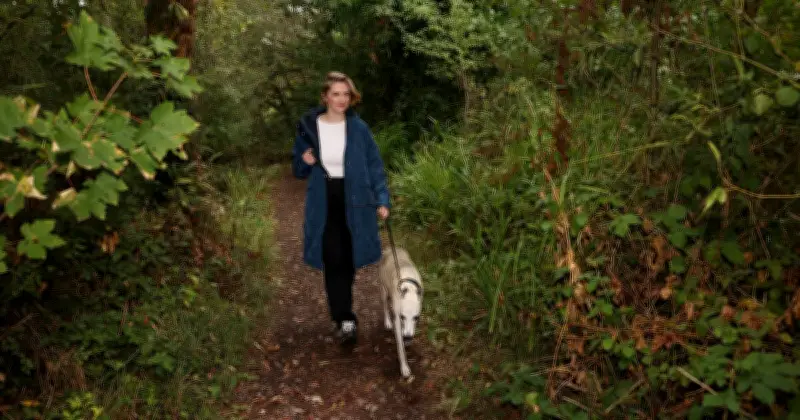
Autumn is the perfect time for my green prescription. The season of mists and mellow fruitfulness is upon us, with a chill in the air, cosy knitwear making a welcome return, evenings drawing in and trees turning gold and copper. Taking Prof Coventry's advice, I put away my phone, borrow my mum's whippet, Rudy, for some larking about and set off to explore some unfamiliar woods.
Rudy is in his element and tears off no doubt in search of fox poo to roll in, leaving me to embrace the dramatic change of scenery from the chaotic cityscape where I spend most of my time.
No cars, no commuters, no pavements. No concrete or artificial light. The palette of colours is softer, the pace gentler. Instead of watching for traffic, my eyes are free to wander to the sudden rustle of branches overhead and the geese gliding across the pond. There's the satisfying crunch of leaves underfoot, the earthy smell of mulch. I stop short of hugging a tree, but remind myself that moments of respite from all the noise are essential for a healthy body and mind. And there may be benefits beyond that fleeting sense of calm. Research suggests that phytoncides, the aromatic oils released by trees, may help strengthen the immune system.
Civilisation has brought extraordinary advances. Modern medicine, for one. But somewhere between inventing the wheel and becoming permanently attached to a screen, we seem to have forgotten that we are part of the natural world, not separate from it. And if something as free and easy as getting back out amongst it can improve our physical and mental health, and even boost our immunity, what on earth are you waiting for? Go on, go outside and get some fresh air.
Exclusive offer for Premium Subscribers
Frances wears the Women's Sweetgrass Jacket in Ultramarine from the Craghoppers National Trust collection, now half-price at £70 (was £140), teamed with water-repellent Kiwi Pro Barrel Trousers, reduced by 30% to £52.50 (was £75) and the Avens II Fleece in Ecru, now £40 (was £80).
The Craghoppers National Trust mid-season sale offers savings of up to 50%, with Express readers able to enjoy an extra 15% off using code DE15 until November 14.




