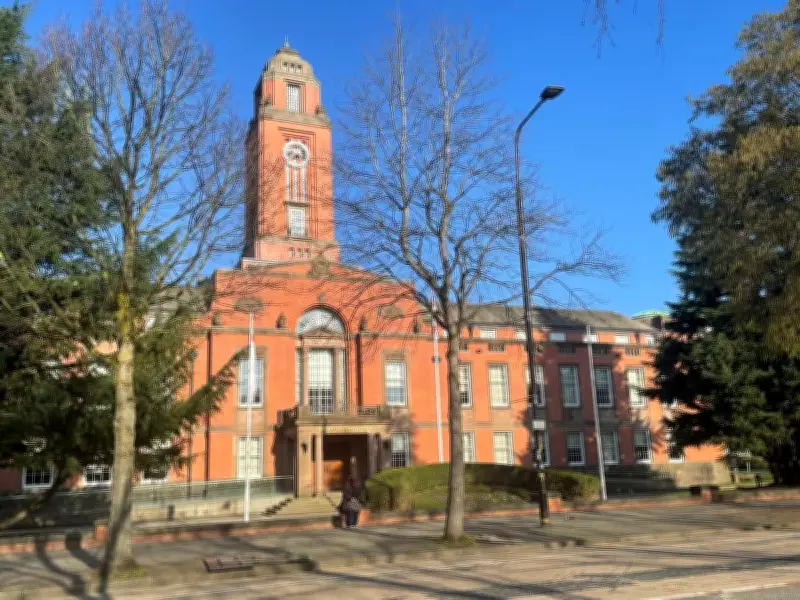
Trafford Council will not seek another extraordinary council tax rise for the coming year, according to newly published budget documents. The draft budget assumes a 4.99% increase in council tax for 2027/28 – the maximum allowed without exceptional financial support (EFS) permission or a referendum.
This follows two consecutive years of 7.49% hikes, approved in the 2025/26 and 2026/27 budgets, which were coupled with borrowing as the authority fought to balance its books – a legal requirement. The approach, permitted by the Government through EFS, raised fears the council was heading towards 'financial collapse', with substantial criticism levelled at the ruling Labour administration by opposition members.
Financial pressures and criticism
Leaders were accused of charging residents more while reducing services, with concerns the council would 'drown faster under the weight of ever-rising borrowing costs'. The council has previously blamed its financial difficulties in part on a lower-than-expected cash settlement from the Government, which increased its funding gap by around £24m last year. It has also said historic council tax freezes under the previous Conservative administration mean it now has less income than it could have had.
While Trafford's financial difficulties have not gone away, the documents suggest the authority is not looking to enter a third year of EFS. The council is still facing a budget gap, however, and will need to deliver savings over the coming years. Without action, the budget gap will stretch to £60m for the next three financial years, with the majority of that pressure – £38m – falling in 2027/28.
Plans to close the gap
Financial leads at the town hall believe they can bring the gap down to £8.4m next year and £24m over three years through a series of measures. These include flexible use of capital receipts, reviewing management of 'bad debt' – money owed to the council, such as unpaid council tax that is not considered collectible – and looking at debt restructuring for money the council itself owes. Around £40m of reserves, one-off cash often used to plug the gap between income and outgoings, are also expected to be spent by March 2030. The council's current usable reserves stand at just shy of £90m.
This approach will not remove financial pressures over the longer term, but the council hopes it will allow enough time for service transformation and other saving measures to be fully implemented. The 'priority', officers have said, 'remains to eliminate the requirement for EFS for 2027/28'. Further work is expected over the coming months to address the remaining budget gap, documents state.
Transformation and parking changes
Officers said: "The successful delivery of transformation programmes, planned savings and permanent budget solutions will be essential to securing the Council's long-term financial sustainability. Failure to achieve these outcomes may increase the council's reliance on external support mechanisms in future years."
The transformation programme focuses on five key areas: children's services, adults' services, bed and breakfast elimination, digital transformation and 'smarter working'. In these areas, the council will look to maximise income and efficiency, reduce demand, renegotiate existing contracts, and review its property portfolio. The council is also considering reviewing its parking charges to introduce on-street fees in parts of Altrincham, Sale and Stretford. Off-street parking costs could also be revised, with Sunday parking and extended charging hours among the proposals. These changes would be expected to come into effect next summer.
Risks and next steps
Even if expected savings are delivered, a number of other risks remain that could throw off the council's budget plans. These include ongoing demand pressures on key service areas such as adult and children's social care, and the fallout from this year's Ofsted inspection that saw the authority rated 'inadequate' for its children's services. Service improvements will need to be delivered, with a plan still to be published.
The potential use of capital receipts to plug spending gaps could also cause problems for planned projects, known as the capital programme. If receipts are used, the council will have to borrow to deliver its current capital programme. In light of this, just £245,000 of capital spending is proposed to be added this year, with the council saying the two projects this cash relates to are invest-to-save schemes: replacing car park pay-and-display machines and proposals around self-service in libraries.
The draft budget is set to be discussed by the council's cabinet next week before being debated by various scrutiny committees. Final proposals will be voted on by the full council in February.