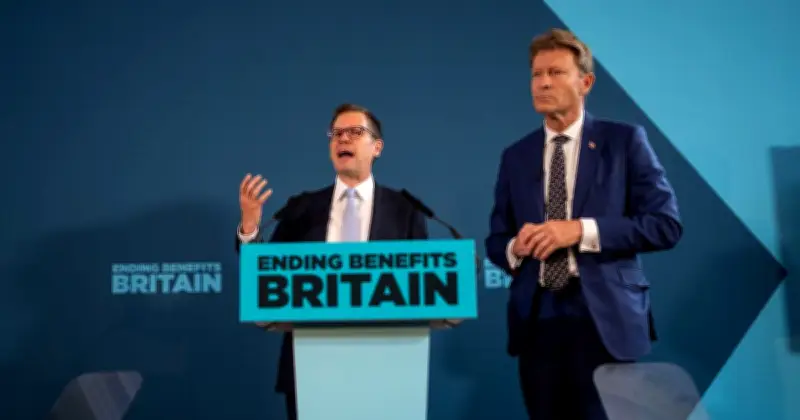
Reform UK has set out sweeping proposals to overhaul the benefits system if it were to win power, including a major change to Personal Independence Payment (PIP). Reform’s Treasury spokesman said the plans would represent the biggest shake-up of the welfare state in a generation.
The proposals unveiled on Monday include replacing PIP and the health-related part of Universal Credit with a “health security allowance”, a flat £429.80-per-month payment. Mr Jenrick said the new allowance would provide support for the “gravely ill and severely challenged”.
Cash payments for low-level conditions to end
Meanwhile, cash payments for low-level conditions would end and be replaced with disability support accounts, run by local councils and mayors, to cover costs such as equipment, adaptations, transport and personal assistance.
Employers would be required to pay a “return to work cover” insurance to fund the cost of the first two years after an employee is signed off sick. Mr Jenrick said firms would then have a “strong economic incentive” to return the employee to work.
People who had not returned to work within two years would go through a single, rigorous assessment conducted in person to “screen out vexatious and fraudulent claims”.
Reform claims £50 billion savings
Reform claimed its plans would slash £50 billion from the welfare bill, with almost three million people seeing disability and sickness payments withdrawn or modified, Robert Jenrick said.
Mr Jenrick said 6.9 million people were receiving disability benefits, but “this is not an epidemic of broken backs and lost limbs”, as, since 2002, the share of working-age people claiming for mental health and behavioural conditions had tripled.
Writing in The Telegraph, the former conservative minister for immigration said: “We will not pretend this is painless. Existing claimants will be reassessed over three to four years: we estimate that 2.16 million will keep their present cash entitlement in full, while 2.89 million will see theirs modified or withdrawn, concentrated where recent growth has been most explosive.”
Political reaction to the proposals
He said the state must be there to support people who need it but “dumping our young people onto welfare isn’t compassion; it’s neglect”. “We are not lifting people out of misfortune. We are abandoning them to it, and calling it kindness.”
Mr Jenrick claimed the Reform proposals would save “more than double” the £23 billion promised by Kemi Badenoch’s Conservatives, with £22 billion of the savings coming from changes to disability benefits alone.
Reform has just eight MPs in Parliament, but polling has suggested the party could challenge Labour and the Tories at the next General Election. The plans look to address the huge welfare bill, an issue that has dogged successive governments.
Shadow Work and Pensions Secretary Helen Whately dismissed the plans as an attempt to distract attention from the investigation into a £5 million donation to Nigel Farage and his “pointless by-election” in Clacton.
“Reform have been nowhere on the debate on welfare reform,” she said. “They have flip-flopped on restoring the two-child benefit cap and claimed they’ll only take benefits away from foreigners, which won’t do enough to bring down the overall bill.
“The Conservatives are on the side of working people, and we’re clear about our plans. Restore the two-child benefit cap, end benefits for low-level mental health conditions, remove benefits from foreign nationals and restore face-to-face assessments.”
A Labour spokeswoman said: “Reform’s £50 billion claim is fantasy economics, built on stripping support from disabled people and shifting costs onto employers.”
She added that the Labour Government’s reforms to welfare “deliver credible, independently-costed savings, not arbitrary numbers with no credible plan behind them”.