
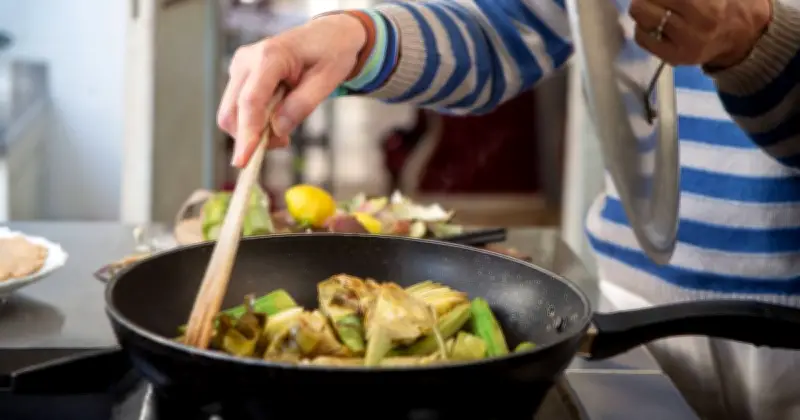
The difference between frying and sautéing is essential knowledge for any home cook. These two stovetop techniques produce very different results and are best suited to different ingredients. Understanding when to use each method can elevate your cooking.
What Is Sautéing?
Sautéing comes from the French word sauter, meaning "to jump." The technique involves flipping or tossing food in the pan with a quick flick of the wrist. It is ideal for smaller, bite-sized pieces such as sliced chicken or diced vegetables. The goal is to achieve a touch of colour and flavour without forming a crust.
Use just enough oil to coat the base of the pan over medium-high heat. Stir occasionally but not constantly. Constant stirring will make the food crisp but lacking in colour, while too little stirring leads to uneven browning.
Cookbook author Jill Silverman Hough explained: "Another key to sautéing is, when you're not stirring, spread your food out evenly in the skillet for even browning. It's why you see chefs shake a pan after they stir or flip—it spreads things out."
Choose a sauté pan with shallow, straight sides for effortless stirring and flipping. A lid can help retain moisture and heat. The vertical sides also keep splatters and liquids contained.
What Is Frying?
Frying involves food sitting in a pool of hot fat. Use enough oil to partially submerge the food, reaching about halfway up the ingredient. This method works best for thicker cuts of meat, fish fillets, or breaded items. Do not constantly toss the food; instead, turn it occasionally.
Frying is perfect for achieving crispness and a richer depth of flavour. Use a shallow frying pan with sloped sides, which makes it easy to flip and turn food. The flat base ensures even cooking, and the angled edges allow steam to escape, which is particularly beneficial for searing.
Key Differences at a Glance
The primary differences lie in the amount of fat and the heat level. Sautéing requires minimal fat at a high temperature, while frying demands more oil at a lower heat. Sautéed foods are often stirred or tossed, while fried foods are left undisturbed to develop a crust.
When a recipe specifies one method over the other, follow it for the best outcome. Using the wrong technique can result in soggy, greasy, or unevenly cooked food.




