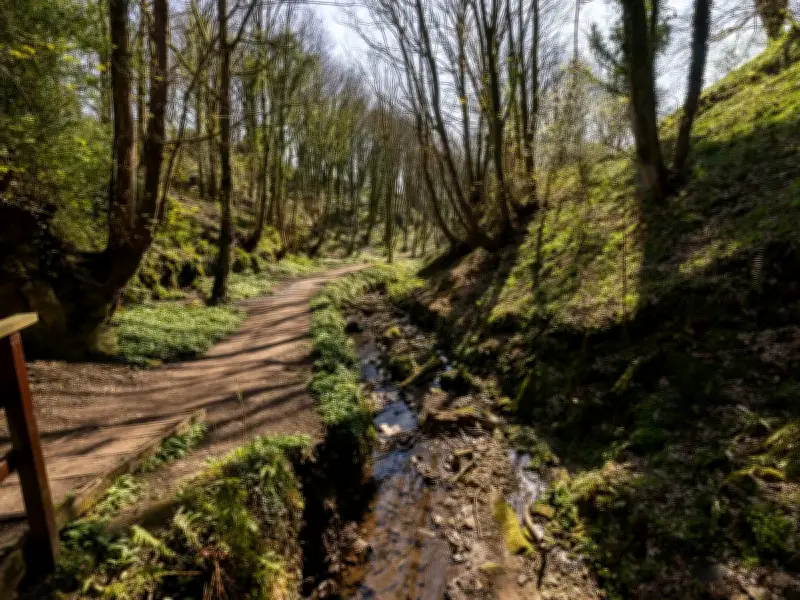
West Lancashire has been named the most peaceful place to live in the North West in a new study examining crime levels, night-time noise, green space, and nightlife density. The study, conducted by property specialists SAM Conveyancing, evaluated all 316 local authorities across England and Wales across four key quality-of-life indicators to determine the nation's most tranquil locations.
How the peace score was calculated
The study took into account how quiet it is at night, crime levels, how much public green space residents have, and how close homes are to nightlife venues such as pubs, bars and clubs. Night-time noise was measured at 37.7 million individual addresses using Defra's national noise maps, so the score reflects what residents are exposed to at their own front doors. Other data was drawn from the 2021 census, police crime statistics, Ordnance Survey green space data and Food Standards Agency registers of pub, bar and nightclub premises.
While West Lancashire claimed the top spot in the region, the findings present a mixed picture across Merseyside and its surrounding boroughs.
West Lancashire tops the regional rankings
West Lancashire secured first place in the North West with an overall peace score of 66.8 out of 100, ranking 73rd nationally - the highest placing of any local authority in the region. The district stood out for its low crime rate of 48.6 offences per 1,000 residents, which is the second lowest in the North West, well below the national median of 71.1, and among the 40 lowest in England and Wales. Additionally, residents benefit from 41.6 square metres of public green space each—the fourth highest total in the region.
West Lancashire is a semi rural area which contains the towns of Ormskirk, Skelmersdale, Burscough and Parbold as well as dozens of little villages and hamlets. It is connected to the Merseyrail line at Ormskirk station and has good transport links to Manchester and Liverpool via the M58. It is bordered to the north by Preston and to the West by Sefton and Southport.
How Merseyside boroughs compare
Among the core areas across Merseyside, scores varied significantly across the four measures:
Knowsley (8th in North West / 157th nationally): Knowsley achieved a peace score of 50.9 out of 100, placing inside the region's top 10 most peaceful local authorities.
Wirral (18th in North West / 210th nationally): Wirral emerged as the most peaceful of the Merseyside authorities with a score of 41.1 out of 100. Its crime rate of 71.1 offences per 1,000 residents matches the national median, with residents enjoying 29.4 square metres of public green space each. However, night-time noise is higher, with 58.1% of residents exposed to road or rail noise above the World Health Organization’s (WHO) 40 decibel guideline, though only 3.44% live near clusters of licensed premises.
Sefton (24th in North West / 252nd nationally): Sefton recorded a peace score of 33.1 out of 100. It boasts the quietest nights among the Merseyside authorities, with 49.5% of residents exposed to night noise above 40 decibels—slightly below the national median of 49.8%. However, its lowest metric was green space, offering 20.8 square metres per resident (ranking 267th nationally). Sefton's crime rate stands at 75.5 per 1,000 residents.
Liverpool (33rd in North West / 301st nationally): Liverpool finished 33rd out of 35 regional areas with a peace score of 15.7 out of 100. The city recorded a crime rate of 124.1 offences per 1,000 residents—almost 1.75 times the national median—and 8.63% of residents live beside a cluster of pubs, bars, or clubs. High night-time noise impacts 59.7% of residents above the WHO 40 dB threshold. Green space remains the city's strongest metric at 28.3 square metres per resident, close to the national average.
Andrew Boast, CEO of SAM Conveyancing, noted home buyers often overlook environment and noise levels when moving. He said: "Buyers spend months on the things they can measure – the price, the survey, the school catchment – and almost no time on the thing they will notice on their first night in the house, which is how quiet it actually is. A Sunday afternoon viewing tells you very little about what a road sounds like at two in the morning, or what happens when the pub two streets away turns out... anyone moving home should be asking those questions before they exchange rather than after."