UK Boiler Costs 2026: A Detailed Guide to Installation Prices and Low-Carbon Upgrades
Boilers may not be the most thrilling topic for dinner conversation, but they have an uncanny ability to fail precisely when you need them most. For UK homeowners considering a replacement in 2026, navigating the costs can be daunting, as quotes often include more than just the unit price. However, understanding the breakdown of expenses makes it easier to compare options and avoid unnecessary charges.
Understanding Boiler Types and Price Ranges
The sticker price of a boiler hinges on three key factors: the type of boiler, its output measured in kilowatts (kW), and the brand along with its warranty level. In 2026, most UK homes will choose between:
- Combi boilers: These provide hot water on demand without a cylinder, ideal for smaller to mid-size homes.
- System boilers: Paired with a hot-water cylinder, they suit households with high simultaneous hot water usage.
- Regular boilers: Typically found in older systems, they require both a cylinder and a cold-water tank.
Typical boiler-only price ranges for 2026 are indicative and exclude installation:

- Budget models: Approximately £600 to £1,100
- Mid-range models: Approximately £1,100 to £2,000
- Premium models: Approximately £2,000 to £3,500 or more
Combi boilers generally fall in the mid-range, while higher output units and premium brands drive prices upward. Factors like extended warranties, smart controls, and brand reliability can further increase costs. It's crucial to avoid oversizing, as larger boilers may cost more upfront and operate less efficiently due to frequent cycling.
Installation Costs and What Influences Them
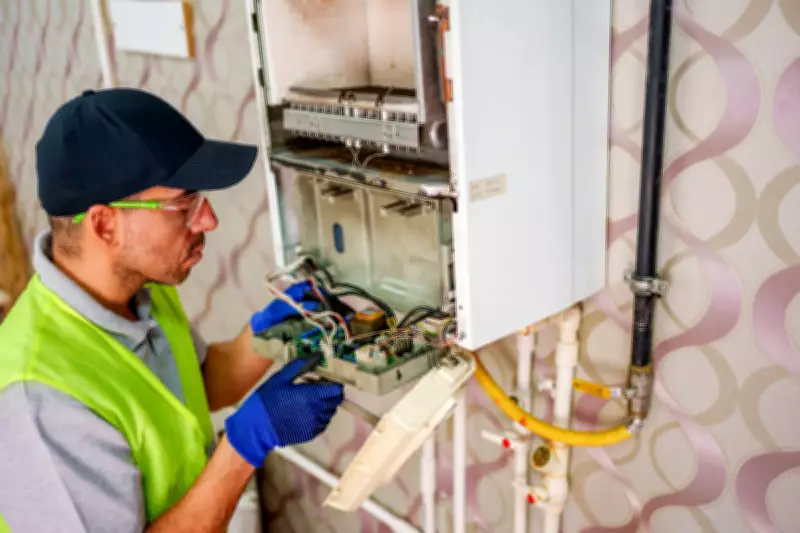
Installation expenses vary significantly based on job complexity. A straightforward like-for-like swap, such as replacing a combi boiler in the same location using existing pipework, is typically the simplest and most affordable option. In 2026, installation cost ranges are broadly:
- Straight swap, same location: Roughly £800 to £1,500 for labour and standard materials
- More complex installations: Roughly £1,500 to £3,000 or more for system changes, relocations, or additional pipework
Costs can escalate due to factors like moving the boiler to a new location, changing boiler types, upgrading flues or condensate routes, system cleaning, controls upgrades, and access issues such as scaffolding. When comparing quotes, ensure they include:
- Boiler make, model, and output (kW)
- Warranty length and maintenance requirements
- System cleaning provisions
- Included controls (thermostats, TRVs, smart features)
- Removal and disposal of the old boiler
- Necessary building work and regulatory sign-off
2026 Price Guide for Popular Brands
To compare effectively, consider both boiler-only and installed costs. Below are indicative ranges for a standard combi boiler replacement in 2026, assuming a straightforward swap. Note that prices may be higher for relocations or system conversions.

- Worcester Bosch: Boiler-only £1,400-£3,000; installed £2,300-£4,500; warranty 5-10 years; premium choice with wide installer network
- Vaillant: Boiler-only £1,300-£2,800; installed £2,200-£4,300; warranty 5-10 years; known for reliability and efficiency
- Ideal: Boiler-only £900-£1,900; installed £1,800-£3,400; warranty 2-10 years; offers value and broad range
- Viessmann: Boiler-only £1,200-£2,600; installed £2,100-£4,100; warranty 5-10 years; features build quality and premium options
- Baxi: Boiler-only £800-£1,700; installed £1,700-£3,200; warranty 2-7 years; budget to mid-range, common in UK homes
- Alpha: Boiler-only £700-£1,500; installed £1,600-£3,000; warranty 2-7 years; cost-effective for smaller homes
- Glow-worm: Boiler-only £700-£1,400; installed £1,600-£2,900; warranty 2-7 years; affordable for simple swaps
- Potterton: Boiler-only £800-£1,600; installed £1,700-£3,100; warranty 2-7 years; part of Baxi group, availability varies
Price variations often stem from job-specific factors like pipework updates, flue routing, and included extras. Always obtain multiple quotes to ensure a fair comparison.
When to Replace Your Boiler
There is no fixed age for boiler replacement; reliability, repair costs, and suitability for your home are key considerations. Signs that replacement may be warranted include:
- Repeat breakdowns or recurring faults
- Rising repair bills and difficulty sourcing parts
- Poor performance, such as inconsistent hot water or uneven radiator heating
- Efficiency issues like long warm-up times or noisy operation
A simple rule of thumb: if your boiler is older and requires expensive repairs, assess whether it's a one-off fix or the start of ongoing problems. When facing major repairs or multiple call-outs, replacement often becomes the less stressful option despite higher upfront costs.
Boiler Grants and the Boiler Upgrade Scheme
Support schemes in the UK can be confusing, as "boiler grants" is often used broadly. While some programmes assist eligible households with heating efficiency improvements, the most prominent national grant for upgrades is not for new gas boilers. Key distinctions include:
- Replacing a gas boiler with another may depend on individual circumstances and specific schemes
- Replacing a fossil-fuel system with a low-carbon alternative, such as a heat pump, may qualify for the Boiler Upgrade Scheme (BUS) to reduce upfront costs
Eligibility and availability vary across the UK, so check official guidance and local authority schemes. For those considering a heat pump, the BUS process typically involves:
- Check relevance: BUS supports low-carbon systems like air source or ground source heat pumps, not like-for-like gas boiler replacements.
- Confirm eligibility: Verify criteria based on location (England and Wales), property type, existing heating system, and efficiency prerequisites.
- Find an MCS-certified installer: Choose an installer experienced with heat pumps and grant processes to assess your home's suitability.
- Get a survey and quote: A thorough survey should cover heat loss, radiator sizing, and system controls to ensure optimal performance.
- Installer applies for grant: The installer typically handles the BUS voucher application, with the grant reflected in your quote.
- Installation and commissioning: Post-installation, receive documentation and guidance on efficient operation, as heat pumps require proper settings.
By understanding these aspects, UK homeowners can make informed decisions about boiler replacements and low-carbon upgrades in 2026, balancing costs, efficiency, and available support.