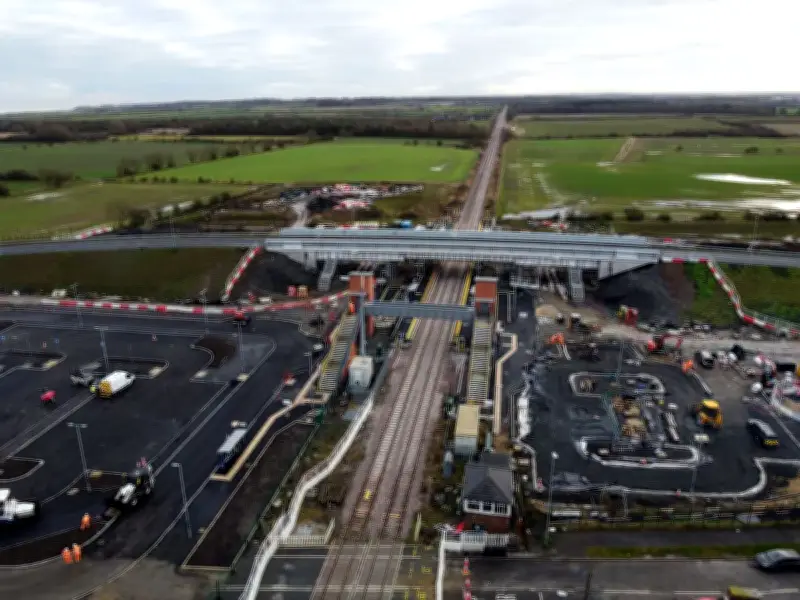
Thousands of new homes could be built around North East train and Metro stations under looser planning rules designed to speed up construction. Changes set out by Angela Rayner on Monday will mean that local councils will have to take a “default yes” approach to new housing developments within reasonable walking distance of well-connected stations.
The Government said that the move would help people “live closer to work, school and the services they rely on”. However, one North East council claimed that it could mean “chaos” for some communities without the level of train services needed to cope with a major influx of new homes.
Potential for 171,000 homes near stations
Research by the Centre for Cities thinktank previously estimated in 2019 that more than 171,000 new homes could be built around 74 potential commuter stations up to 45 minutes away from Newcastle, if green belt land within a 10 minute walk of those stations was released.
Labour has targeted building 1.5 million new homes in England by the end of the current, five-year parliament. Latest estimates suggest that 392,400 net additional homes had been delivered in England from the general election in July 2024 to June 14 this year, just over a quarter of the target.
Council warns of 'chaos' without infrastructure
Ms Rayner, the housing secretary, said of the new National Planning Policy Framework (NPPF) on Monday: “A safe, secure home is the foundation of opportunity, but too many people are being priced out of the communities where they want to live and work. By unlocking thousands of homes around well-connected transport hubs, we’re helping people live closer to work, school and the services they rely on, while backing local businesses and driving growth in our communities. That’s how we’ll tackle the housing crisis and raise living standards for people in every corner of the country.”
However, Northumberland County Council’s deputy leader cautioned that rail services like the popular Northumberland Line were already at capacity and that a surge in housebuilding without added infrastructure could cause problems in station towns like Newsham and Bedlington. Conservative councillor Richard Wearmouth told the Local Democracy Reporting Service: “Let’s take an example of a station like Newsham on the Northumberland Line. If the announcement was taken literally it would open up land for about 3,000 or more new homes to the south of that station. But already the trains are full and, let’s face it, not all those people are going to catch the train even if they could.
“Our council are working on more train capacity but have been told we will get no money from government to buy the trains. We have put in a funding request for money for the Blyth Relief Road but no news from the government on funding yet after months of waiting. We have campaigned for years to rebuild Moor Farm roundabout and now the government say they might fund it in 2030-something.
“Now take that example of Newham and apply it to Bebside, Bedlington, Prudhoe, Alnmouth and others. It could spell chaos for Northumberland residents who have already seen Labour delete most of the Northumberland Green Belt and double our housing targets such that we would have to build the equivalent of Berwick, Blyth, Morpeth and Haltwhistle in new houses. All with no investment in roads, no new railway infrastructure, no money for schools or GPs or dentists or anything else. From us it’s a ‘no, thank you!’”
Public transport users see potential
The North East Public Transport Users group said that building high-density housing around stations “makes sense, assuming those stations have good rail connections”. The group added: “Higher frequencies at stations in the North East, particularly on the East Coast mainline, could unlock sustainable development for much-needed housing.”
Labour’s changes to the NPPF will also include greater protections to prevent pubs and music venues from being closed, and cutting “unnecessary bureaucracy” by dropping the requirement for councils to consult some public bodies like Sport England on development decisions.