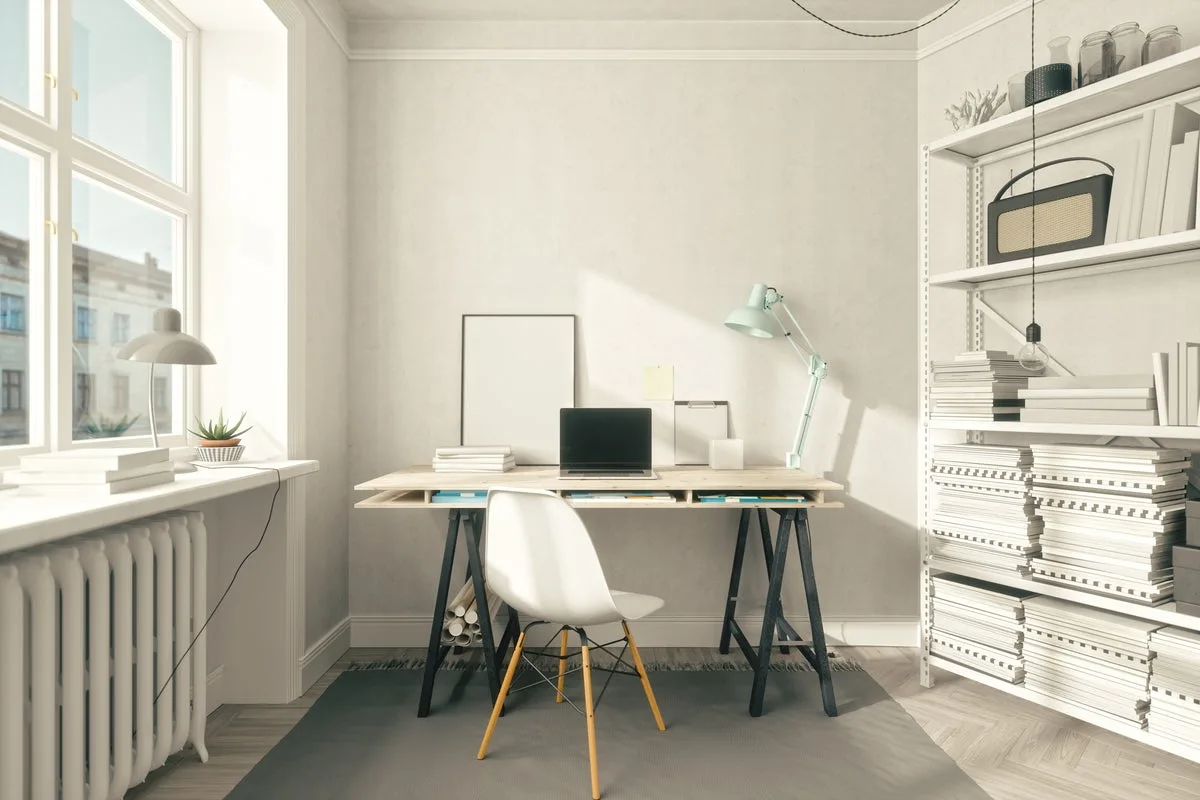
Home Offices Can Boost Property Values by Up to £40,000, Research Reveals
Home Offices Add Up to £40,000 to House Prices

The enduring trend of working from home continues to influence the property market significantly, with new research indicating that dedicated home office spaces can substantially boost a house's value, in some cases by as much as £40,000. While remote work arrangements remain a topic of debate, their impact on real estate is becoming increasingly clear as buyers prioritise functional workspaces.

The Value of a Dedicated Workspace

According to fresh analysis from estate agency Benham & Reeves, a dedicated home office is no longer merely a desirable feature but has become "highly sought-after" in today's hybrid working environment. Marc von Grundherr, director at Benham and Reeves, emphasises that such spaces provide essential privacy, structure, and practicality that modern work demands.

"Homes that can offer a genuine workspace, whether that's a converted room, a garden office, or a purpose-built outbuilding, tend to stand out far more strongly in the market and attract more serious buyer interest," von Grundherr explains. This shift reflects broader changes in work patterns since the pandemic, with many employers adopting mixed remote and office-based models.

Wide Pickt banner — collaborative shopping lists app for Telegram, phone mockup with grocery list

Quantifying the Financial Boost

Benham & Reeves conducted a detailed study comparing wider market house price averages with properties featuring home offices listed on major portals. Their findings, based on the UK average house price of £270,873 from Nationwide's recent House Price Index, reveal significant value additions across different office types.

The research indicates that an inside-the-home office space within a dedicated room can increase property value by approximately 15.2%, translating to an impressive £41,173 on average. Other configurations also contribute meaningfully: outbuildings or large garden offices add around 7.5% (£20,315), while shed or small garden offices provide a 5.0% boost (£13,544).

Bryn Nettle, head of business development at property consultancy Strettons, corroborates these findings, noting that well-designed home offices can add £20,000–£25,000 depending on property specifics. "The key is quality and functionality," Nettle states. "A well-insulated garden studio with power, heating and broadband connectivity will command a premium over a makeshift desk in a spare bedroom."

Market Dynamics and Demand Trends

Property website Zoopla reports that approximately 82,000 residential listings featured home offices in January 2026, indicating growing availability. However, demand patterns show regional variations. Laura Dam Villena, head of residential agency at Cluttons, observes that while home offices were almost a necessity during the post-pandemic buying rush, particularly in prime central London, this demand has moderated as companies implement stricter return-to-office policies.

"The momentum of this demand has slowed down in central London, as major companies are implementing stricter return to work policies, with this trend expected to increase in 2026," Dam Villena notes. Interestingly, Nettle adds that while homes with dedicated offices are more desirable, there isn't consistent evidence they sell materially faster than those without, suggesting buyers weigh multiple factors.

Important Considerations for Homeowners

Beyond market appeal, creating a home office involves crucial tax implications that homeowners must navigate. Lisa Wilson, head of tax at accountancy group Cowgills, highlights that employees can only claim working-from-home tax relief where home working is required by their employer, not merely chosen. For self-employed individuals, construction or conversion costs for a home office are not tax-deductible, though ongoing repairs and redecorating expenses are allowable.

Wilson advises that understanding these rules early "can help homeowners maximise the benefits of a home office while avoiding unexpected tax costs when it comes to selling their property." Additionally, the British Business Bank reported last year that 61% of one-person businesses operate from residential premises or are mobile, underscoring the practical importance of professional home workspaces for many.

Pickt after-article banner — collaborative shopping lists app with family illustration

Ultimately, while average value increases provide useful benchmarks, individual property outcomes depend on various factors including location, size, market conditions, and the quality of the office space itself. As remote work continues to evolve, the home office remains a significant feature shaping property values and buyer preferences across the UK.