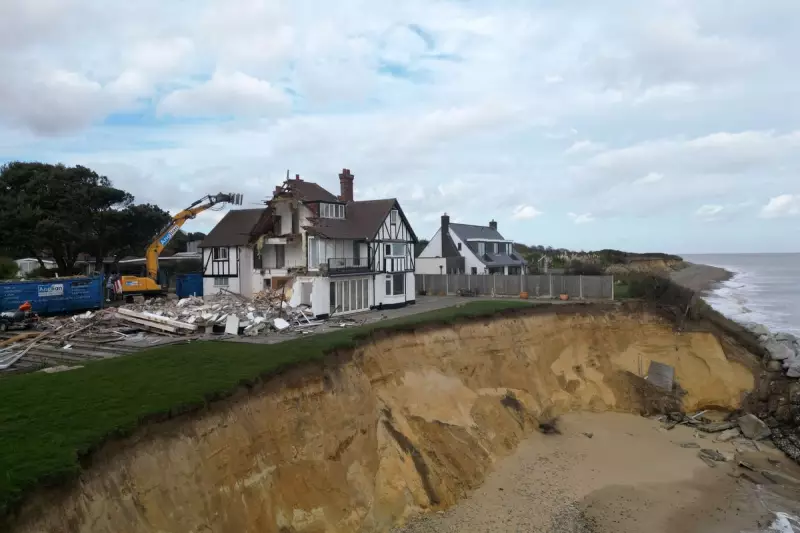
Work has commenced to tear down a fourth clifftop property in a Suffolk seaside village, as authorities admit there are no feasible long-term defences against the relentless encroachment of the sea.
Accelerated Demolition Amidst Weekend Erosion
The demolition of the latest home in Thorpeness began on Monday 12 January 2026, after significant cliff loss over the weekend forced the council to bring the schedule forward. It had originally been slated for the end of the month.
This marks the fourth property to be sacrificed to the waves. Two homes were demolished last year, and work on a third began just last week, highlighting the alarming speed of the environmental crisis.

Council's Stark Warning and Safety Plea
East Suffolk Council has issued a sobering statement, confirming that ‘no viable long-term solutions’ exist to stop the erosion at this location. Their immediate focus is on resident safety and managing the developing situation.
A council spokesperson said: “This is an incredibly difficult time for those residents whose homes have already been demolished and for those who may face this difficulty in the coming weeks.”
The authority is now holding individual meetings with residents at the northern end of the village to explain the impact of the latest cliff collapse and the necessary next steps.
They have also issued a public plea, urging people to stay away from the affected cliffs and beach. “In some places, there are now large drops from the footpath on to the beach,” the spokesperson warned, noting that while fencing and signs are in place, the area remains highly dangerous.
A Community on the Frontline
The situation leaves homeowners and the wider community facing profound uncertainty. Despite the grim long-term outlook, the council emphasised its ongoing collaboration with residents, the Environment Agency, and the local MP to explore any potential short-term measures that might slow the erosion.
This series of demolitions in Thorpeness stands as a stark, physical reminder of the powerful and costly impact of coastal erosion on communities across the UK, forcing difficult conversations about climate resilience, property rights, and managed retreat.