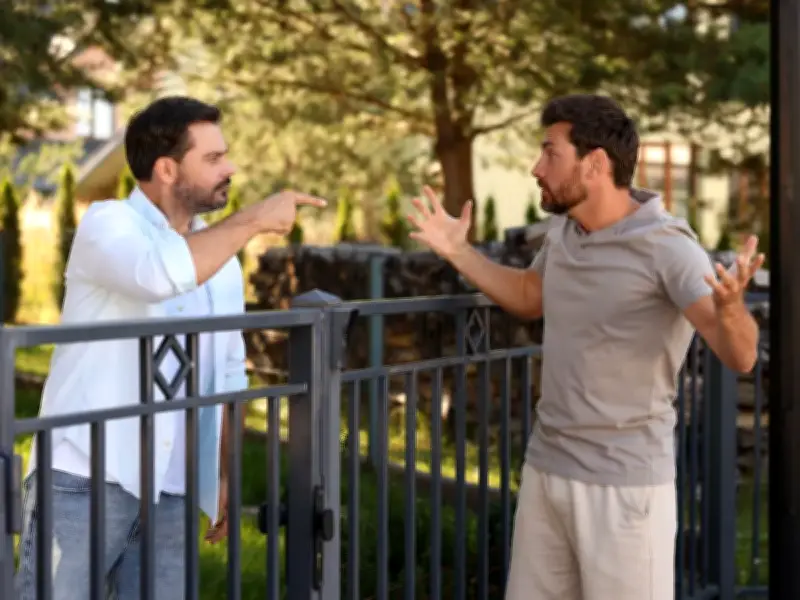
Certain property changes, such as extensions, fences, or CCTV installation, can give neighbours legal grounds to challenge homeowners, potentially leading to costly court cases if not handled correctly. Proper procedures and neighbourly communication are essential to avoid disputes.
Legal Risks of Home Improvements
When buying a property, homeowners may feel there are changes needed to make it their dream home. However, following correct procedures is vital, or ongoing neighbour disputes could arise. While rules on managing properties and gardens can differ between Scotland and the rest of the UK, letting neighbours know about any planned work is crucial. In worst-case scenarios, legal action could be taken if this is not done.
Alex Cook, senior partner and property litigation solicitor at Helix Law, warns that owning a property does not necessarily give complete freedom to do as you please within its boundaries. While many cases won't go beyond some grumbling from a neighbour, Cook advises that it "pays to know where those lines sit before you start work."
Key Changes That Can Trigger Challenges
Lawyers state that the most important step before starting any extensions or alterations is to inform neighbours. Even if work is safely within boundary lines, a conversation is crucial for maintaining a friendly atmosphere. Before starting an extension, loft conversion, or other major structural work, ensure all documents are in order, including planning permission, building warrants, and title deeds. Avoid building over a neighbour's boundary, as this could result in disputes and legal action. Neighbours can also challenge extensions by objecting to the planning application or complaining to the council if one hasn't been acquired.
Regarding trees and hedges, Cook stresses that a tree or hedge crossing a boundary does not make it fair game to alter as you see fit. Ownership depends on where the trunk is rooted. Neighbours can object if branches or roots are removed in a way that damages their tree, or if alterations breach a Tree Preservation Order or conservation area rules. After a conversation and checking these facts, trimming overhanging branches may be allowed with approval, but further damage could lead to legal action. For hedges, the High Hedges (Scotland) Act 2013 applies, allowing neighbours to complain to the council if hedges cause serious problems, such as blocking light.
Fences, CCTV, and Access Rights
Fences are a common source of disputes, mainly because title plans often don't detail exact boundary lines. Putting up a new fence, replacing one, or changing its height or style could prompt a challenge if a neighbour believes it encroaches on their land. There is no general legal rule that a boundary must be fenced or that either side is automatically responsible for a particular boundary. Check title deeds and consider a formal boundary survey to minimise arguments or legal action.
Under UK data protection law, home security cameras and video doorbells are treated as purely domestic devices only when they capture footage within the homeowner's boundary. If the field of view extends into a neighbour's garden, windows, or private space, it falls under UK GDPR and the Data Protection Act 2018. The neighbour can ask to see the recordings, and in serious or persistent cases, they can complain to the Information Commissioner's Office, and legal remedies may be taken. Experts advise angling cameras and doorbells as narrowly as possible towards your own property, using privacy masking if a wider view is unavoidable, and considering audio, which can be more intrusive than video.
Blocking or changing access to your property can also be problematic. Just because land belongs to you does not mean you can block a driveway, path, or other access points, as the neighbour may have a legal right of way (servitude) over the land. They might have the right to drive across your driveway, walk across part of your garden, use a shared path, or access their property through your land. Homeowners must check title deeds before making changes, as ignoring this could result in legal action. Some rights may exist informally through long-standing use, even if not formally documented.