
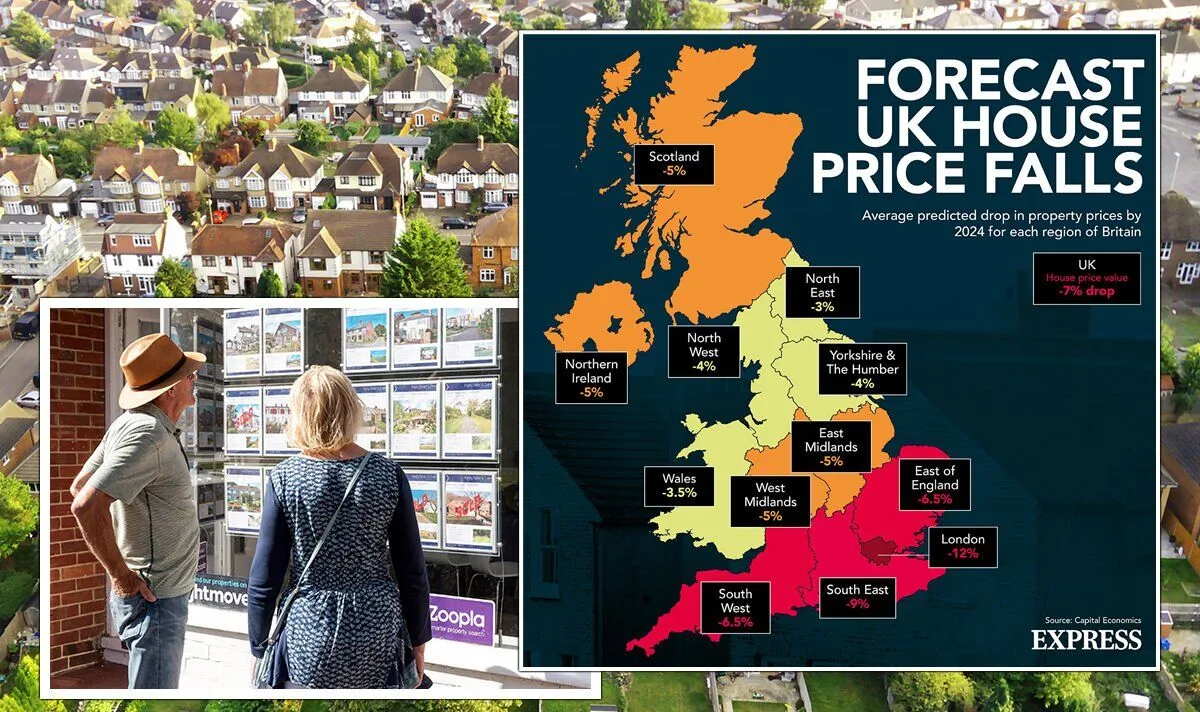
New research from analysis firm Capital Economics suggests that UK house prices will slump by around 7% over the next two years, wiping out expected growth. The most expensive areas, particularly London, are predicted to fare the worst, with values falling by 12% by the end of 2024 – an 8% drop next year and a further 4% in 2024. For an average London property priced at £538,000, this would mean a loss of approximately £65,560.
The forecast comes amid a series of interest rate rises by the Bank of England, which increased the base rate to 1.75% in August, with economists expecting a further 0.5% rise in September. These rises aim to curb inflation, which climbed above 10% in July and could reach 18.6% in January, but are also pushing mortgage costs higher, deterring potential buyers. With household incomes shrinking in real terms, demand is expected to decline sharply.
Capital Economics attributes the sharper falls in London and the South East to high price-to-income ratios. In London, average earnings are around £70,000, making buyers more reliant on mortgages. As interest rates rise, many will find mortgages increasingly unaffordable, especially when refinancing within two to five years. The South East is predicted to see a 9% drop, amounting to an average loss of £35,190, while the South West and East of England each face falls of about 6.5%.
Andrew Wishart, senior property economist at Capital Economics, said: 'Areas where house prices are highest relative to incomes are most vulnerable. London and the South East are therefore likely to see the largest falls and the North and Wales the smallest.' The Midlands, Scotland, and Northern Ireland are expected to see 5% drops; Yorkshire, Humber, and the North West 4%; Wales 3.5%; and the North East 3%.
The rise in mortgage costs is seen as a key driver, likely to prevent first-time buyers from entering the market and deter existing homeowners from moving. Wishart added that the slump in demand and confidence would even 'prevent cash buyers taking up the slack', with market activity expected to slow to its lowest level in years.




