Former Football Tycoon's Mansion at Centre of Neighbourhood Planning Row
A disgraced former Premier League football club owner has become embroiled in an extraordinary dispute with his wealthy neighbours after his Filipino housekeeper moved 11 friends and family members into his £7 million London mansion.
From Football Glory to Legal Controversy
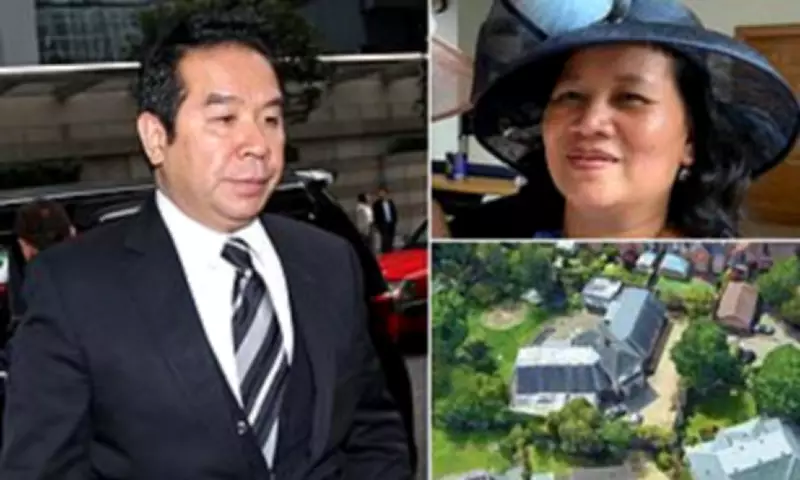
Carson Yeung, who owned Birmingham City Football Club before being imprisoned for laundering £55 million in Hong Kong, purchased the gated seven-bedroom property on the exclusive Coombe estate in southwest London in 2007. The former hairdresser-turned-tycoon, who made his fortune on the Hong Kong stock market before buying Birmingham City for £81.5 million in 2009, has barely occupied the prestigious address since his acquisition.
Instead, Yeung essentially handed control of the property to his housekeeper, Concepcion Limson, who has resided there for nearly two decades. Remarkably, Limson has even raised Yeung's granddaughter as her own child, with planning documents revealing she became the girl's legal guardian.

The Unusual Household Arrangement
Over time, Limson invited relatives, friends, and acquaintances to move into the mansion to help care for the child, creating what neighbours described as an unconventional household arrangement. Planning papers disclosed that as many as 11 individuals connected to Limson were living under the same roof at various points, with occupancy peaking in 2013 and remaining high thereafter.
In her planning application to Kingston-upon-Thames Council, Limson explained that she was unable to live alone in the vast property while raising the child and therefore permitted members of her extended family and other acquaintances to move in to provide care and support. She described the extended household as a surrogate family that offered the girl a "safe, secure and loving environment."
Neighbourhood Backlash and Council Action
The unusual living situation sparked fury among residents of the affluent postcode, where homes typically sell for over £14 million. When council officials discovered the arrangement, they determined the property was being used as an unauthorised House in Multiple Occupation (HMO) and required Limson to apply for retrospective planning permission.
The application triggered significant opposition, with 38 neighbours formally objecting to the proposal. Residents warned that an HMO would "undermine the established character of the area," increase noise levels, and set an unwelcome precedent for the prestigious estate. One neighbour expressed concerns about security, suggesting HMO residents "would be likely to break into neighbours' houses," while another compared the setup to student accommodation.
Key Workers and Family Circumstances
Limson defended the arrangement by noting that many occupants were key workers, including nurses, a child psychologist, and a pharmacist. She explained that "due to various family circumstances the original owners have now left the country" and that she could not manage the house and child without support from her extended network.
Agents representing Limson told the council that Yeung and his partner Dan Zhou had lived at the property only intermittently since 2007 and that Limson was currently responsible for Yeung's granddaughter, who reportedly had "no contact with her natural parents or the grandparents."
Planning Inspector's Ruling
The council refused the retrospective application and issued an enforcement notice to halt the unauthorised use. This month, the independent Planning Inspectorate dismissed Limson's final appeal. Inspector Simon Hand ruled that the house had been used as an HMO since Yeung purchased it in 2007, with various people living there over the years alongside Limson and the child.
Hand noted that Limson "would appear to be an employee of the owners, who live abroad" and that other occupants included wider family members who had come to London for university. However, he found that actual details about the arrangements remained sparse despite third-party information.

Fallout and Future Requirements
Residents now have six months to find alternative accommodation before the mansion must revert to use as a single-family home. The ruling adds another chapter to Yeung's dramatic fall from grace. After his arrest in 2011 and subsequent six-year prison sentence for money laundering in 2014, Yeung resigned from all his roles at Birmingham City, leaving the club in turmoil before its eventual sale to American investors.
Although the money laundering offences were not connected to his football club ownership, prosecutors linked Yeung to high-stakes casino gambling and organised crime, with the court hearing he maintained business relationships with Hong Kong triad figures. The former tycoon, whom a judge said "lied whenever he saw the need to do so," has seen his London property become the latest focus of controversy in his troubled post-football career.