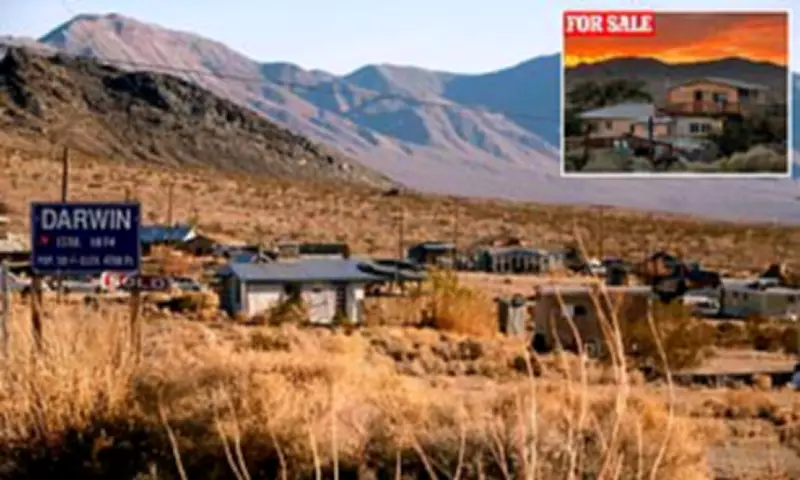
Nestled on the edge of Death Valley National Park, the remote desert settlement of Darwin, California, is issuing a heartfelt plea to a new generation. Once a thriving 19th-century gold and silver mining hub, its population has now collapsed to a mere 30 souls. This former boom town is on the brink of becoming a permanent ghost town, and its ageing residents are desperately urging young people to relocate and purchase its remarkably affordable properties.
A Stark Contrast in Property Prices
Homes in this quaint, isolated community are an astonishing 350 percent cheaper than the California state average. At the time of writing, two properties were actively listed for sale, presenting unique opportunities far removed from the state's typical soaring real estate costs.
Luxury Living at a Fraction of the Cost
The first is a stunning three-bedroom, three-bathroom luxury ranch, encircled by majestic mountain vistas. This home is listed for just $245,000. To put this into perspective, the average price for a similar-sized property across California stands at $861,725, making the Darwin ranch approximately 3.5 times more affordable.

An Even Deeper Discount
Merely two blocks away, a second opportunity awaits. A rustic, two-bedroom ranch property, framed by towering cacti, is on the market for a mere $85,000. This price tag is a staggering seven times lower than the statewide average of $619,491 for a comparable two-bedroom home.
The High Price of Seclusion and Scarcity
However, this profound affordability comes with significant challenges. Darwin's extreme remoteness is a defining characteristic; the town sits over five miles from the nearest highway. Furthermore, water is not a guaranteed utility but a precious, community-managed resource.
Water scarcity fundamentally limits the town's growth potential to only a few hundred residents. The entire population relies on a volunteer-operated system to pump water from a distant spring via gravity-fed pipelines. This requires consistent investment of time, labour, and money from every resident.
A Community Ageing in Place
With an average resident age of 66, the current populace is acutely aware that the town's future hinges on attracting younger, able-bodied individuals. The physical demands of maintaining the water infrastructure are becoming increasingly burdensome.
"We need help," explained longtime resident and artist Kathy Goss. "We need younger people to come here and make the commitment to live here. And make a commitment to doing some muscle work."
Echoing this sentiment, Nico Georis, 43, one of Darwin's youngest inhabitants and a recent appointee to the water board, stated plainly: "They're getting older, and they need help, and they need a new generation to pass the torch to."
The Practical Realities of Remote Living
The town's inaccessibility contributes directly to its low property values but also poses real risks. "The only danger of living here, real danger, is you're too far from a hospital if you really need something," admitted 73-year-old local Rick Gibson, who plans to relocate to Las Vegas by age 80 for easier healthcare access, though he intends to keep his Darwin property.
Gibson's story is emblematic; he purchased his home for just $6,500 in cash back in 1988, highlighting the long-standing affordability of the area for those seeking solitude.
From Boom to Near Bust: A Historical Decline
Founded in 1874 and named after explorer and miner Darwin French, the town rapidly grew into a bustling centre for silver and lead extraction. However, the hostile desert environment and dwindling resources drove most settlers away by the end of the 19th century.
Its fate was further sealed in the 1930s when state officials rerouted the main road away from Darwin, deepening its isolation. The final mines shuttered in the 1970s, precipitating a steady population decline from a peak of 3,500 to just 54 by the year 2000, and a mere 30 today.

This dramatic history now attracts waves of content creators and photographers, drawn to capture its dilapidated cabins and the quirky, creative hermits—many refugees from cities like Las Vegas and San Francisco—who call it home. Yet, for Darwin to avoid fading into a silent relic of the past, it must convince a new generation that its cheap homes are worth the commitment to a challenging, communal, and profoundly unique way of life.