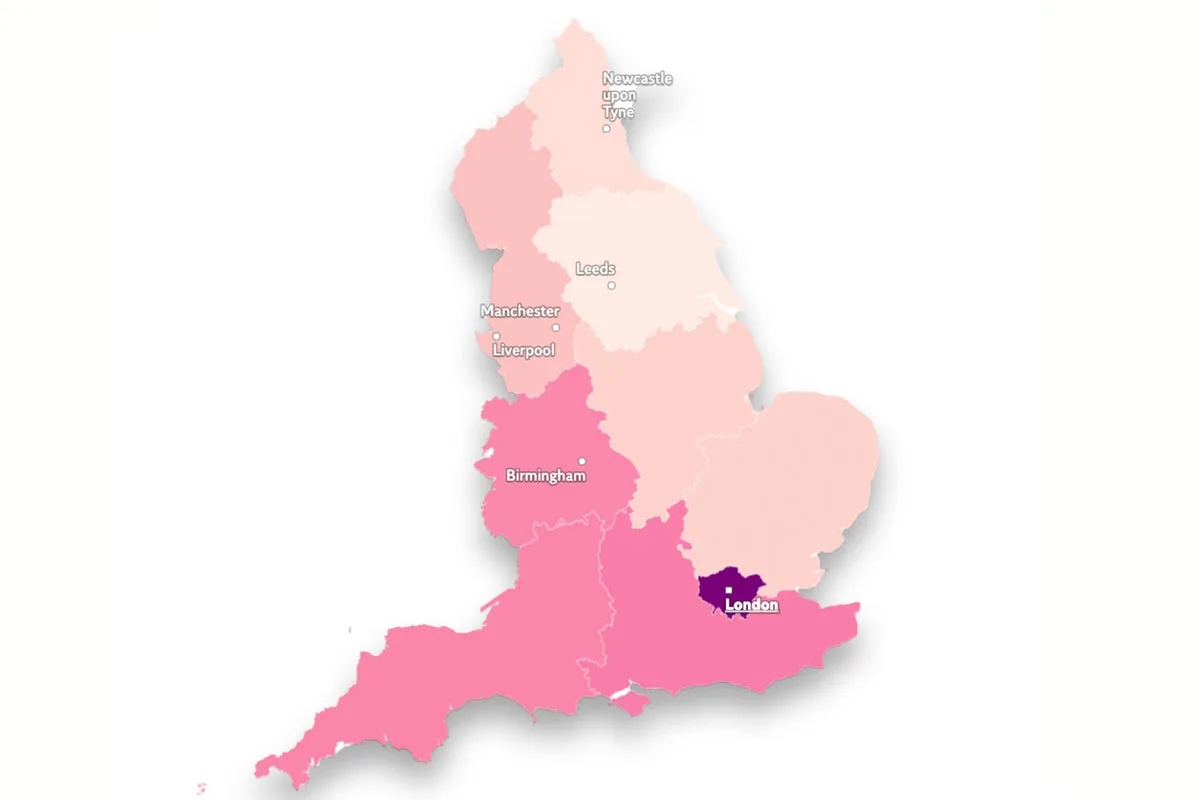
Homeowners in London and the South East could be battered with tax bills of up to £50,000 under proposed Land Value Tax (LVT) plans, a report revealed. Andy Burnham, who is teed up to become the next Prime Minister, has long supported LVT, arguing it is "a very productive form of taxation" that could discourage land hoarding in a 2022 LBC interview. But even as recently as May, his campaign said he had "long been persuaded of the argument for a Land Value Tax".
How Land Value Tax Would Work
The proposed system would replace council tax, which Burnham described as "highly regressive" because its valuations, based on 1991 figures, were "not justifiable", and the property would be taxed solely on the value of the land itself, excluding any buildings or improvements. Supporters say it is fairer since land doesn't fluctuate as dramatically as the value of buildings or other structures, because it is a finite resource.
Regional Impact and Winners and Losers
However, the report from Tax Policy Associates showed that while at least 63% of people will benefit in immediate cash terms, the remaining 37% will be paying more, with potentially disastrous consequences for homeowners in London and the South-east, who could see property prices plummet. London would have to foot 34% of England's tax bill under this model, paying £8.4 billion more than its current council tax responsibility to total £19.5 billion. The South East would have to cover 21% of the bill. In comparison, Yorkshire and the Humber would pay just £2.7 billion in LVT across the region, covering 4% of England's bill, and a decrease of £1.7 billion.

Specific Examples of Tax Increases
The estimates, which are purely illustrative, suggest owners of a Band F flat in Islington would pay £12,000 a year, instead of £2,900 in council tax. Someone who purchased a Band H property in Kensington years ago would have to shell out £54,000 a year compared to £3,183 in council tax. Homeowners in Oxford with a band F terraced home would have to fork out £8,000 compared to £3,600 in council tax, while a band F home in Guildford would be facing a £6,200 a year charge, instead of £3,500. Even if homeowners purchased an affordable flat years ago, they would have to find thousands more pounds every year simply because of where they live, which could further affect homeowners in places that have experienced gentrification, such as Shoreditch, London.
Challenges and Political Feasibility
Dan Neidle, who founded the think-tank, said they had tried various configurations of an LVT and all "look really challenging", with this model based on a flat rate of 1.28%. Posting on X, he said the tax was "economically the right thing to do", partly because it encourages people to use land efficiently, but the "short-term effects look too serious and the politics impossible". He wrote: "It's normally said the big problem with land value tax is valuation. That's certainly a very serious challenge, but to my mind bigger problems are (1) very substantial tax increases for some people, particularly in London, and (2) capitalisation: the prospect of a sudden shock that, overnight, greatly reduces property prices in some parts of the country (think: Kensington) and greatly increases them in others (think: Blackpool). Neither is desirable." He said the most "plausible solution" is to phase in the tax over a long period.