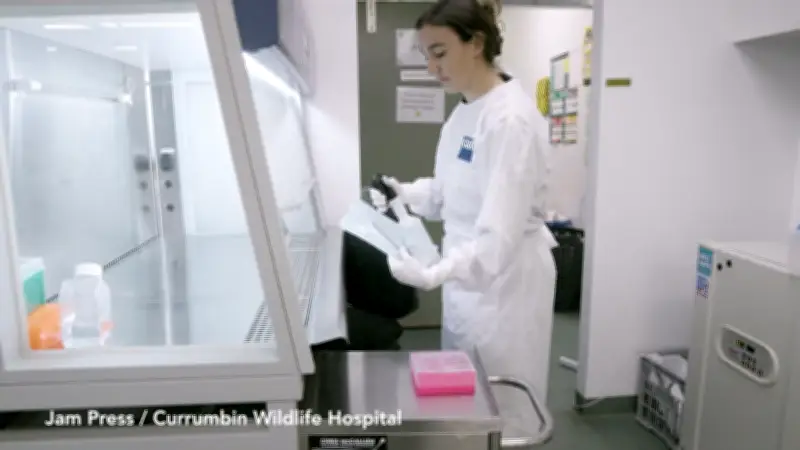
A koala named Bamse has become the first animal to receive a revolutionary new chlamydia vaccine implant, part of a research programme aimed at saving the endangered species from extinction. The vaccine, developed by researchers at Queensland University of Technology (QUT), was administered by vets at Currumbin Wildlife Hospital in Australia after Bamse was captured in the wild.
Breakthrough Vaccine Implant
The new biodegradable implant releases a second dose of the vaccine automatically around 30 days after the first, eliminating the need for koalas to be recaptured for a second injection. This reduces stress on the animals and makes the vaccination programme more practical. Bamse, whose name means 'teddy bear' in Norwegian, was released back into the wild after receiving the implant and was recaptured a month later for a checkup, confirming she remains chlamydia-free.
Chlamydia Threat to Koalas
Chlamydia is one of the biggest threats to koalas, causing blindness, infertility, and death. The disease has contributed to the species being officially classed as 'endangered' in Australia in 2022. Scientists hope the new vaccine will prevent the spread of the disease and help koalas reproduce more safely.
Dr Michael Pyne, a senior veterinarian at Currumbin Wildlife Hospital, called the creation of the new vaccine a 'massive breakthrough' and 'a truly remarkable moment.' He said: 'We've been working with vaccines against chlamydial disease in koalas for over five years now and this is a massive breakthrough where we are turning a two-injection vaccine into an injection and an implant that can be all applied in one examination.'
Successful Programme Expansion
Bamse is one of five koalas to receive the revolutionary implant so far. Dr Pyne noted: 'Bamse was a great candidate, a young female koala, the poster child for the future of the species. We'll be monitoring her over the next six months. It'll be exciting to see her when she gets her first joey.'
Dr Freya Russel, a researcher at QUT, described the relief she felt when her years of research finally came to fruition. She said: 'It felt like a turning point where all of the research setbacks and persistence over the last few years have finally come to the point where we can make a real-world impact.'
Impact on Koala Populations
More than 500 koalas have already been vaccinated through the programme at QUT, and chlamydia admissions in the region have fallen by 75 per cent. Researchers also report a baby boom, with 41 joeys and 13 grand-joeys born in what was once one of Queensland's worst-affected koala populations. The team hopes to expand the programme across Australia and potentially use the technology to help tackle disease in other species.