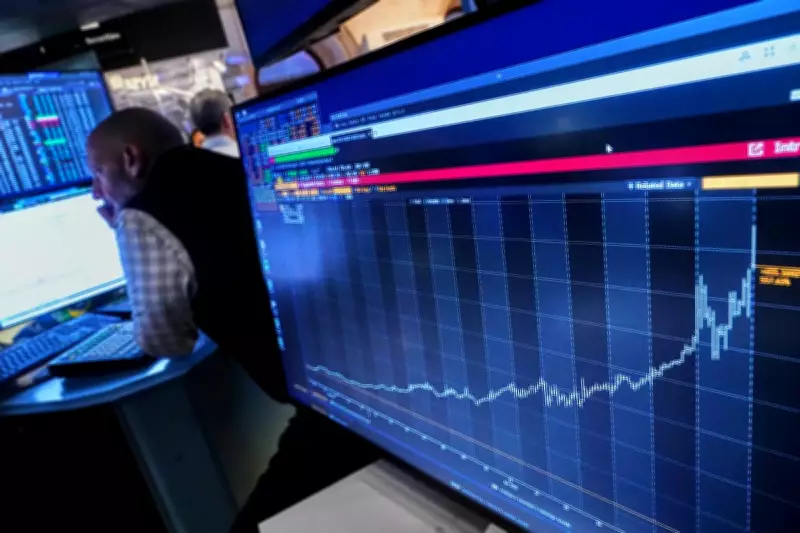
It appears entirely illogical at first glance. How can the U.S. stock market be achieving record-breaking highs while gasoline prices remain elevated, American households express growing economic anxiety, and the war with Iran continues unabated? Yet, for Wall Street, the fundamental question ultimately revolves around corporate profitability. At present, companies are generating such substantial earnings that investors are prepared to pay unprecedented prices for a stake in U.S. businesses.
A Jarring Yet Rewarding Journey for Investors
The recent trajectory has been a turbulent experience for many investors. Last month, the S&P 500 index plummeted nearly 10% below its previous peak, prompting a natural urge among some to divest their stock holdings. However, demonstrating its historical resilience, the index—central to numerous 401(k) retirement accounts—has not only recouped all losses but has surged to new record levels. On Wednesday, the S&P 500 closed at an all-time high of 7,137.90, rewarding those who maintained patience.
The Core Drivers of Stock Prices
Stock prices fluctuate constantly for myriad, often inexplicable reasons. Over the long term, however, a stock's valuation hinges on two critical factors: the company's earnings and the price investors are willing to pay for each dollar of that profit. The latter component is heavily influenced by interest rates and the prevailing emotional climate on Wall Street, oscillating between greed and fear.

From Prevailing Fear to Cautious Optimism
In the initial stages of the Iran conflict, fear dominated the market, causing stock prices to dive sharply. Concerns centered on the potential for a protracted surge in oil prices, which could unleash a debilitating wave of inflation across the global economy. Concurrently, interest rates rose as investors feared that persistent high inflation would prevent the Federal Reserve and other central banks from implementing rate cuts. Lower interest rates typically stimulate economic growth but can also exacerbate inflationary pressures.
Since late March, a shift in sentiment has emerged. Expectations have grown that the United States and Iran will avoid a worst-case economic scenario, driven by mutual economic interests and, for Iran's leadership, the prospect of survival. The ceasefire agreed earlier this month remains tenuous but intact. This easing of abject fear is reflected in oil prices; Brent crude, which soared to $119 per barrel at the height of anxieties, has retreated to around $100.
Much attention remains focused on the Strait of Hormuz, a vital passage for oil tankers exiting the Persian Gulf. A continued closure by Iran or an ongoing U.S. naval blockade could inflict widespread economic damage, depriving global customers of oil and Iran of crucial revenue. Thierry Wizman, a strategist at Macquarie Group, notes that traders may believe economic pressure, rather than military action alone, could expedite concessions from Iran's regime and bring a swifter end to hostilities.
Renewed Focus on Robust Corporate Profits
As fear has subsided, investors have redirected their attention to corporate earnings, the other pillar of stock valuation. Results have been remarkably strong. More than 15% of S&P 500 companies have reported first-quarter 2026 profits, with a vast majority exceeding analysts' expectations. This trend spans diverse sectors, from Citigroup and J.B. Hunt Transport Services to UnitedHealth Group.
According to FactSet, if remaining companies merely meet estimates, S&P 500 earnings will be approximately 14% higher than a year ago. These results encompass a month of wartime, and while companies acknowledge potential risks, there is little evidence of significant earnings damage thus far. Bank of America CEO Brian Moynihan recently highlighted "healthy client activity, including solid consumer spending and stable asset quality," pointing to a resilient American economy despite household concerns over gasoline prices and broader tariff-induced inflation.

Elevated Expectations for Future Growth
Analysts have actually raised their profit forecasts for S&P 500 companies since the war began. They now anticipate earnings growth accelerating to 20% in the second quarter, with companies providing few reasons for revision. Delta Air Lines reports robust demand for both business and leisure travel. PepsiCo has reaffirmed its full-year profit guidance, initially issued before the conflict, with CEO Ramon Laguarta encouraged by the resilience of its international operations. GE Vernova, citing soaring demand for power from AI data centers, has raised its annual revenue forecast.
Persistent Uncertainties and Potential Risks
Despite the current optimism, the U.S. stock market remains vulnerable to sudden downturns. A breakdown in U.S.-Iran negotiations or emerging oil shortages could swiftly reignite fear on Wall Street. Sustained high oil prices would inevitably erode corporate profits by increasing business costs and diminishing the spending power of households and consumers worldwide. The market's record run, while impressive, is not immune to the volatile geopolitical and economic landscape.