Retail Investors Transform from 'Dumb Money' to Market Force
For years, retail investors were often dismissed by Wall Street insiders as "dumb money," a term typically referring to those prone to trading on hype, chasing trends, or responding late to major market movements rather than focusing on company or industry fundamentals. However, this perception is rapidly changing as small investors demonstrate significant impact and sophistication in today's volatile markets.
Outperforming Professional Funds
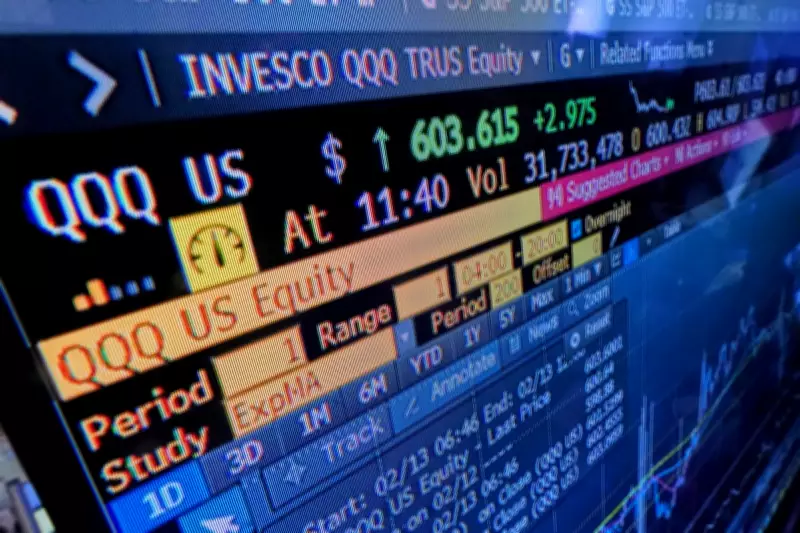
An analysis of retail investor activity in 2025 reveals that these individual traders outperformed two of the most popular professionally managed index funds: SPY and QQQ, which aim to mirror the performance of the S&P 500 and Nasdaq 100, respectively. According to Vanda, an independent data and research firm, retail investors accounted for a staggering $5.4 trillion in trading activity across stocks and exchange-traded funds (ETFs) in 2025. This represents a nearly 47% increase from the previous year and the highest level recorded since at least 2014.
"I personally want to dispel the myth of retail being dumb money, because it's not dumb money anymore," said Joe Mazzola, head trading and derivatives strategist at Charles Schwab, during an investor education event in Anaheim, California, last November that attracted around 800 clients. This shift underscores a broader transformation in how Americans engage with financial markets.

The Rise of DIY Investing
While many Americans have long invested in the stock market through hands-off managed funds in retirement plans like 401(k)s, the past decade has ushered in a new era of do-it-yourself trading. The advent of mobile trading apps, zero-commission trading, stock market-focused communities on social media, and online educational tools has democratized access to investing in stocks, cryptocurrencies, and other assets.
The COVID-19 lockdowns served as a critical inflection point, with a new crop of investors—many young newcomers using platforms like Robinhood—fueling the "meme stock" frenzy that catapulted prices of companies like GameStop and AMC Entertainment. Beyond meme stocks, years of mostly uninterrupted, strong market gains provided an attractive backdrop for more people to take up investing, with the S&P 500 posting annual losses only three times since 2015.
By early 2025, the number of people moving money from checking accounts to investment accounts reached its highest levels since 2021, according to a JPMorgan Chase report. This surge may include younger Americans who, unable to afford housing, have turned to stocks as an alternative investment. Overall, money flowing into the market from individual investors jumped about 50% from 2023 to early 2025.
Buying the Dip and Market Influence
Retail investors have become adept at "buying the dip," seizing opportunities during market downturns. For instance, in April 2025, when stocks tanked after President Donald Trump announced sweeping tariffs, retail investors bought over $5 billion in stocks over two days, helping stabilize the market. "In April, it was retail investors that bought the dip. They were the ones that were willing to step in front. They saw the opportunity," Mazzola noted.
This activity continued throughout the year, with retail trading hitting an all-time high on a rolling monthly basis in early 2026, according to J.P. Morgan. They were particularly active during the S&P 500's climb to record highs and played a key role in driving silver prices to record levels by purchasing record amounts of silver ETFs.
Embracing Risk and Strategy
Many retail investors are venturing beyond traditional stocks and ETFs into higher-risk vehicles like options trading, which accounted for about $650 billion of their activity in 2025 and has been rising steadily since at least 2019. Examples include Frank Sabia, a high school registrar from Encino, California, who focuses on options as his "bread and butter," and Noah Goodwin, a high school junior in Castaic, California, who made profits on Nvidia options but also faced losses from miscalculated trades.

"For the most part, with only some exceptions, buying the dip has tended to be a very profitable tactic for many retail investors," said Steve Sosnick, chief strategist at Interactive Brokers. However, he cautioned that this strategy can lead to mechanical trading without full consideration of risks and rewards.
Balancing Short-Term and Long-Term Goals
It's common for retail investors to strike a balance between high-risk moves and long-term portfolio building. Andy Hu, a financial analyst in Los Angeles, allocates 50% of his portfolio to the SPDR S&P 500 ETF Trust for stability, while engaging in short-term trades with micro-cap stocks for potential gains. His active trading account was up around 20% through the first 11 months of 2025, though he paused trading during a tech-led market pullback in December.
As retail investors continue to grow in influence, their impact on Wall Street is undeniable, reshaping market dynamics and challenging old stereotypes. With tools and access more widespread than ever, the era of the empowered small investor is here to stay.