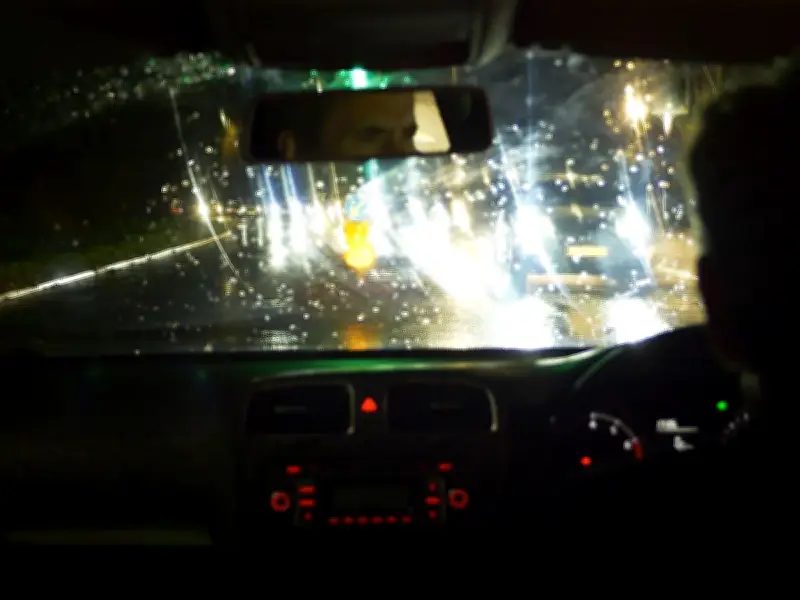
Drivers are being urged to check a simple switch on their rear-view mirror that could help prevent them from being dazzled by headlights during darker autumn commutes.
New research from Ripe Classic Car Insurance has found that darkness and poor visibility are among the biggest contributing factors to collisions during the winter months. Mel Savage, head of insurance product at the company, has explained how switching your rear-view mirror to 'night mode' can help reduce glare from other vehicles when driving in the dark.
Expert highlights rear-view mirror switch
She said: "Over the past few years, LED headlights in newer cars have raised concerns about glare affecting road users. While they're designed to help drivers see more clearly during the darker months, the bright lights can cause temporary loss of vision, slower reaction times and result in drivers drifting out of lanes or missing hazards ahead.
"As well as this, there are now more SUVs on the road, meaning headlights can sit higher up and shine directly into other drivers' eyes. However, what many drivers might not realise is that there's actually a simple switch on their rear-view mirror that can help prevent them from being dazzled by motorists behind them, which can be particularly useful at this time of year."
In most vehicles with a manual dimming mirror, the switch is located underneath the rear-view mirror and allows you to toggle between a fully reflective surface during the day and a dimmed reflection at night, helping to reduce glare from headlights behind you. Some modern cars also have rear-view mirrors that dim automatically depending on the conditions.
How to stay safe when facing dazzling headlights
There are also a few other simple ways to reduce the impact of headlight glare when driving at night, helping to keep you and other road users safe during the darker months.
If your visibility is reduced by glare from headlights, make sure to slow down and increase the distance between you and the car in front, as being dazzled can also affect your reaction time. If you're struggling to see clearly, don't hesitate to pull over somewhere safe until your vision returns to normal.
Dirt, dust and streaks on the glass can make glare from oncoming vehicles significantly worse, making it harder to see the road ahead. Before setting off in the dark, take a moment to clean your windows inside and out and check your wiper blades, as worn or damaged blades can make smearing worse. It's also worth topping up your washer fluid, as grit, salt and mud from the roads can quickly build up on your windscreen during autumn and winter.
Check headlight alignment and eyesight
Driving over potholes or uneven road surfaces can sometimes affect your headlight alignment, causing the beams to point too high and dazzle other drivers, or too low and reduce your own visibility. Make sure to have your headlight alignment checked regularly, either as part of your usual servicing or before the darker winter months, to ensure they're pointing in the right direction.
If you're noticeably struggling with headlight glare, it may be worth booking an appointment with an optician, as certain eye conditions, such as cataracts or astigmatism, can make glare from headlights significantly worse. Sensitivity to light can also increase with age, so regular eye tests are important to help you see the road clearly, particularly when driving at night.
Where possible, avoid looking directly at the headlights of oncoming vehicles, as this can make it harder for your eyes to adjust once they've passed. Instead, slow down and try shifting your focus slightly towards the left-hand edge of the road, using the road markings as a visual guide until the bright lights have passed and you have a clear view of the road ahead.