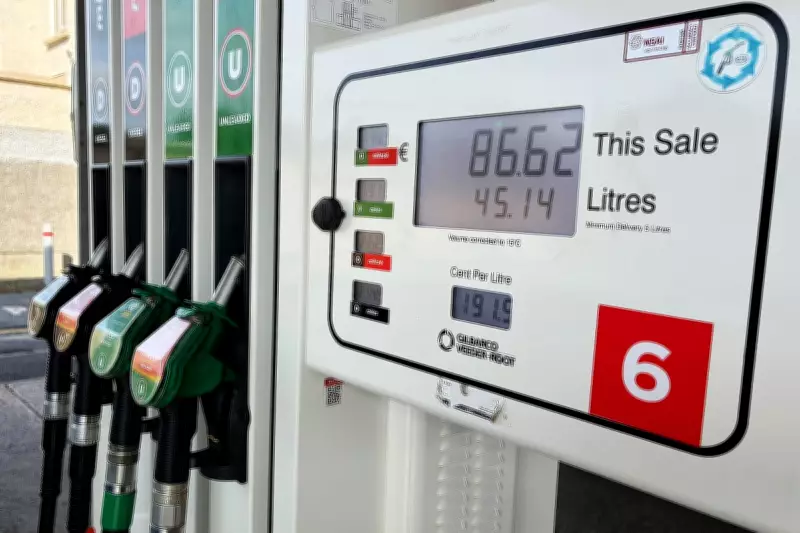
Official statistics have confirmed a significant acceleration in UK inflation during March, with the Consumer Prices Index (CPI) rate climbing to 3.3%, up from 3% in February. The Office for National Statistics attributed this increase primarily to a sharp jump in motor fuel costs, which have been heavily influenced by the ongoing conflict in the Middle East, particularly involving Iran.
Fuel Prices Drive Inflationary Pressure
The data reveals that higher motor fuel prices were the dominant factor behind the inflation surge. Month-on-month, fuel prices increased by 8.7%, representing the largest single-month rise since June 2022, shortly after Russia's invasion of Ukraine. This substantial hike has pushed inflation to its highest level since December of the previous year.
Petrol and Diesel Reach Multi-Year Highs
Detailed analysis shows the average price of petrol rose by 8.6p per litre between February and March, reaching 140.2p per litre. This marks the highest petrol price recorded since August 2024. Meanwhile, diesel prices experienced an even more dramatic increase, climbing by 17.6p per litre to an average of 158.7p per litre, the highest level since November 2023.

Chancellor Warns of Impact on Households
Chancellor Rachel Reeves responded to the figures by emphasising that while the Iran crisis is "not our war," it is nevertheless "pushing up bills for families and businesses" across the United Kingdom. She outlined government actions aimed at protecting consumers from unfair price increases, including measures to reduce food prices and enhance long-term energy security to build a stronger, more resilient economy.
Additional Contributing Factors
Grant Fitzner, chief economist at the Office for National Statistics, noted that alongside fuel prices, air fares and rising food costs also contributed to the upward pressure on inflation this month. The only significant counterbalance came from clothing costs, where prices increased at a slower rate compared to the same period last year.
The inflation increase was in line with predictions from economic analysts, who had anticipated the impact of geopolitical tensions on global energy markets. The situation highlights how international conflicts can have direct and measurable effects on domestic economic indicators, with fuel prices serving as a particularly sensitive transmission mechanism.